Middle East LNG imports into key Asian and other consuming markets have dropped 66%, underscoring how supply has been rerouted toward North American volumes as producers in the U.S. and Canada expand export capacity and long-term contracts.
Middle East LNG Imports Fall as U.S. Supply Rises
The shift matters because LNG is increasingly setting the marginal price for winter gas security. When Middle East cargoes are constrained by shipping risk or geopolitical tension, buyers are forced to compete more aggressively for Atlantic basin supply, lifting volatility across spot markets and making contract structure as important as headline prices.
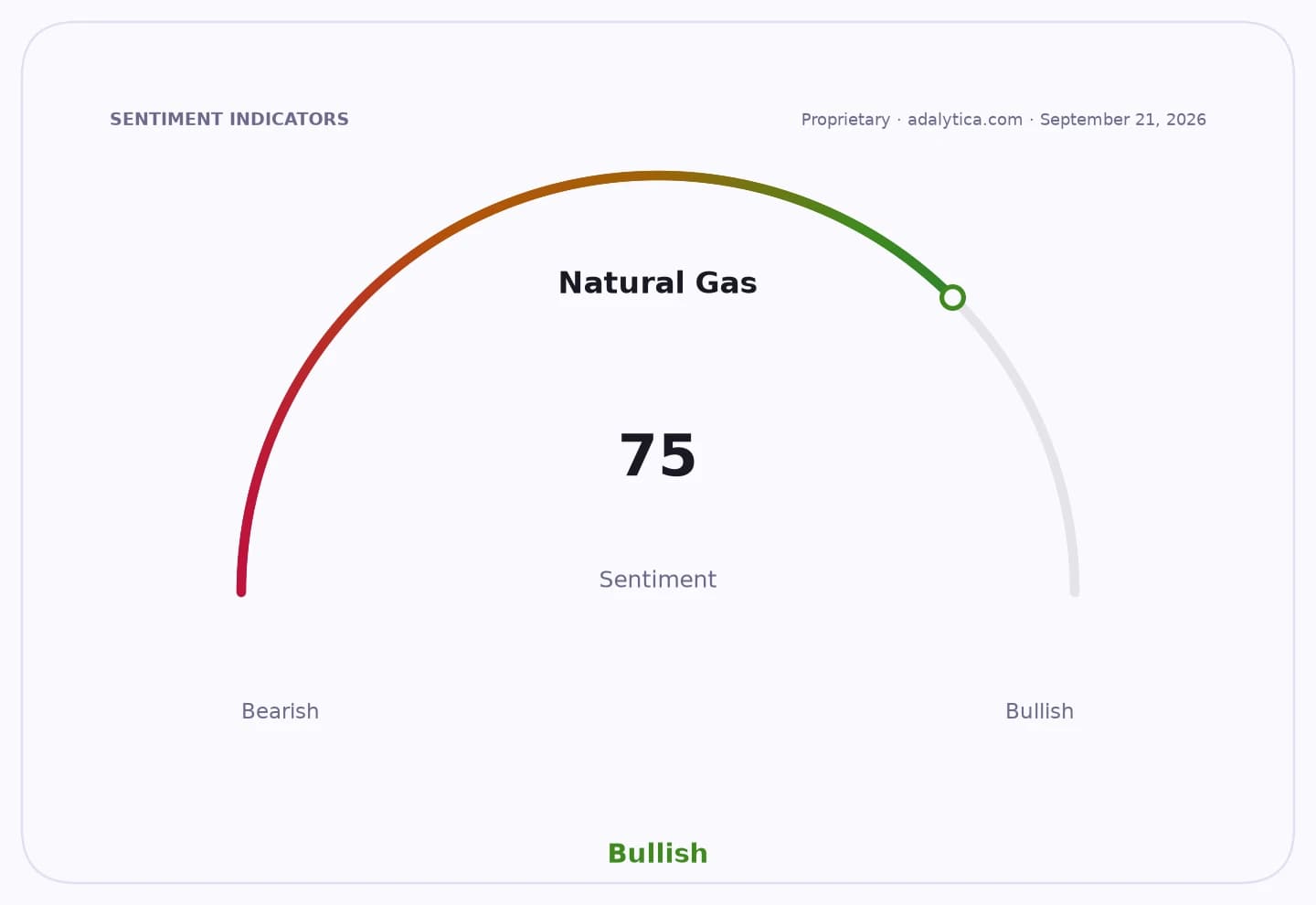
Sentiment IndicatorsⓘProprietary · adalytica.com · October 20, 2026
This is a snapshot — live sentiment, awareness and momentum for 130+ markets update continuously in the dashboard.Open AlphaPulse

Asian LNG prices have already surged past $30, reflecting tightness in the physical market and the added premium for seaborne cargoes that can be redirected quickly. Recent disruptions, including damage to QatarEnergy LNG trains and tanker accidents, have amplified concerns over reliability at a time when inventories and weather risk are in focus.
For North American exporters, the reallocation is a tailwind. Cheniere Energy, whose shares have climbed to about $282.40 from $205.23 in January, remains well supported technically, with the stock above both its 50-day and 200-day moving averages and RSI readings still elevated, suggesting persistent investor demand for U.S. LNG exposure. Kinder Morgan, a major pipeline and midstream beneficiary of expanding gas flows, has also strengthened, rising to $33.54 from $29.07 in early February.
The market is also signaling that new North American capacity is being absorbed even as global margins remain uncertain. Shell’s long-term LNG Canada-related deals and other supply agreements point to a strategy by buyers to lock in barrels outside the Middle East, even if that means accepting higher up-front costs in exchange for reliability.
That does not remove the downside. Societe Generale’s view that the U.S.-Europe LNG trade margin could shrink toward zero by 2028 highlights the risk that today’s export boom will face pressure as more projects come online and freight, feedgas and financing costs rise. In that scenario, the winners are the low-cost exporters and the midstream operators tied to contracted volumes; the losers are spot-dependent buyers and traders exposed to a narrower arbitrage.
For investors, the key question is whether the current scramble for North American supply becomes a durable structural shift or a cyclical response to Middle East disruption. If shipping risks persist and winter demand stays firm, U.S. and Canadian export projects should continue to command a premium. If geopolitical pressure eases, the market may quickly revert to thinner spreads and more competitive pricing.
| Entity | Gains | Losses |
|---|---|---|
| U.S. LNG exporters | ▲Higher volumes and pricing power | ▼— |
| Canadian LNG projects | ▲More long-term demand | ▼— |
| Asian and European buyers | ▲Supply diversification | ▼Higher procurement costs |
| Middle East suppliers | ▲— | ▼Loss of market share |