Middle East liquefied petroleum gas prices for August loading rose 7% to Japan, tracking the latest rebound in crude and reinforcing the link between oil benchmarks and fuel costs across Asia’s import-dependent energy markets.
Middle East LPG Prices Rise 7% for Japan
The increase matters because Japan remains a major buyer of LPG and other refined fuels, making it exposed to swings in Middle East supply pricing even when local demand is not the main driver. Higher LPG differentials feed directly into household, industrial and petrochemical costs, while also tightening margins for importers and downstream users that cannot fully pass on the expense.
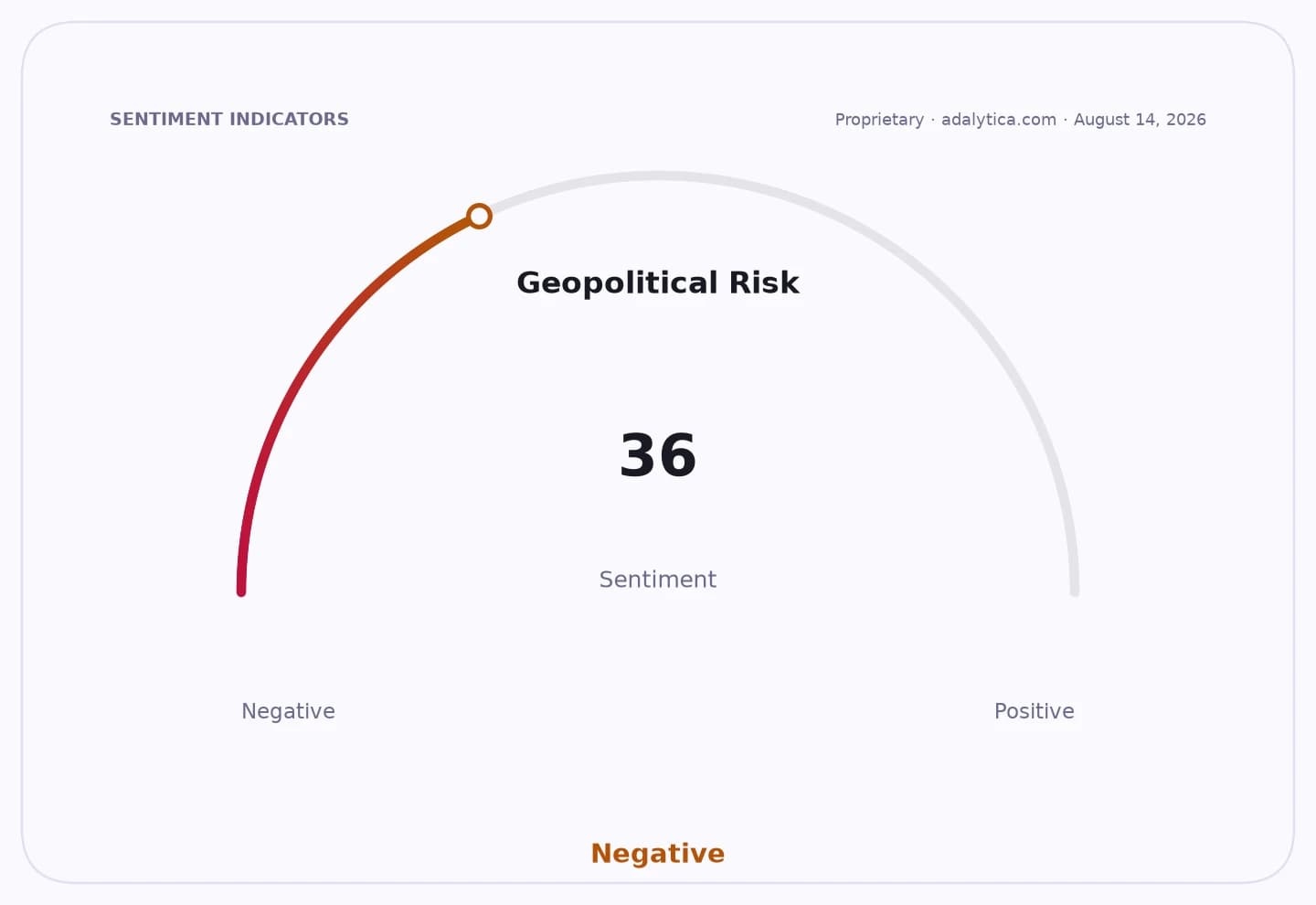
Sentiment IndicatorsⓘProprietary · adalytica.com · August 14, 2026
This is a snapshot — live sentiment, awareness and momentum for 130+ markets update continuously in the dashboard.Open AlphaPulse
The move comes against a backdrop of firmer crude, with WTI trading around $82.83 on Aug. 14 after a recent slide and Brent at $88.54, both off earlier August lows but still well above levels seen in parts of the second quarter. That rebound has lifted the cost base for energy cargoes more broadly, and the market is treating LPG less as an isolated product and more as part of a wider oil complex still prone to sharp swings.
For investors, the implication is that oil’s recovery is beginning to work its way through adjacent fuel markets, supporting earnings for producers and exporters while pressuring consumers and traders that rely on stable import pricing. U.S. majors have already pointed to the benefit of higher crude and robust refining margins in recent filings, underscoring how price cycles remain central to cash generation across the energy sector.
The LPG move also fits a broader pattern of strain in energy supply chains, where shortages and logistical bottlenecks have kept pricing sensitive to even modest shifts in crude. That leaves Asian buyers vulnerable if oil extends higher, while offering another reminder that the inflation impulse from energy has not fully disappeared.
For now, the key question is whether the August rise proves temporary or becomes the first sign of a broader repricing in refined fuels as crude stabilizes at elevated levels. A sustained move higher would support upstream producers and shipping-linked traders, but it would also tighten cost conditions for importers, distributors and end users across Asia.
| Entity | Gains | Losses |
|---|---|---|
| Oil producers | ▲Higher realized prices | ▼— |
| Middle East exporters | ▲Stronger LPG revenues | ▼Importers facing higher costs |
| Japanese buyers | ▲— | ▼Higher fuel and feedstock bills |
| Downstream consumers | ▲— | ▼Tighter household and industrial budgets |