Iran’s threat to hit any country that helps the United States strike its territory is the latest sign that the conflict is no longer just a bilateral standoff — it is becoming a broader regional risk with real consequences for energy markets, defense contractors and global investors.
Middle East Risk Lifts Oil and Defense Stocks

That matters because wars rarely stay neatly contained when oil infrastructure, shipping lanes and allied bases are in the crosshairs. A widening confrontation in the Middle East can quickly feed through to crude prices, airline costs, inflation expectations and the market’s appetite for risk. Investors do not need a full-scale supply shock to feel the effects; even the prospect of retaliation can keep energy premiums elevated and push money toward perceived safe havens.
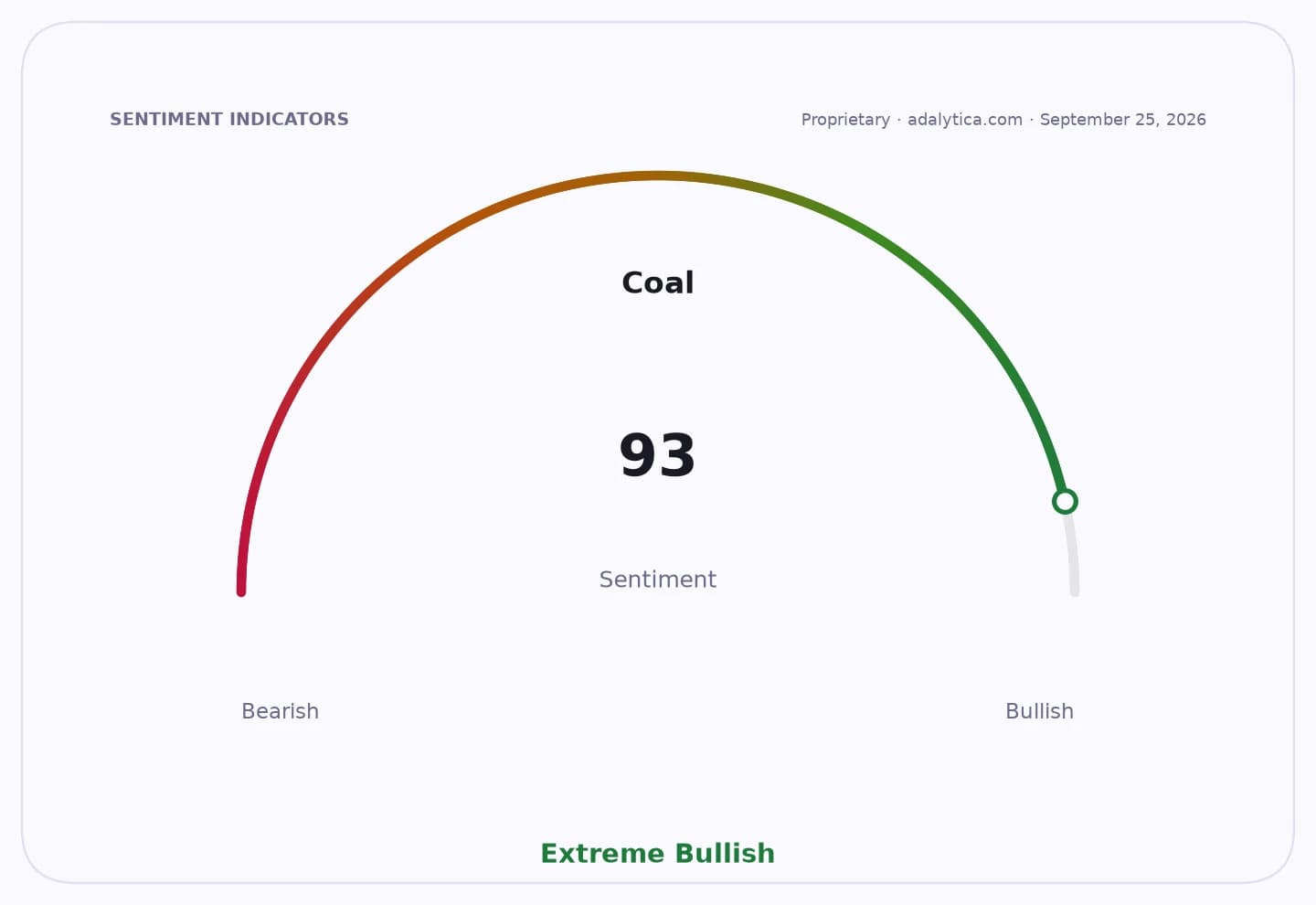
Sentiment IndicatorsⓘProprietary · adalytica.com · July 23, 2026
This is a snapshot — live sentiment, awareness and momentum for 130+ markets update continuously in the dashboard.Open AlphaPulse

Oil has already started to reflect that anxiety. The U.S. Oil Fund, which tracks crude, has jumped to 131.68, up sharply from 106.29 just a month earlier, while its 50-day moving average has climbed to 125.52. The move has been forceful enough that the price is now pressing the upper end of its Bollinger Band range, and the conventional RSI reading at 85.9 points to a market that is extremely stretched in the short term. In plain English: traders are pricing in more geopolitical fear, even if they may be getting ahead of themselves over the next few sessions.
Energy equities are benefiting too. The Energy Select Sector SPDR ETF has risen to 59.20 from 57.94 over the past three sessions, extending a rebound that has taken it well above both its 50-day and 200-day moving averages. That is a classic sign that investors are rotating toward the sector as a hedge against turmoil. For long-term investors, the bigger point is that geopolitical shocks can temporarily improve the earnings power of integrated oil companies and service names, even if they also raise the risk of a later pullback if tensions ease.
Geopolitical Risk vs USOadalytica.com
Explore this data interactively — full history, time series and cross-market comparisons.Open AlphaPulse

Defense stocks are a more complicated story. Lockheed Martin, one of the most visible names in U.S. aerospace and defense, has held near 514.36 after a volatile stretch, showing that the market is still weighing higher demand for military hardware against valuation and budget uncertainty. If the conflict broadens, suppliers of missiles, air defense systems and surveillance technology could see more attention from the Pentagon and allies. But defense shares tend to trade on backlog, margins and long-term procurement, not just one headline, so investors should think in years rather than days.
The deeper narrative here is about second-order effects. If Iran follows through on targeting countries that support the U.S., the key issue becomes not only the battlefield but the risk to shipping, energy exports and allied infrastructure. That is where inflation can re-enter the market conversation. Higher crude prices can pressure consumers, complicate central bank policy and make it harder for investors to argue that global growth is immune to geopolitical shocks.
Adalytica’s global stability gauge captures that shift in mood. Its reading has dropped to extreme fear, even as attention across markets remains very high. That combination often shows up when traders are worried enough to buy protection, but not yet ready to abandon risky assets altogether. For long-term investors, that usually argues for discipline rather than reaction: keep diversification broad, avoid making portfolio decisions on a single headline, and remember that volatility can create opportunities in quality energy and defense names.
The most important question now is whether this remains a contained escalation or becomes the kind of regional conflict that keeps oil elevated for months. If retaliation broadens beyond Iran and the U.S., the winners are likely to be energy producers, tanker owners and defense contractors. The losers are importers, airlines, consumers and any investor chasing momentum without regard to valuation. Worth watching — and worth taking seriously.
| Entity | Gains | Losses |
|---|---|---|
| Oil producers | ▲Higher crude prices | ▼Later demand destruction |
| Defense contractors | ▲More procurement demand | ▼Budget uncertainty |
| Importers and airlines | ▲— | ▼Higher fuel costs |
| Consumers and risk assets | ▲— | ▼Inflation pressure |