MIK Group has officially launched The Harbor Skyline, its first high-rise city on an island in Hai Phong, extending a luxury residential play that could reshape demand in one of northern Vietnam’s most strategic logistics hubs.
MIK Group launches Harbor Skyline in Hai Phong
The project matters because it is not just another apartment tower. It is a bet that Vietnam’s property cycle is moving beyond isolated condo blocks toward larger, integrated urban formats that can command premium pricing and attract buyers seeking lifestyle, not just shelter. In a market still working through legal uncertainty and uneven buyer confidence, developers with land, brand recognition and execution capability are positioning themselves to capture the next leg of urbanization-driven demand.
Sentiment Indicators
Hai Phong is a particularly important test case. The port city sits at the center of northern Vietnam’s industrial, shipping and logistics economy, and infrastructure investment has been widening its residential footprint. MIK is using Vũ Yên Island’s river-surrounded setting to market a more differentiated product: a planned high-rise community rather than a standard condominium complex. That is a meaningful shift for a city where most tall residential projects have traditionally been built as stand-alone blocks with limited shared amenities.
The Harbor Skyline is part of MIK’s I Series, which the company says has become its core apartment line and accounts for roughly 70% to 80% of its high-rise housing portfolio. MIK says it has already brought about 17,000 I Series units to market and plans to develop about 200,000 more in the coming period. That scale suggests the Hai Phong launch is less a one-off than a template for expansion into new regional markets.
For investors, the significance lies in the second-order beneficiaries of Vietnam’s urban housing buildout. Integrated projects like this typically support land values, infrastructure spending, construction demand and premium consumer positioning for developers that can secure large sites early. They also tend to favor companies with access to international design standards, local regulatory know-how and the balance sheet to deliver phased projects over multiple years.
The broader backdrop also matters. Vietnam’s real estate sector remains under pressure from legal bottlenecks and buyer protection concerns, while governments in major cities are seeking new land monetization channels and clearer ownership frameworks. That means developers able to launch visible, differentiated projects in high-growth cities could gain an edge as confidence gradually returns.
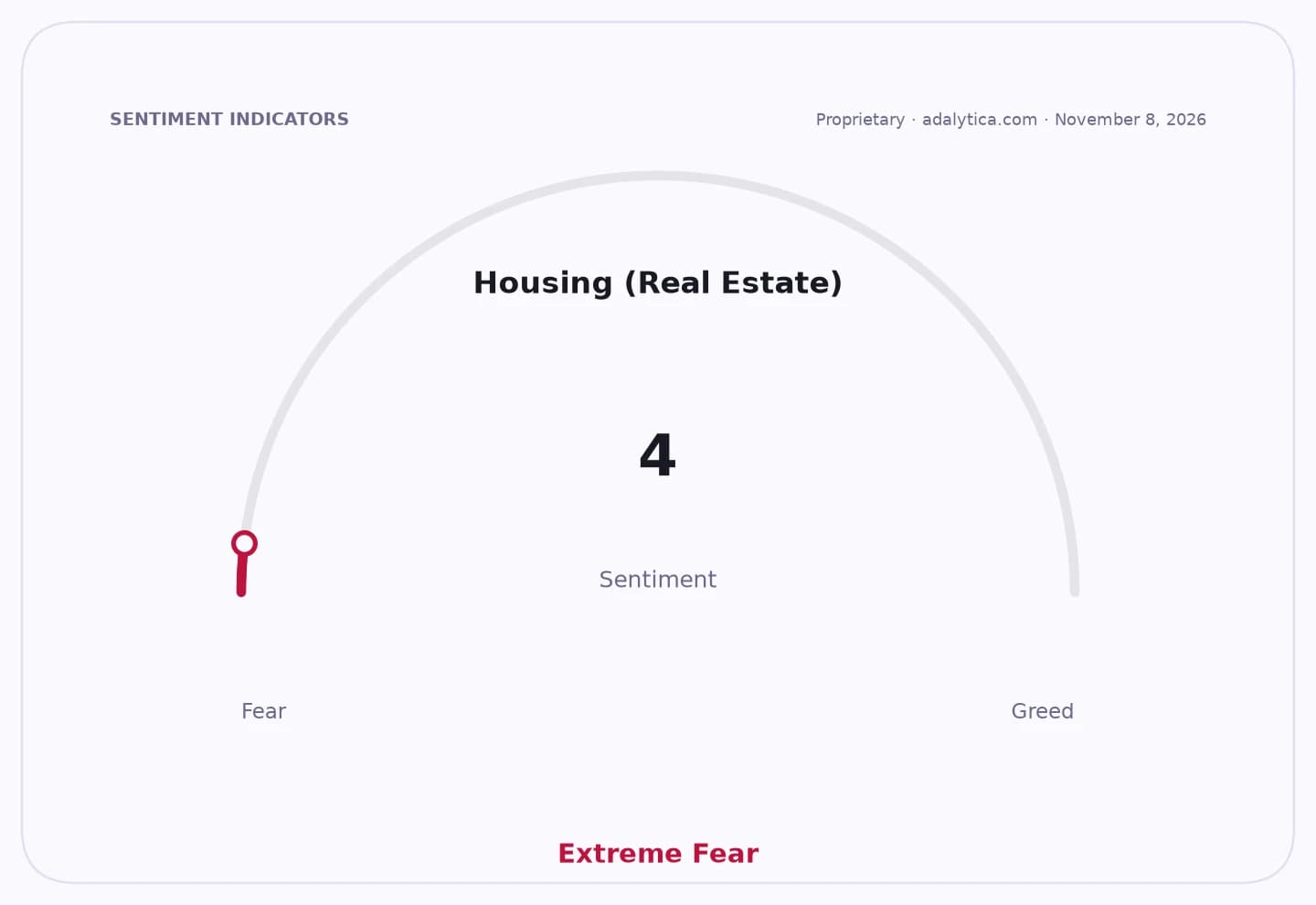
Adalytica’s Commercial REIT Sentiment gauge is flashing “Extreme Fear,” a reminder that investor positioning around real estate remains fragile even as awareness stays elevated. That kind of disconnect often creates opportunity: when sentiment is washed out but underlying urban demand is still growing, the market can misprice the value of developers with the right land bank and product mix.
The Harbor Skyline gives MIK a new reference project in a city with strategic economic weight and rising housing aspirations. If the concept gains traction, it could strengthen the case for more large-scale island and waterfront developments across Vietnam’s northern growth corridor. For investors, the actionable takeaway is to watch for the companies best positioned to monetize premium urbanization, not the ones merely exposed to headline property volume.
| Entity | Gains | Losses |
|---|---|---|
| MIK Group | ▲Brand reach and premium sales mix | ▼Higher execution risk |
| Hai Phong | ▲New upscale housing supply | ▼Pressure on rivals’ pricing |
| Buyers seeking luxury homes | ▲Integrated amenities, location appeal | ▼Higher entry prices |
| Small standalone condo developers | ▲— | ▼Competitive differentiation |