Javier Milei’s appearance at the Ibero-American summit in Madrid is turning what was meant to be a reset for Spain’s Latin America diplomacy into a live test of Pedro Sánchez’s political survival, with the Argentine president’s anti-left rhetoric amplifying an already toxic campaign environment at home.
Milei visit tests Spain politics and AI agenda
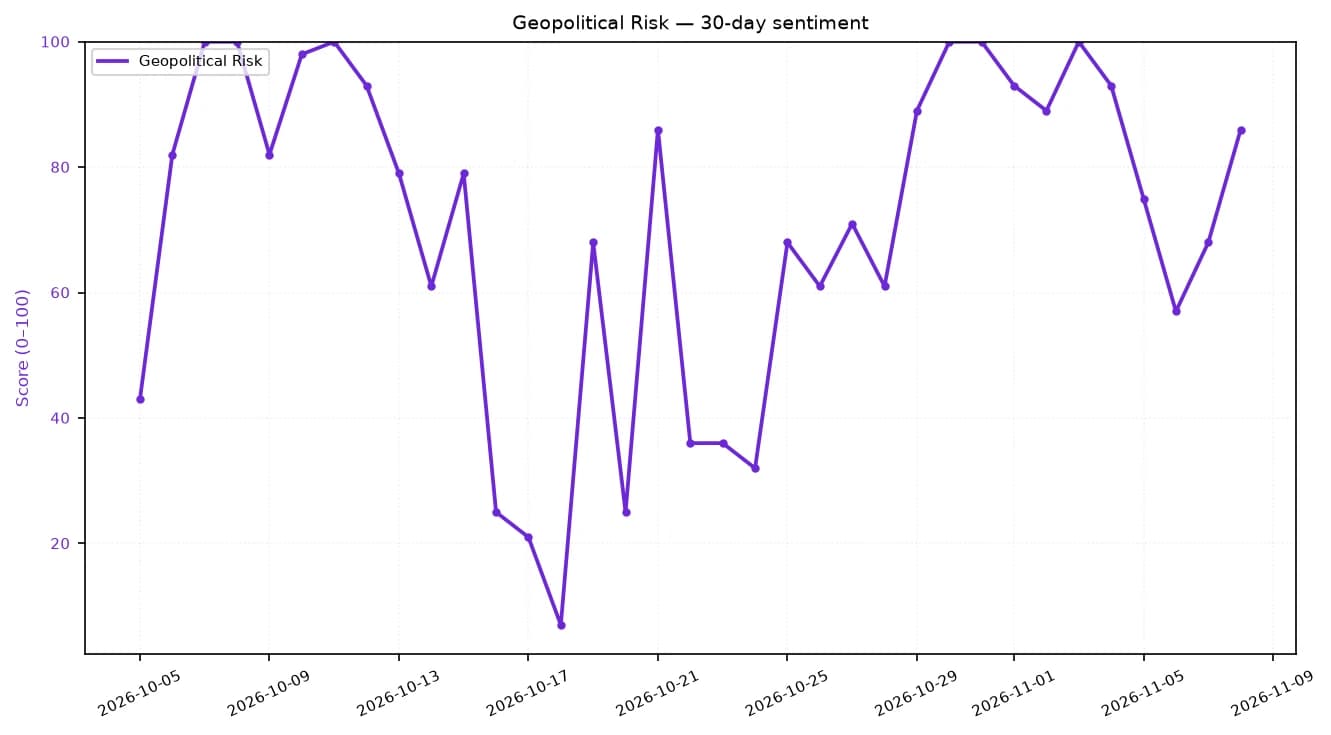
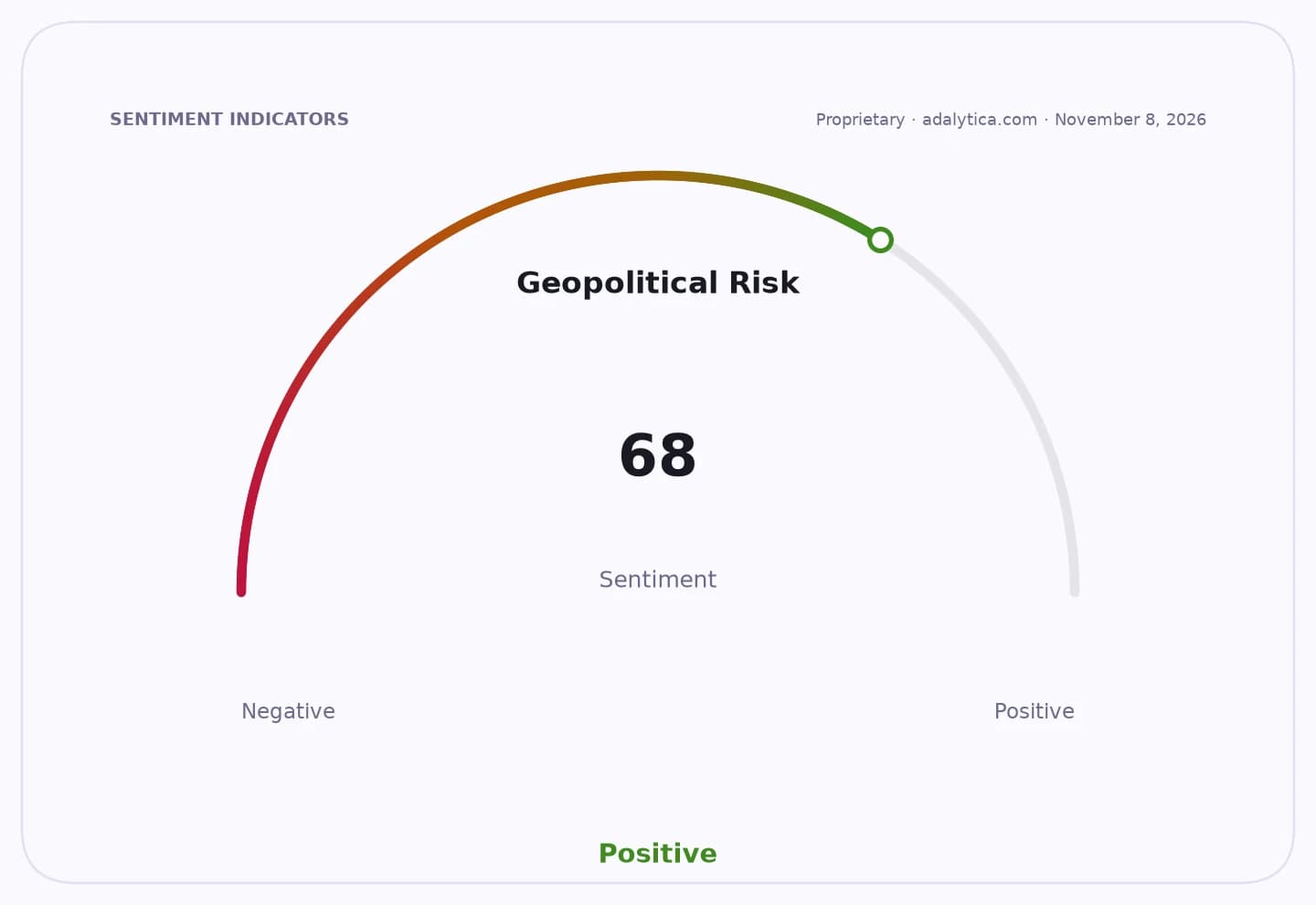
Geopolitical Risk
That matters because the summit is not just a diplomatic photo opportunity. Spain is trying to revive an Ibero-American framework that has faded in relevance, while Sánchez is heading into an early election in less than a month and doing so under pressure from a devastating train accident, a fragmented political field and a regional gathering that tilts to the right. The optics are bad for a government that wants to present itself as a bridge between Europe and Latin America, especially when the main draw is a leader who has repeatedly insulted Sánchez and will not hold any bilateral meeting with him.
Sentiment Indicators
The economic stakes are bigger than the theater suggests. Madrid wants the summit to produce a “strong” final declaration and concrete accords, especially on artificial intelligence and disaster cooperation. That AI agenda is not trivial: a push for Spanish-language models would support a broader ecosystem of local data, cloud, chip and software demand across the Spanish-speaking world, creating potential tailwinds for telecoms, infrastructure and enterprise technology providers. For investors, the question is whether this becomes a one-off communique or the start of a more durable policy effort to build digital sovereignty in a market of 19 Latin American countries plus Spain, Portugal and Andorra.
The politics, however, could swamp the policy. Milei has become an ideological proxy for Spain’s own culture war, openly backing the country’s hard right and reinforcing the prospect that the opposition Popular Party may need the far-right Vox to govern after the November 29 vote. That raises the odds of policy volatility in Spain just as investors are weighing the implications for fiscal discipline, regulation and capital allocation. It also reinforces a broader pattern: Latin America’s political center of gravity is tilting toward market-friendly, confrontational leaders, while Spain’s socialist government looks increasingly isolated.
For markets, the clearest read-through is not on the summit itself but on Spanish assets exposed to political risk and to Latin America, including banks with large regional franchises. The latest price action in the iShares MSCI Spain ETF and the larger Latin America proxy has been choppy, underscoring how quickly geopolitical headlines can move investor sentiment even when the underlying economic story is unchanged. Bank investors should watch whether the summit produces enough policy substance to offset the noise — or whether it simply hardens the view that Spain is entering a period of domestic instability with little room for distraction.
My view is that the market underestimates how much this summit could matter as a signal of where political power is shifting in the Spanish-speaking world. If the AI and cooperation agreements land well, they could lay the groundwork for investment themes around language-based AI infrastructure, digital networks and cross-border public-private projects. But if the event is remembered mainly for Milei’s confrontation with Sánchez, it will reinforce the trade that Spain’s political risk premium is rising just as the election campaign enters its final stretch. Position early, because the next catalyst is likely to be political, not economic.
| Entity | Gains | Losses |
|---|---|---|
| Javier Milei | ▲Regional influence | ▼Diplomatic friction |
| Pedro Sánchez | ▲Summit visibility | ▼Political credibility |
| Spanish banks | ▲Regional policy clarity | ▼Election uncertainty |
| AI and telecom providers | ▲Language-tech demand | ▼Noise from politics |