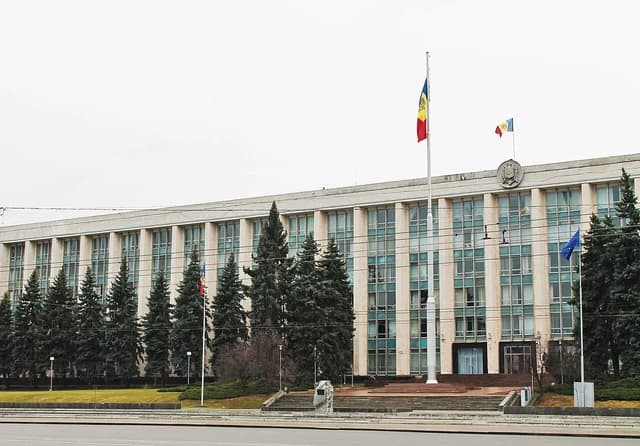
Moldova’s new chance to buy cheaper natural gas from Ukraine could ease winter supply costs, strengthen the country’s bargaining position with existing suppliers and modestly rewire a regional market still shaped by the war in Ukraine.
Moldova Can Buy Cheaper Gas From Ukraine

For a small import-dependent economy, even limited access to lower-priced gas can matter. Energy remains one of the clearest transmission channels from geopolitics into inflation, household budgets and public finances. If Chisinau can source molecules through Ukraine at a discount to alternative routes, the immediate gain is lower procurement cost; the broader effect is leverage, as Moldovan buyers gain another option just as European gas markets are still sensitive to weather, storage levels and transit risk.
Sentiment IndicatorsⓘProprietary · adalytica.com · October 10, 2026
This is a snapshot — live sentiment, awareness and momentum for 130+ markets update continuously in the dashboard.Open AlphaPulse
The timing matters because natural-gas sentiment has been uneven, not decisively bearish. Adalytica’s Natural Gas Market Trade Signals show neutral sentiment at 56, while broader stability sentiment is high, even if awareness is still flagged at “extreme fear.” That combination suggests markets are not pricing a clean, one-way move lower, but are instead balancing supply resilience against geopolitical fragility. In that environment, incremental cross-border supply options can influence local pricing more than they would in a fully oversupplied market.
The price backdrop also underscores how volatile the gas complex remains. U.S. natural gas proxy UNG has swung sharply over the past year, while benchmark-linked energy funds such as USO and BNO have also moved in large ranges, reflecting how quickly commodity markets can reprice on supply shocks, policy shifts or weather-driven demand. For Moldova, the key issue is not headline global prices but the spread between regional import alternatives and whether Ukraine can act as a corridor, source or trading hub with enough reliability to matter.
Ukraine’s role is economically important because it sits at the intersection of production, transit infrastructure and wartime energy logistics. Even if the available volumes are limited, a cheaper Ukrainian option can reduce Moldova’s exposure to a single supplier and improve security of supply. That is especially relevant for a country that has spent recent years trying to reduce vulnerability to Russian gas leverage and broader regional disruptions.
For investors, the direct read-through is limited but not trivial. Lower gas import costs can support Moldovan growth, ease inflation and reduce pressure on the state budget, which is constructive for sovereign risk and domestic utilities. Regionally, any sign that Ukraine is deepening its role in gas trade could be supportive for infrastructure operators, interconnectors and traders positioned around Eastern Europe. The bear case is that the opportunity remains small, contingent on transit conditions and price differentials that can vanish quickly if regional spreads tighten.
The bigger narrative is that Europe’s gas map is still being redrawn in fragments. Moldova’s chance to buy cheaper gas from Ukraine is not a market-moving event on its own, but it is another sign that wartime logistics, infrastructure and cross-border arbitrage continue to shape energy costs long after the initial shock has passed. The economic value will hinge on whether the cheaper option is durable, scalable and insulated from the next supply disruption.
| Entity | Gains | Losses |
|---|---|---|
| Moldova | ▲lower import costs | ▼supplier concentration |
| Ukraine | ▲trading relevance | ▼spare capacity risk |
| Consumers in Moldova | ▲lower energy bills | ▼none immediate |
| Incumbent gas suppliers | ▲less leverage | ▼share of demand |