Moldova’s energy regulator has opened public consultations on new gas prices proposed by Energocom, a move that could quickly feed into household bills, business costs and the country’s inflation outlook as Europe’s gas market remains exposed to geopolitical shock.
Moldova Gas Tariff Review May Lift Inflation
The immediate issue is not just the tariff itself, but the timing. Natural gas pricing in the region has become more sensitive as tensions linked to Iran have kept European energy markets volatile, pushing up broader fuel costs and reinforcing fears of renewed inflation pressure. For Moldova, which relies heavily on imported energy, even a procedural step such as ANRE’s publication for consultation can become a market event because it signals that higher or lower retail prices may soon filter through to consumers and industry.
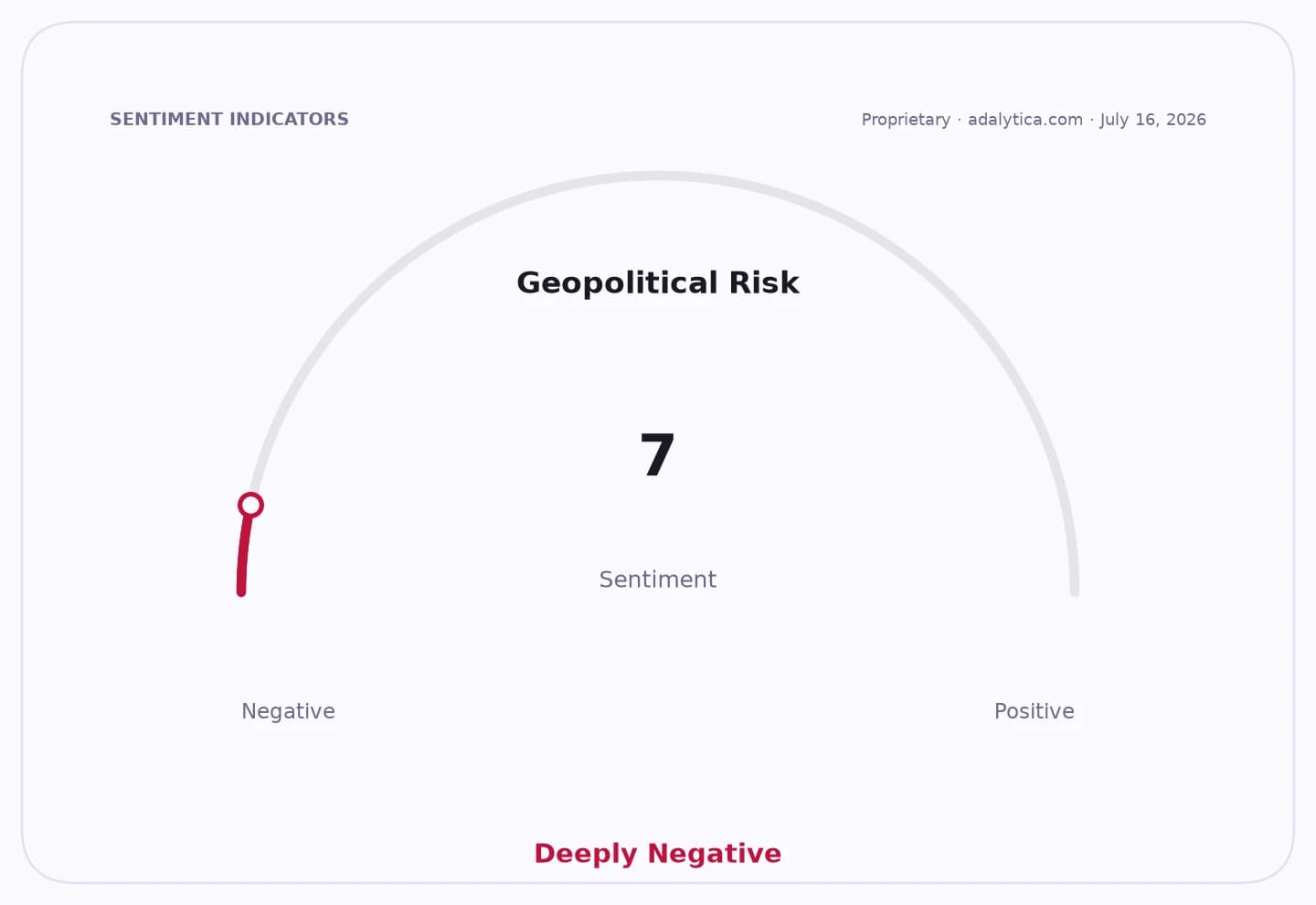
Sentiment IndicatorsⓘProprietary · adalytica.com · July 16, 2026
This is a snapshot — live sentiment, awareness and momentum for 130+ markets update continuously in the dashboard.Open AlphaPulse
That matters economically because gas is still a key input for heating, electricity generation and parts of the manufacturing chain. A higher regulated price would widen pressure on disposable incomes and operating margins at a time when households are already dealing with elevated living costs. It would also complicate the policy response for the central bank, which would have to weigh energy-led inflation against softer demand elsewhere in the economy. If the adjustment is modest, it could help limit subsidy needs and improve the financial balance of the energy system; if it is sharp, the burden would shift more quickly onto consumers and the state.
The contrast with other regional energy moves is also telling. While Indonesian distributor Pertamina Patra Niaga has cut the price of some 12 kg Bright Gas products, Europe continues to see gas prices climb, underscoring how uneven the global energy shock has become. In Europe, and particularly in smaller import-dependent markets, consumers are more exposed to the geopolitical premium embedded in fuel and gas prices. That makes ANRE’s consultation more than an administrative exercise: it is part of the transmission mechanism from global supply risk to domestic inflation.
For investors, the main implications run through regulated utility and energy-sector earnings, sovereign risk and local-currency stability. Higher gas prices can support revenue for suppliers and traders, including Energocom, but they also increase the risk of payment stress among vulnerable end-users and may eventually require policy support. That can weigh on public finances and, by extension, on government borrowing costs. In markets where energy affordability is politically sensitive, tariff decisions can also influence reform momentum and investor confidence in regulated sectors.
The next catalyst will be the final ANRE decision and the scale of any tariff change after the consultation period. Investors will be watching whether the regulator tries to smooth the pass-through to consumers or allows a faster adjustment to reflect international market conditions. Either way, the direction of travel is clear: in a volatile gas market, Moldova’s price-setting process is likely to shape inflation, demand and policy debate well beyond the energy sector.
| Entity | Gains | Losses |
|---|---|---|
| Energocom | ▲Higher allowed recovery | ▼Price-sensitive consumers |
| ANRE | ▲Regulatory credibility | ▼Political pressure |
| Households | ▲Possible tariff smoothing | ▼Higher heating bills |
| Moldova’s government | ▲Better energy balance if pass-through is gradual | ▼Inflation and subsidy strain |