Moldova’s push to market itself as an investment platform into the European Union for Indian companies is a bid to turn geopolitics into capital flows, with the next prime minister signalling that the country wants to be judged on execution rather than rhetoric.
Moldova courts Indian firms as EU gateway

The message from prime minister-designate Vasile Tofan to the Moldova-India Business Forum — “Put us to the test. Come with serious projects” — is economically significant because it frames Moldova not as a small frontier market but as a potential production and logistics base for firms seeking access to the EU single market. For India, which is looking to diversify trade routes and overseas manufacturing footprints, Moldova offers a lower-cost entry point on the EU’s eastern edge, provided the country can offer predictable regulation, infrastructure and legal protection.
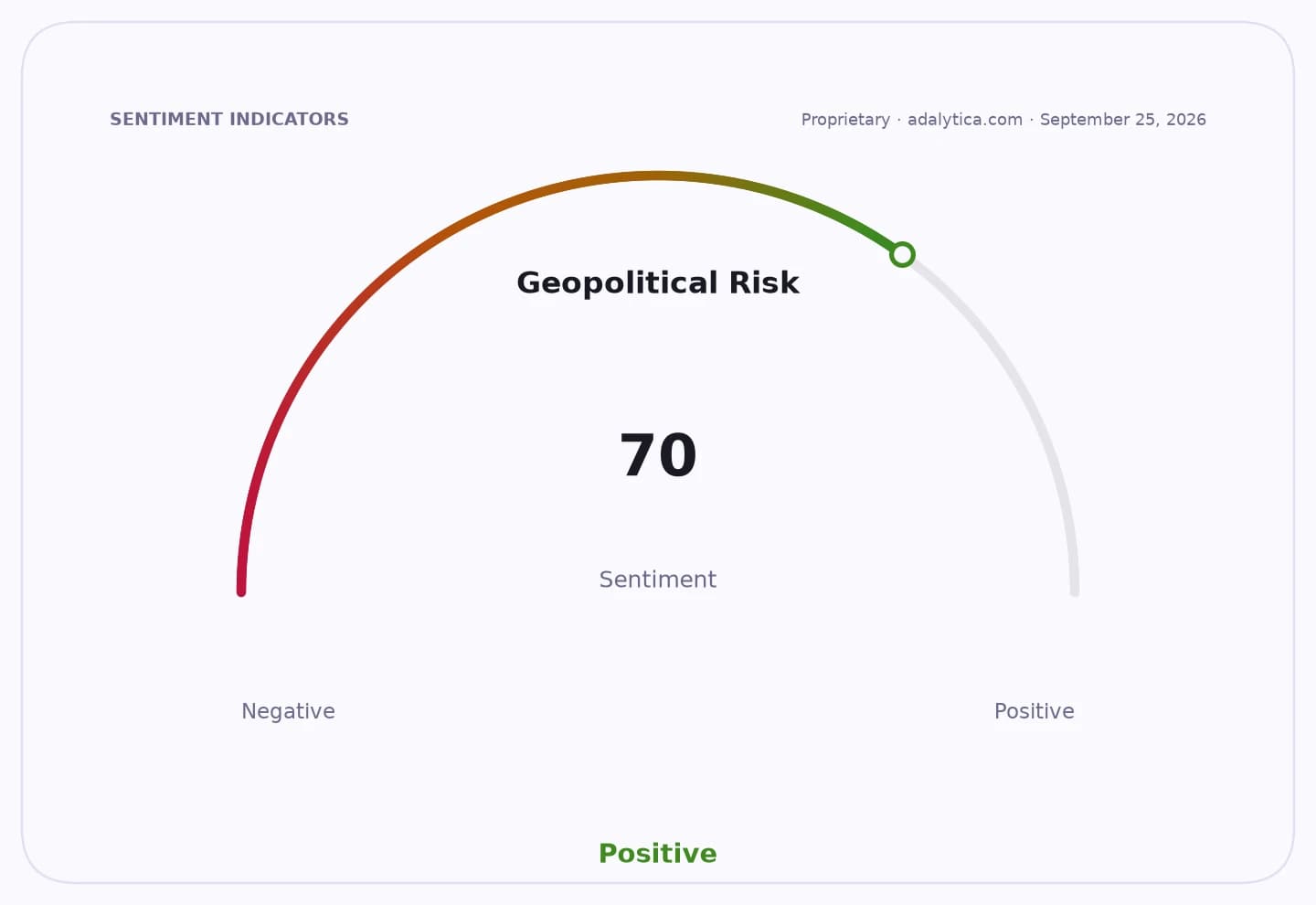
Sentiment IndicatorsⓘProprietary · adalytica.com · July 20, 2026
This is a snapshot — live sentiment, awareness and momentum for 130+ markets update continuously in the dashboard.Open AlphaPulse

That matters because Moldova is trying to sell something more durable than tax incentives. Its pitch is that proximity to the EU, together with a reform agenda and deeper Western alignment, can compensate for its limited domestic market. For investors, the real question is whether Moldova can convert strategic geography into bankable operating conditions. In frontier markets, the gap between political ambition and investability is usually decided by institutions: customs efficiency, dispute resolution, currency stability and policy continuity.
The timing also reflects a wider regional shift. Moldova has emerged as one of the Eastern European states most exposed to the security and economic consequences of the war in Ukraine, and EU backing has become part of the country’s investment case. Brussels has already committed support to Moldovan security, including 120 million euros for air defence, underscoring the bloc’s view that Moldova’s stability is tied to Europe’s own perimeter. That external anchor can help reduce perceived political risk, but it does not eliminate it.
For Indian companies, the opportunity is clearest in light manufacturing, agro-processing, warehousing and selected business services that can serve EU customers with shorter supply chains than Asia-based production allows. Moldova’s cost base is likely its biggest advantage. Its challenge is scale. Without a larger domestic market or a deep industrial ecosystem, it must persuade investors that it can act as a platform rather than just a destination.
That is where the bull and bear cases diverge. The bull case is that Moldova uses EU integration momentum and external support to create a credible nearshoring node for companies from India and other non-EU markets. The bear case is that regulatory fragility, infrastructure gaps and regional security risk keep investment to a trickle, making the country a diplomatic talking point rather than a commercial hub.
Markets are unlikely to price this story as a near-term growth catalyst, but investors in regional infrastructure, industrial real estate, logistics and frontier-market debt will watch whether the government can translate forum language into memorandums, licenses and actual capital expenditure. The next proof point is whether serious Indian projects arrive — and whether Moldova can keep them once they do.
| Entity | Gains | Losses |
|---|---|---|
| Moldova | ▲FDI pipeline | ▼Complacency risk |
| Indian companies | ▲EU market access | ▼Higher execution risk |
| EU | ▲Nearshore supply base | ▼More exposure to frontier risk |
| Russia-aligned actors | ▲None | ▼Moldova’s Western drift |