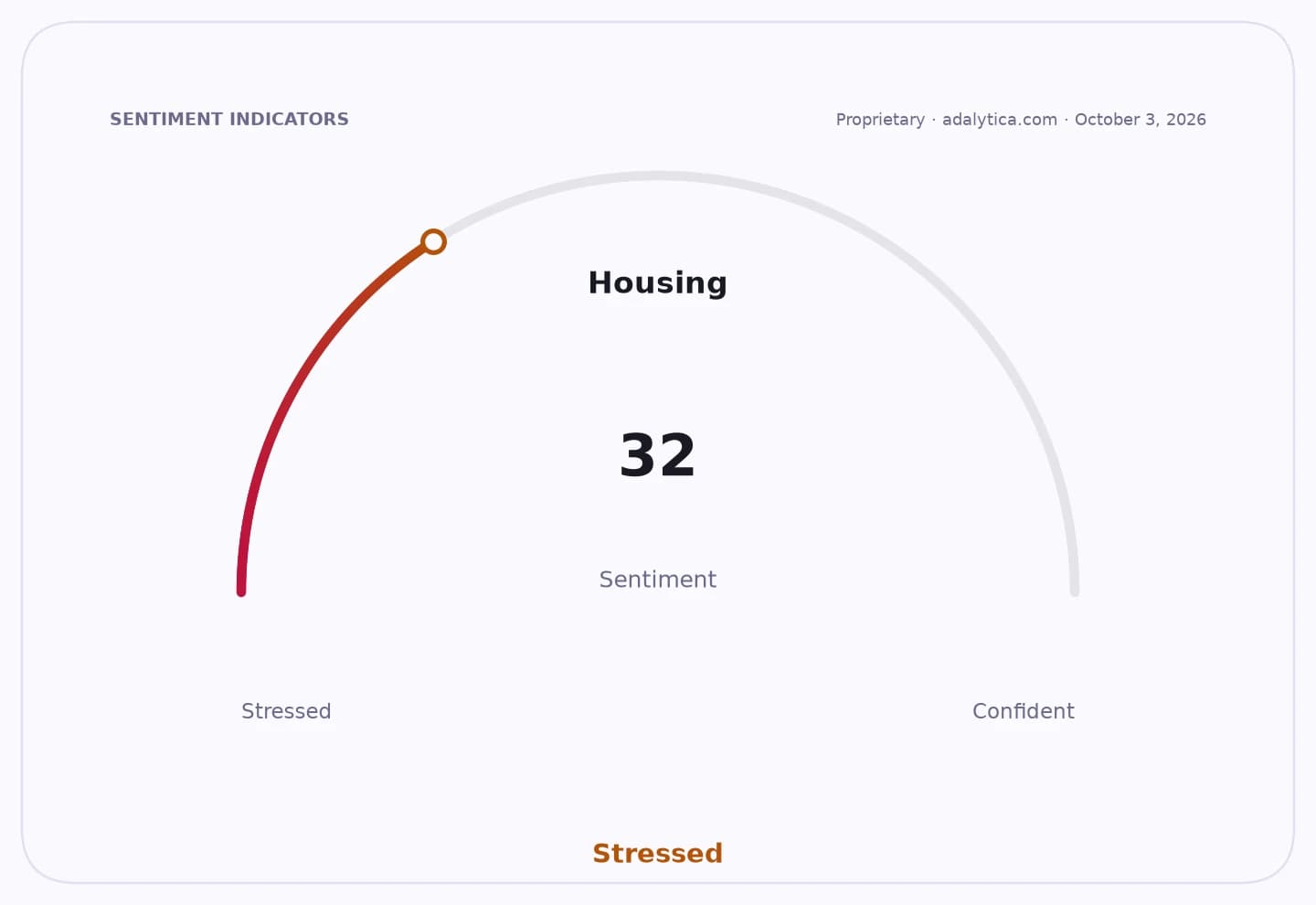
Mongolia is moving to put large families at the front of the housing queue, with a draft family-development law set to give households with three or more children first access to mortgage loans and, in some cases, priority for rental housing and government-backed down-payment support.
Mongolia draft law gives 3+ child families housing priority
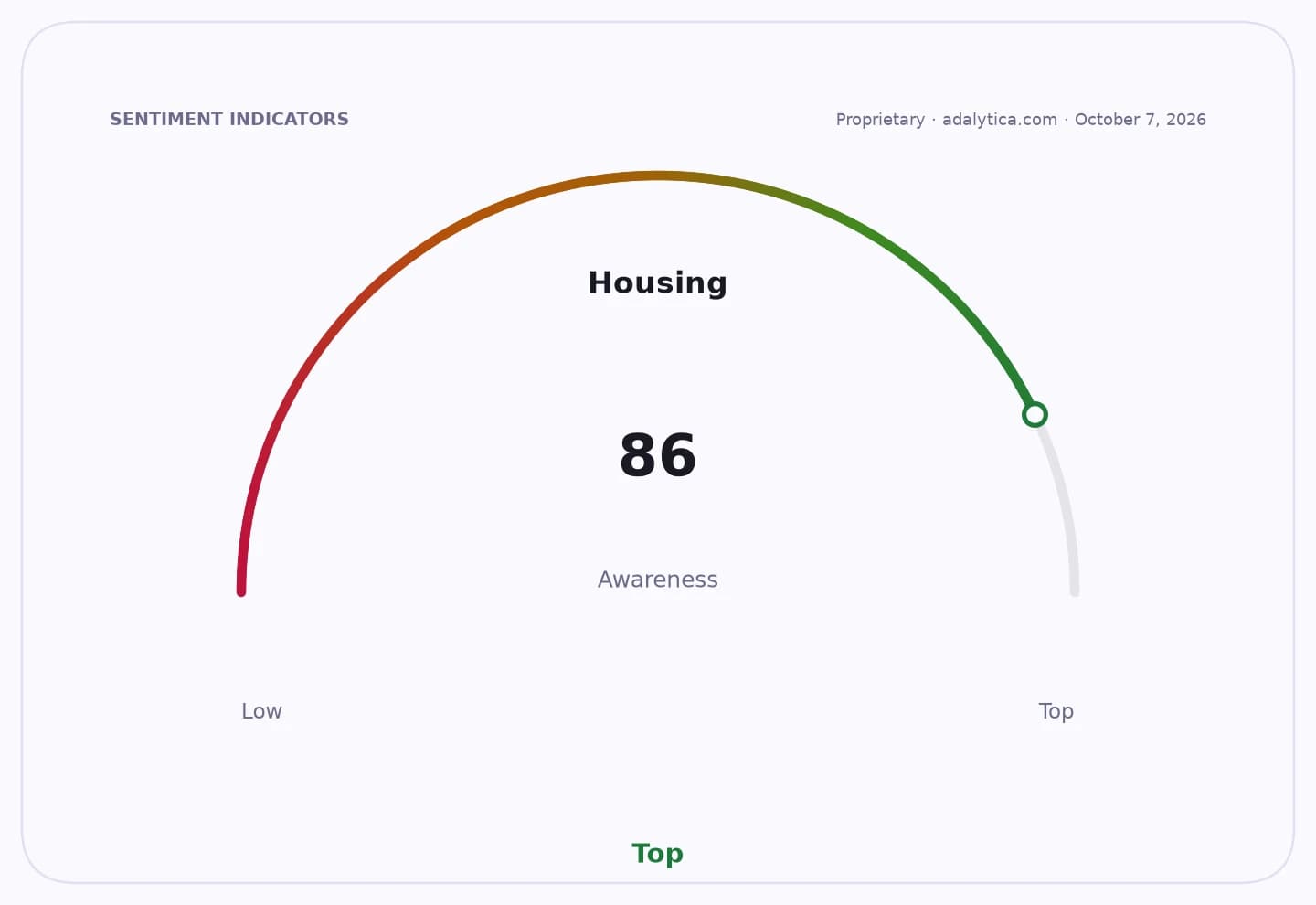
The proposal matters because it turns family policy into a direct housing-market intervention at a time when affordability is one of the biggest constraints on household formation and birth rates. By tying mortgage access, loan guarantees and workplace flexibility into one framework, the government is signaling that it wants to use the budget and the credit system to push more births, stabilize households and keep younger families in the housing market.
Sentiment IndicatorsⓘProprietary · adalytica.com · October 7, 2026
This is a snapshot — live sentiment, awareness and momentum for 130+ markets update continuously in the dashboard.Open AlphaPulse
The clearest economic lever is housing credit. Under the draft, families with at least three children would be placed first for mortgage participation, while the state-backed Credit Guarantee Fund could cover as much as 60% of the down payment. The bill also envisages priority access to rental housing for such families. In a market where mortgage access is often the difference between renting and buying, that is a meaningful subsidy to demand, particularly for mid-income households that are otherwise squeezed by rates, upfront cash requirements and limited supply.
The timing also shows how governments in lower-fertility economies are trying to move beyond cash handouts and toward targeted demographic policy. Labour and Social Protection Minister T.Aubakir said the state plans to spend 1.5 trillion tugriks on child payments in the 2027 budget, while overall welfare spending would total 2.7 trillion tugriks under the welfare law. His argument was that Mongolia has become too reliant on broad welfare and should separate family-support measures into a distinct law.
That separation has investor relevance because it suggests a more durable policy regime for housing-related demand. If mortgage priority and guarantees become structural, the housing market could see a steadier flow of subsidized buyers, supporting developers focused on entry-level and family homes. The policy also creates a likely beneficiary list: lenders with mortgage pipelines, builders selling affordable units and rental providers connected to state allocation systems.
Still, the economics are not one-sided. The government is trying to add benefits without blowing out the fiscal bill, and officials said the new family-development centres would use existing labour and welfare agency staff rather than build a new bureaucracy. That implies the administration is sensitive to spending pressure and to the risk of turning a pro-natalist policy into another open-ended entitlement. The bill’s design suggests the state wants to reallocate support rather than simply expand it.
For investors, the key question is whether the policy can lift family formation and home purchase activity without distorting credit quality or worsening affordability for everyone else. Families with more children may get to the front of the line, but that could shift pressure onto other first-time buyers unless housing supply expands alongside the subsidy. If supply remains tight, the policy may support developers and lenders in the short run while doing less to solve the structural affordability problem.
The housing backdrop is already favorable to government intervention. Conventional technical indicators on U.S. homebuilders show mixed signals: D.R. Horton and Lennar have both fallen below their 200-day moving averages, while NVR has also weakened after a volatile stretch. That speaks to a broader global pattern in which housing demand remains constrained by cost and financing conditions, even before policy starts redirecting credit to favored households.
The new Mongolian law, if passed, would therefore be less about charity than about steering capital. It would use mortgage access, loan guarantees and workplace protections to make large families a preferred class in the housing market. For lenders and homebuilders, that could create a protected demand segment. For the state, it is an attempt to answer the birth-rate problem with one of the few tools that moves quickly: credit.
| Entity | Gains | Losses |
|---|---|---|
| Families with 3+ children | ▲Faster mortgage access | ▼Other first-time buyers |
| Homebuilders | ▲More subsidized demand | ▼Pricing discipline |
| Mortgage lenders | ▲Priority loan pipeline | ▼Credit risk if underwriting loosens |
| State budget | ▲Demographic policy leverage | ▼Fiscal flexibility |