A new political platform in Montenegro, Stega - European Club 28, has formally launched ahead of the June 13, 2027 election, adding a fresh pro-European challenger at a time when the country’s institutional direction and EU path remain politically contested.
Montenegro Stega launches ahead of 2027 election
The significance is less about another name on the ballot than about what Stega is trying to occupy: the space between established parties and a growing pool of urban, educated and politically engaged voters who are frustrated with polarization but still want a firmly pro-EU, pro-NATO line. In a small state where coalition arithmetic often decides power, even a new platform that can mobilize a few percentage points can affect government formation, policy continuity and the pace of European integration.
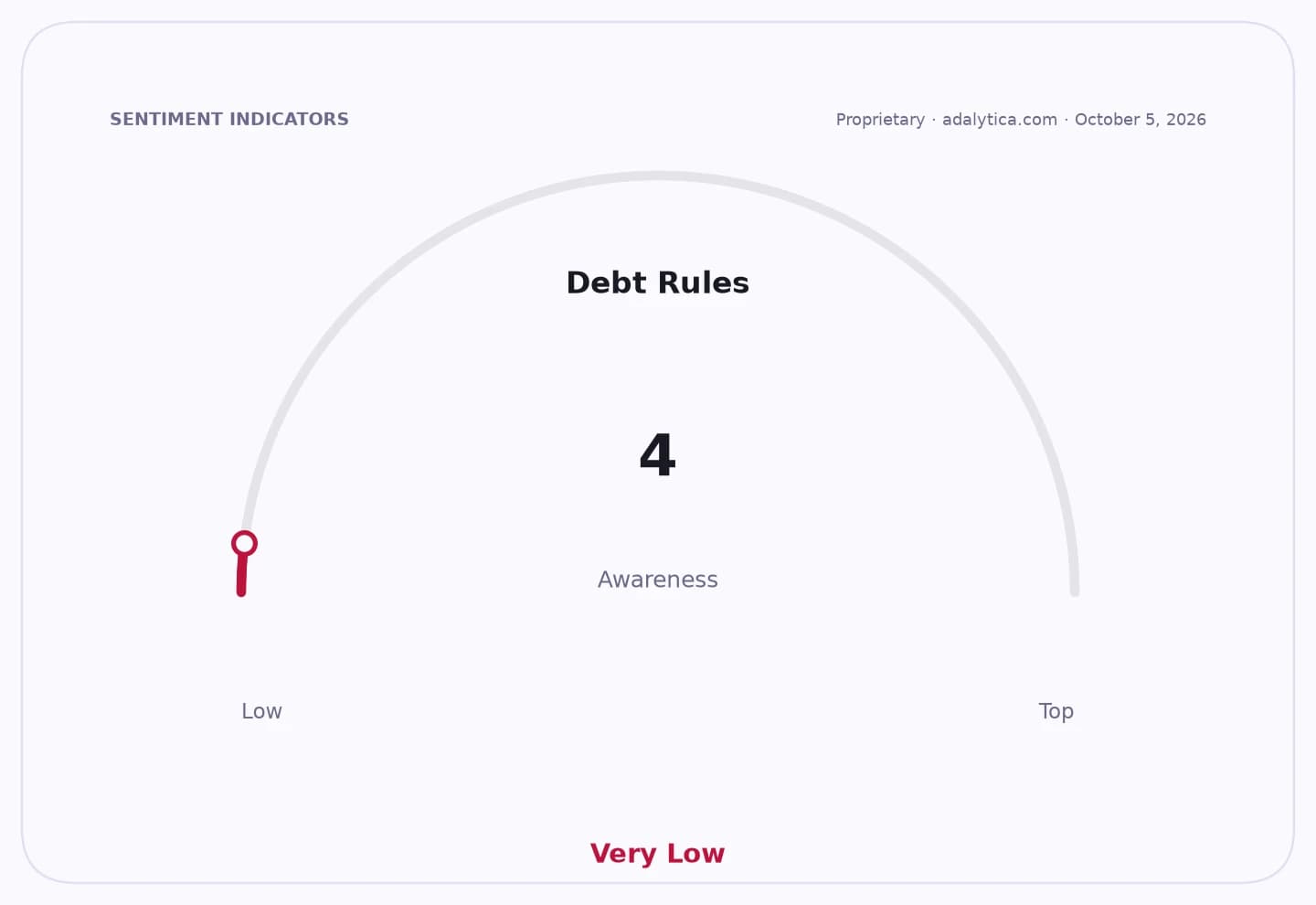
Sentiment IndicatorsⓘProprietary · adalytica.com · October 5, 2026
This is a snapshot — live sentiment, awareness and momentum for 130+ markets update continuously in the dashboard.Open AlphaPulse
Stega is positioning itself as a civic platform rather than a traditional party, a formulation that could help it attract independents, professionals and younger voters who are wary of party structures but open to a reformist message. Its founders used the launch to stress non-negotiables around Montenegro’s multiethnic character, secularism, rule of law and NATO membership, framing the initiative as a response to what they described as the country’s urgent political moment.
That message matters economically because Montenegro’s reform trajectory is tightly linked to investor confidence, EU accession credibility and the government’s ability to deliver on governance standards. A platform that can reinforce the pro-reform camp may support policy stability, but a fragmented field could also complicate coalition-building and slow decisions on fiscal discipline, institutional reform and the legal certainty foreign investors seek.
The launch also fits a broader regional pattern in which pro-European forces are trying to translate support for accession into political organization. The EU’s recent backing for Moldova’s reform push has underscored Brussels’ willingness to reward credible candidates, while also sharpening the contrast with Western Balkan states where reform momentum can be hostage to domestic political battles. For Montenegro, the stakes are not symbolic: accession progress remains one of the clearest anchors for public policy, external financing and long-term capital flows.
For investors, the immediate implication is to watch whether Stega becomes a niche civic initiative or a real electoral factor. If it draws support from centrist and pro-EU voters, it could strengthen the reformist camp and improve policy continuity. If it merely splits that electorate, it may make coalition negotiations harder and leave space for slower-moving, less market-friendly outcomes.
The next test will be whether the platform can turn its public profile into a detailed economic and governance agenda. Its ability to articulate positions on institutions, fiscal management and EU alignment will determine whether it becomes a meaningful political force or simply another protest-era vehicle entering a crowded field ahead of 2027.
| Entity | Gains | Losses |
|---|---|---|
| Stega - European Club 28 | ▲New political visibility | ▼Must prove electoral depth |
| Pro-EU, civic voters | ▲Fresh alternative | ▼Risk of vote splitting |
| Montenegro reform agenda | ▲Stronger civic backing | ▼More fragmented opposition field |
| Established parties | ▲Pressure to clarify positions | ▼Loss of centrist support |