Morgan Stanley’s push to expand its crypto lineup with Ether and Solana exchange-traded products is another sign that digital assets are moving from the speculative fringes of finance into the core product shelves of Wall Street.
Morgan Stanley Expands Ether and Solana Access
That matters because the biggest investment banks do not widen distribution for a fad they expect to vanish. By offering regulated access to two of the market’s most important blockchain networks, Morgan Stanley is helping make crypto exposure easier for wealth clients, retirement savers and advisers who want the upside without the operational headaches of buying tokens directly. For investors, the real story is not the day-to-day price of Ether or Solana. It is the long-run validation that a large, trusted intermediary sees enough durable demand to make these products part of a broader portfolio toolkit.
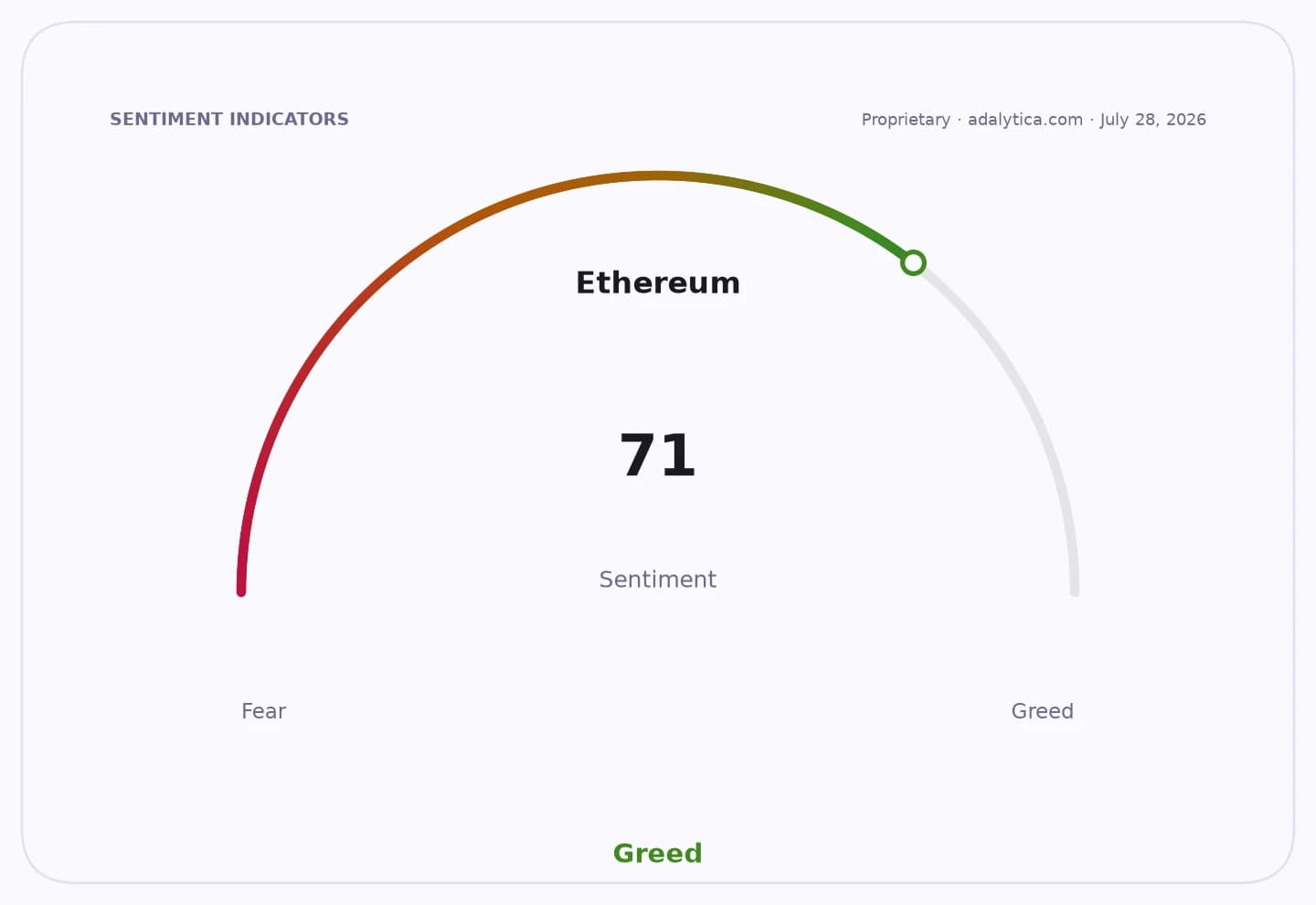
Sentiment IndicatorsⓘProprietary · adalytica.com · July 28, 2026
This is a snapshot — live sentiment, awareness and momentum for 130+ markets update continuously in the dashboard.Open AlphaPulse
The economics are straightforward. Every new listed crypto product lowers friction, widens the potential buyer base and deepens market liquidity. That can bring more capital into Ether and Solana over time, especially from investors who prefer exchange-traded wrappers, familiar custody standards and the compliance infrastructure of a major bank. It also strengthens the case that crypto is evolving from a single-asset bet on Bitcoin into a more diversified ecosystem built around payments, smart contracts and decentralized applications.
The timing is notable. Ethereum remains the dominant smart-contract network, while Solana has carved out a growing niche in faster, cheaper transactions and a lively developer base. At the same time, investor appetite for digital assets has stayed resilient even after bouts of volatility. Adalytica’s Ethereum Fear & Greed snapshot still shows sentiment in “Greed” territory, and Bitcoin sentiment is neutral, suggesting the market is not in a euphoric blow-off but is still willing to engage. That is often the kind of backdrop in which regulated products can gain traction: enough enthusiasm to attract flows, enough caution to keep the long-term story intact.
For Morgan Stanley, the move is about more than product breadth. It is about competing for the next generation of wealth-management assets. Crypto-native investors, younger clients and advisors looking to diversify beyond stocks and bonds are increasingly asking for exposure to digital assets in institutional packaging. Banks that can provide that access may keep more assets in-house and earn fees from a market that is still early in its adoption curve.
There are risks, of course. Crypto remains volatile, regulation is still evolving, and the value of Ether and Solana will continue to swing with market sentiment, network usage and broader risk appetite. But for long-term investors, that volatility is exactly why the entrance of a firm like Morgan Stanley matters. It suggests the market is building the plumbing needed for digital assets to become a lasting allocation rather than a passing trade.
For investors, the takeaway is simple: this is another milestone in crypto’s march toward legitimacy. Ether and Solana may not be household names in every portfolio today, but the expansion of regulated access argues that they are becoming increasingly hard for Wall Street to ignore. Worth watching, and for patient investors, worth considering as part of a diversified long-term approach.
| Entity | Gains | Losses |
|---|---|---|
| Morgan Stanley | ▲More product breadth | ▼Less exclusivity in crypto access |
| Ether and Solana | ▲Wider institutional demand | ▼Continued volatility |
| Wealth clients/advisers | ▲Easier regulated exposure | ▼Less direct control |
| Crypto-native exchanges | ▲Validation of asset class | ▼Share of new flows |




