Morocco’s inflation accelerated to 1.9% in October, the highest in 20 months, underscoring how rising transport and energy costs are starting to erode household purchasing power even as overall price growth remains below levels seen in many emerging markets.
Morocco Inflation Rises to 1.9% in October
The pickup matters because it comes with pressure concentrated in the parts of the economy consumers feel most directly. Non-food prices rose 3.1%, while transport costs jumped 11.6% as diesel hit a record 17 dirhams a litre, according to official data. Food inflation was more modest at 0.3%, but that has done little to offset the squeeze from fuel, freight and other administered or imported costs. For policymakers, the reading is a reminder that Morocco’s inflation shock may be re-accelerating from the supply side rather than from broad domestic demand.
Sentiment Indicators
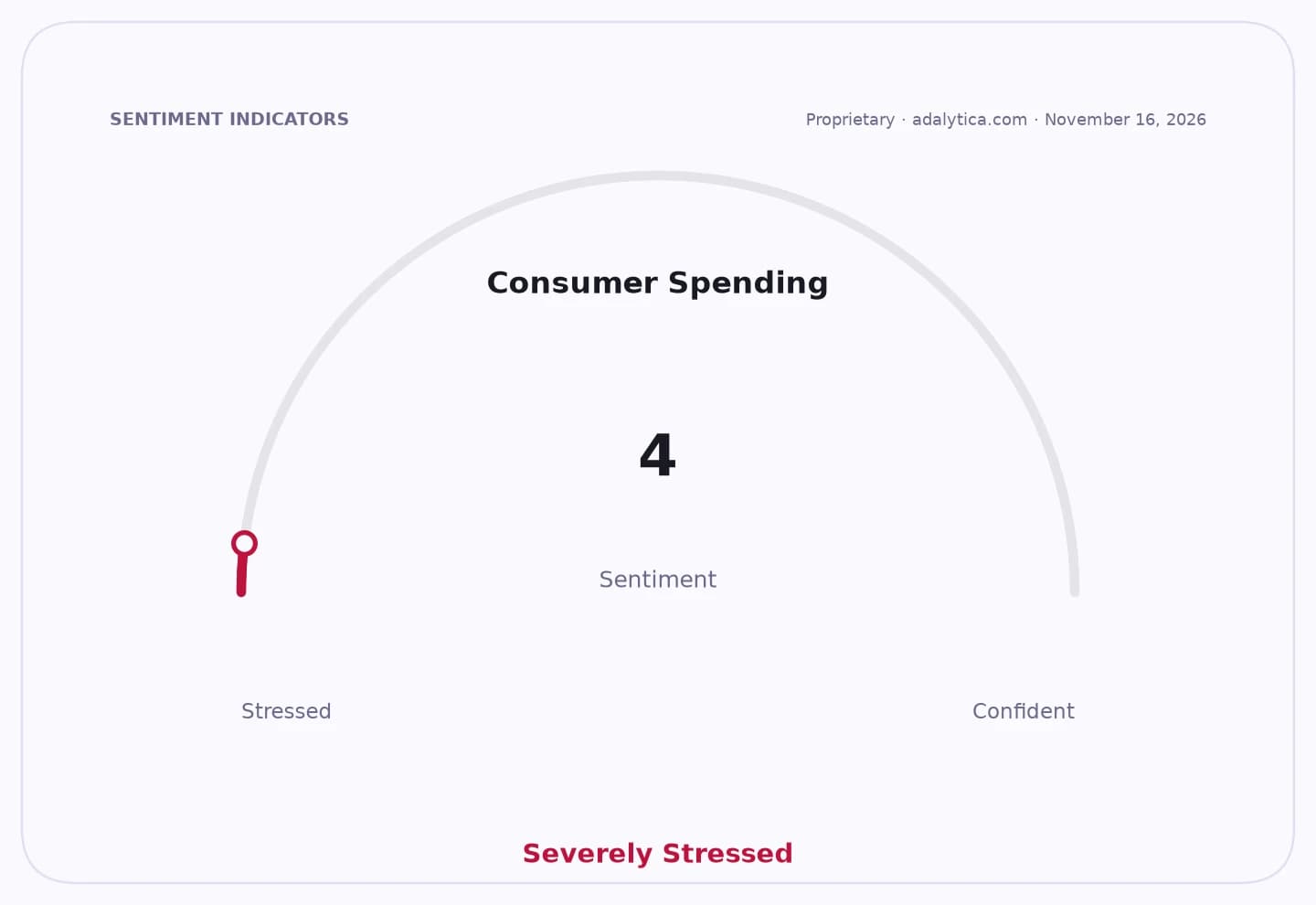
Consumer Spending
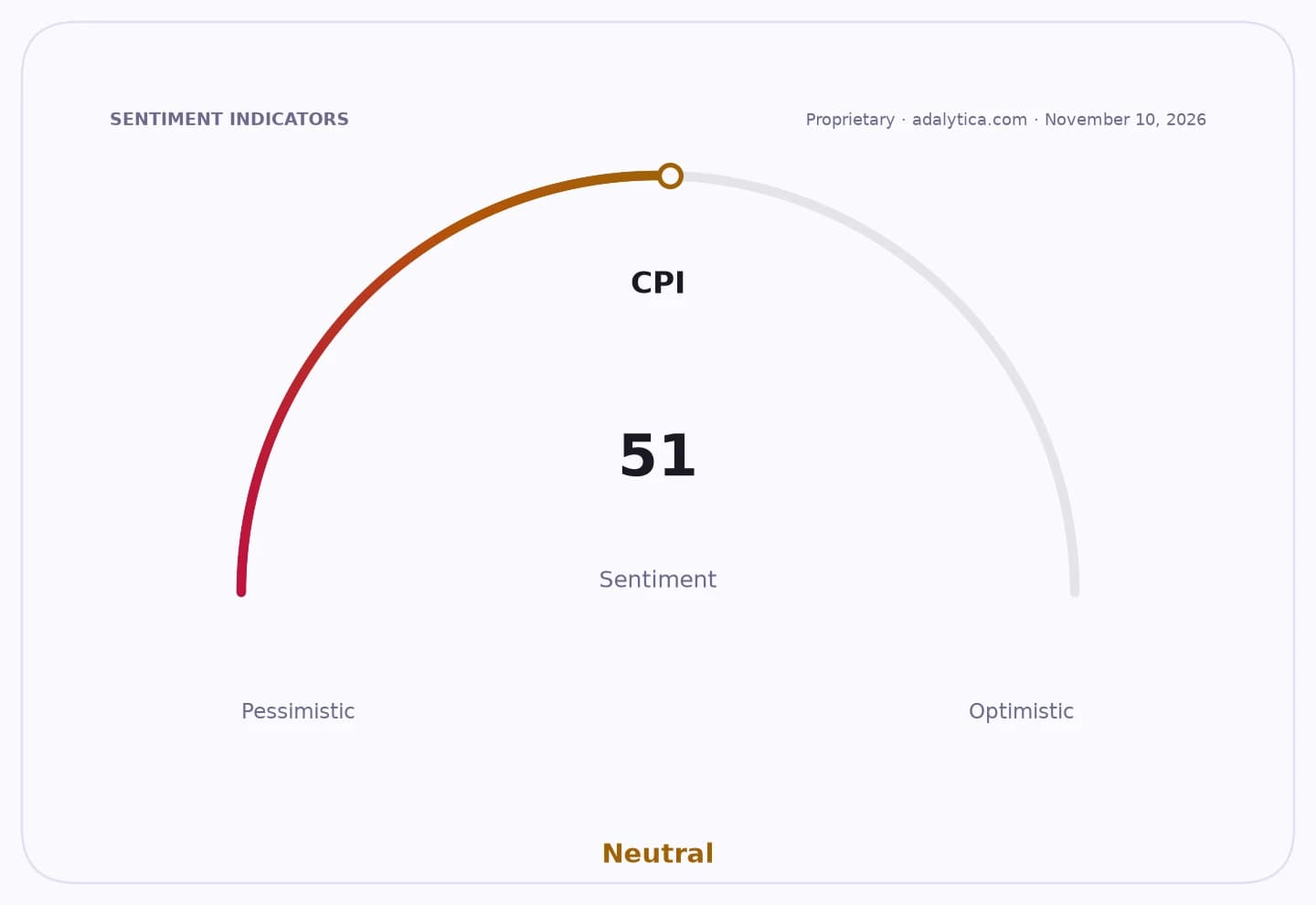
That distinction is important for investors. A supply-driven inflation pulse is harder to tame quickly and can complicate the government’s effort to keep inflation near 1.5% this year and 2% through 2031 while still targeting around 5% growth. It also raises questions over the path for interest rates and fiscal support if price pressures broaden. Adalytica’s consumer spending sentiment gauge is in fear territory, suggesting households are already cautious, while its CPI sentiment reading remains neutral but volatile, reflecting uncertainty around the durability of the latest price gains.
Rabat has already responded by temporarily suspending export permits for some vegetables to boost domestic supply, a move that highlights how the authorities are trying to contain living-cost pressures without abandoning the country’s growth and investment agenda. Morocco is still pushing ahead with large infrastructure spending and a broader industrial strategy, but higher transport costs can feed through to construction, distribution and private consumption, making it more expensive to deliver that growth.
For bond investors and multinational companies with exposure to Morocco, the key question is whether October marks a one-off energy-led bump or the start of a stickier inflation trend. The answer will shape real incomes, policy flexibility and the cost of doing business into 2027, especially if global commodity prices or logistics costs stay elevated.
| Entity | Gains | Losses |
|---|---|---|
| Moroccan fuel suppliers | ▲Higher nominal revenues | ▼Public pressure on pricing |
| Consumers | ▲Temporary food supply relief | ▼Higher transport and living costs |
| Government of Morocco | ▲More room to manage supply | ▼Less policy flexibility on inflation |
| Transport and construction firms | ▲None | ▼Higher operating and freight costs |