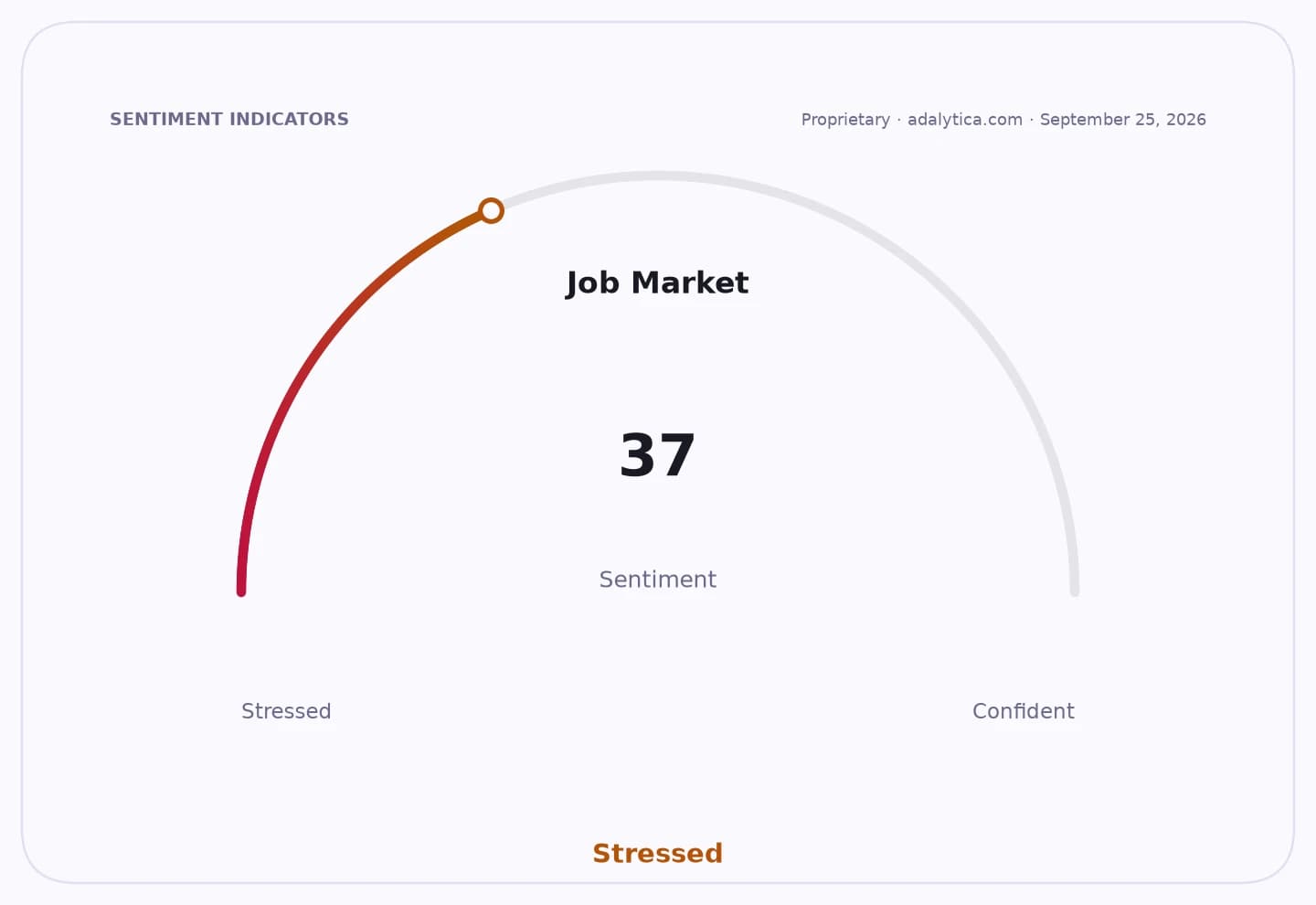
The mortgage market is tilting toward market-priced loans fast, and that matters because it shows housing demand is being reshaped by affordability stress, not just by interest rates. Over the past month, the share of market mortgages rose one and a half times as apartment shortages, higher home prices and stricter underwriting pushed borrowers away from easy credit and forced lenders to compete harder for a shrinking pool of qualified buyers.
Mortgage market tilts to market-priced loans as demand cools

That shift is economically important because it signals a housing market that is cooling in volume even as financing costs stay sticky. Banks have cut rates to attract new customers, but the benefit is concentrated in fresh origination rather than existing homeowners, many of whom will not see relief unless they refinance. In other words, lower posted rates are not translating into broad-based balance-sheet improvement for households. The result is a market where borrowers are more selective, lenders are chasing fewer deals and credit quality is likely to become a bigger issue than headline loan growth.
Sentiment IndicatorsⓘProprietary · adalytica.com · August 4, 2026
This is a snapshot — live sentiment, awareness and momentum for 130+ markets update continuously in the dashboard.Open AlphaPulse
The strain is already showing up in related parts of the housing chain. Demand for individual home construction has dropped 30% to 50% over the past 18 months, a sharp warning that higher financing costs and weaker affordability are feeding directly into builders’ order books. Cottage builders losing half their clients is not a seasonal wobble; it is a sign that private residential investment is under pressure and that the housing slowdown is broadening beyond apartments into detached homes and renovation activity.
For investors, the opportunity and the risk sit on opposite sides of the same trade. Mortgage originators such as Rocket Companies and United Wholesale Mortgage can benefit if refinancing activity eventually improves, but the near-term backdrop is harsh: Rocket’s shares have been under pressure, with the stock recently trading below its 200-day moving average, while UWM has fallen even more sharply and remains well beneath its long-term trend. That kind of technical damage usually reflects a market that is discounting lower volumes, tighter spreads and weaker pricing power before the fundamentals fully show up.
The deeper takeaway is that housing is becoming a capital-allocation story, not just a rate story. If mortgage credit is tightening while prices remain elevated, the market is likely to keep punishing marginal buyers, which can eventually weigh on homebuilders, construction suppliers and mortgage insurers. The winners are lenders and servicers that can capture scarce, high-quality borrowers; the losers are households stretching for affordability and builders dependent on easy financing.
The market underestimates how long this can last. Until prices reset or credit standards ease, mortgage demand is likely to stay selective, refinancing will remain a niche trade and housing-related equities will keep trading as a macro-sensitive, not a cyclical-recovery, opportunity. For investors, that argues for owning the best-capitalized mortgage platforms and avoiding the most leveraged housing names until the next clear inflection point in credit demand.
| Entity | Gains | Losses |
|---|---|---|
| Mortgage lenders with strong refinance pipelines | ▲Higher pricing power | ▼Smaller borrower pool |
| Existing homeowners | ▲Potential rate cuts on new loans | ▼Little benefit without refinancing |
| Homebuyers and first-home buyers | ▲More lender competition | ▼Negative equity risk |
| Builders and cottage developers | ▲None | ▼Falling demand, weaker orders |