Homeowners looking for relief from mortgage payments are still running into a stubborn reality: refinancing only works when borrowing costs fall far enough to offset fees, and the recent move in Treasury yields suggests that window remains narrow.
Mortgage Rates 6.66% Keep Refinancing Narrow
The 10-year US Treasury yield, a key benchmark for fixed mortgage pricing, has climbed to 4.68%, near the highest level in the data provided and above the 4.66% forecast for July 31. The 30-year mortgage rate is even more telling, sitting at 6.66% and forecast to edge up to 6.707%, while the federal funds rate remains far lower at 3.63%. That gap shows mortgage borrowers are not getting the benefit of the lower policy rate they may expect, because long-term funding costs and lender spreads continue to keep home loans expensive.
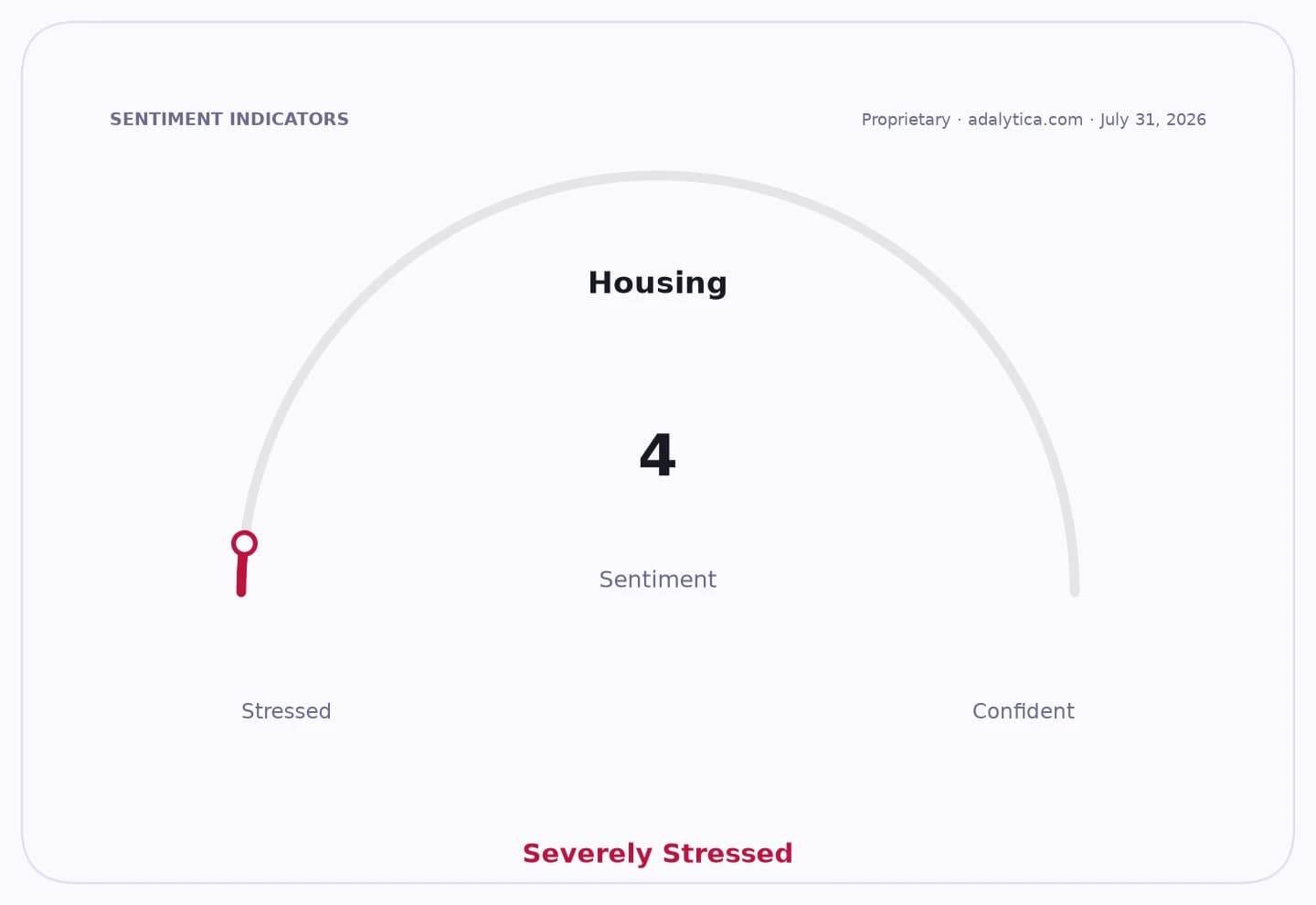
Sentiment IndicatorsⓘProprietary · adalytica.com · July 31, 2026
This is a snapshot — live sentiment, awareness and momentum for 130+ markets update continuously in the dashboard.Open AlphaPulse
For households, that means the old “buy now, refinance later” pitch has become much less reliable. A homeowner who locked in a loan when rates were near 5% or below still has a meaningful incentive to refinance, but millions of borrowers who bought in the last two years are sitting on rates too close to current offers to justify the upfront costs. The result is a market where refinancing activity can improve at the margins, yet still remains well below the boom levels that followed the pandemic-era rate collapse.
That backdrop matters for mortgage lenders and investors alike. Rocket Companies, one of the most rate-sensitive names in the sector, closed at $12.90 on July 31, below its 200-day moving average of $16.52, a sign the market is still discounting a weaker refinancing environment. United Wholesale Mortgage, which specializes in mortgage brokerage, finished at $1.82, also well under its 200-day average of $3.79. By contrast, PennyMac Financial Services ended at $75.41, below its 200-day average of $103.80, but with a stronger balance-sheet profile than some rivals. The divergence reflects a simple truth: when refinancing demand is thin, lenders and mortgage platforms with more purchase-loan exposure or more diversified revenue streams tend to be better insulated than pure refinance plays.
DGS10 vs FEDFUNDS — macro contextadalytica.com
Explore this data interactively — full history, time series and cross-market comparisons.Open AlphaPulse
Technical indicators point to a market still lacking conviction. Rocket’s RSI reading was 40.6 on July 31, while UWM’s was 38.5 and PennyMac’s 38.3, all consistent with subdued momentum rather than a durable recovery. For investors, that suggests the recent bounce in rate expectations has not yet translated into a convincing turn in mortgage volumes.
The broader housing picture is also becoming more uncomfortable. Adalytica’s Housing and Rent Inflation Sentiment gauge sits in “Extreme Fear,” underscoring how strained affordability remains. That is an important macro signal because high mortgage rates do more than slow refinancing; they suppress turnover, discourage move-up buying and keep existing homeowners locked into older loans. In turn, that reduces origination volume across the industry and leaves banks, brokers and servicers fighting over a smaller pool of eligible borrowers.
For policymakers, the tension is clear. The Federal Reserve has eased policy from its peak, but mortgage rates are still anchored near levels that keep housing activity subdued. Until long-term yields and mortgage spreads come down more meaningfully, refinancing will stay selective, not broad-based — good news for borrowers with a wide rate advantage, but a continued headwind for the industry’s earnings power.
| Entity | Gains | Losses |
|---|---|---|
| Homeowners with older loans | ▲Potential savings from refi | ▼Higher payment burden |
| Mortgage lenders | ▲More selective refinance flow | ▼Lower origination volume |
| Rocket / UWM | ▲Any pickup in rate-sensitive demand | ▼Weak refinancing market |
| PennyMac / diversified lenders | ▲Relative resilience | ▼Still-pressured housing activity |




