The average 30-year U.S. mortgage rate has climbed to 6.58%, its highest level in nearly a year, and that matters because every basis point still acts like a tax on housing affordability. For would-be buyers, the move pushes monthly payments higher just as home prices remain sticky. For the broader economy, it threatens to keep existing-home turnover, refinancing activity and residential construction subdued for longer.
Mortgage Rates Pressure Housing and Builder Stocks
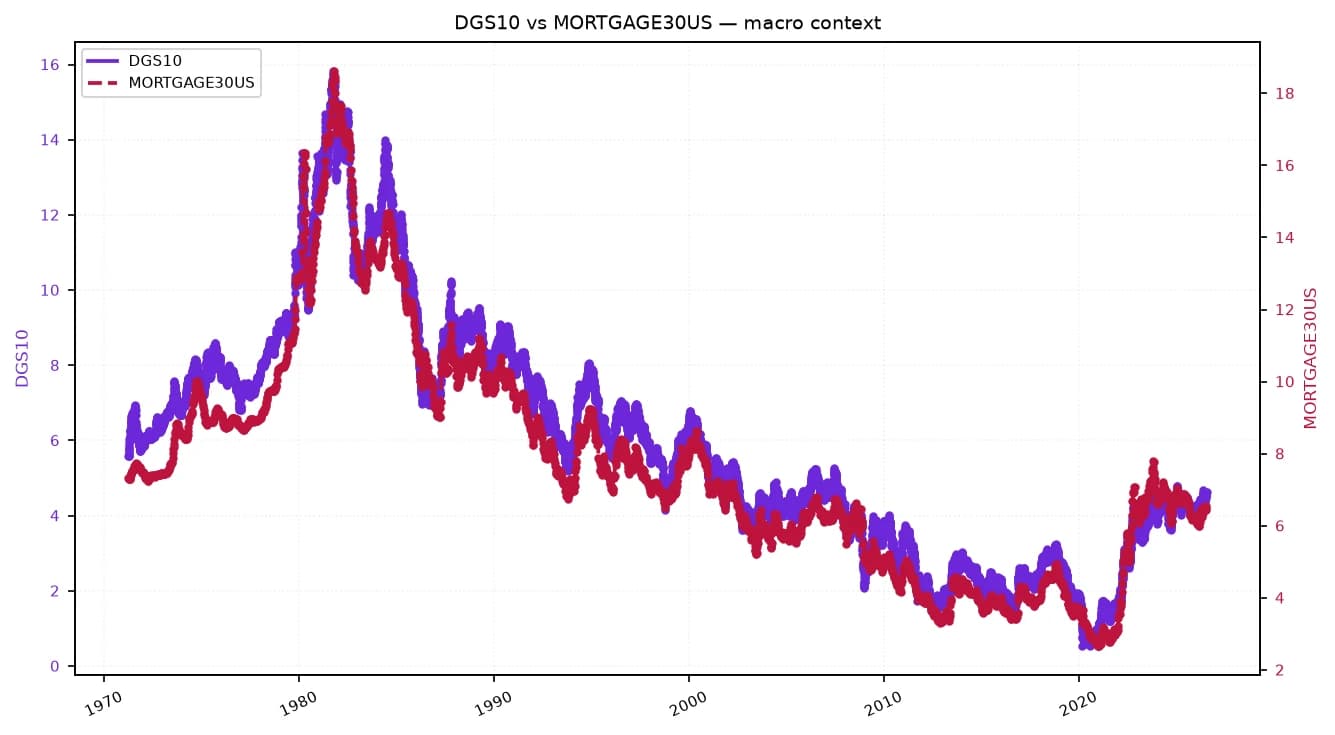
The rise in borrowing costs is part of a bigger story: the bond market is repricing inflation and growth risk, and mortgage rates are following Treasury yields higher. The 10-year Treasury note was trading around 4.64% in the latest data, up from 4.55% only days earlier and near the highest level in more than a year. That matters because mortgage pricing tracks long-term yields closely, so even modest moves in Treasuries can quickly translate into tougher financing conditions for households.
Sentiment IndicatorsⓘProprietary · adalytica.com · July 23, 2026
This is a snapshot — live sentiment, awareness and momentum for 130+ markets update continuously in the dashboard.Open AlphaPulse
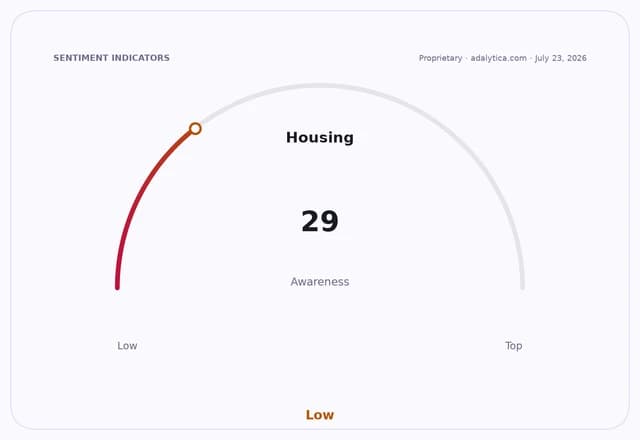
Investors should care because housing is one of the most rate-sensitive corners of the economy. Higher mortgage rates usually mean fewer home sales, slower price growth and less demand for everything tied to a move — from appliances and furnishings to brokerage and lending services. That is exactly why housing ETFs have been under pressure. The iShares U.S. Home Construction ETF has slid below its 200-day moving average, while the iShares MBS ETF has also weakened, suggesting investors are bracing for more pressure on builders and mortgage assets.
The industry data support that cautious view. U.S. housing starts recently ran at 1,199,000 in May before rebounding to 1,427,000 in June, but the forecast for July points to 1,333,300, underscoring a market that is still struggling to find a steady footing. In other words, one strong month does not erase the drag from financing costs that remain high by historical standards. The latest mortgage move reinforces a simple truth: if the 30-year rate stays above 6.5%, the housing market is likely to remain affordability constrained rather than exuberant.
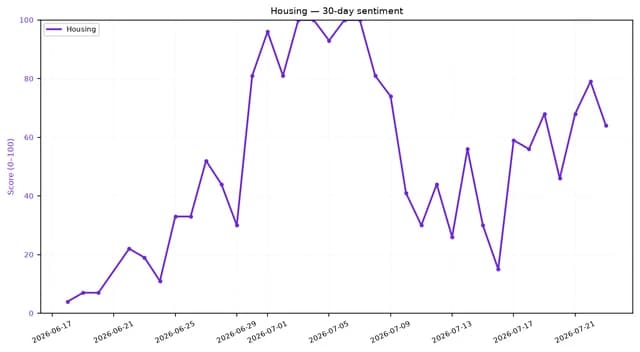
That has different consequences for different players. Homebuilders and mortgage originators face a tougher near-term backdrop, while cash buyers and existing owners with locked-in low-rate loans keep an advantage. Long-term investors should remember that this is not a thesis breaker for housing, but it is a reminder that the sector’s recovery will be slow and uneven until rates come down decisively. If you own homebuilders, lenders or mortgage REITs, this is a development worth watching closely. For diversified investors, it is another reason to stay patient and think in years, not months.
| Entity | Gains | Losses |
|---|---|---|
| Cash buyers | ▲Better bargaining power | ▼None from higher rates |
| Existing homeowners with low-rate mortgages | ▲Keep cheap financing | ▼Less mobility |
| Homebuilders and lenders | ▲Some demand from needs-based buyers | ▼Lower affordability, weaker sales |
| Housing ETFs and mortgage assets | ▲Possible value opportunities later | ▼Near-term pressure from higher yields |




