Mortgage borrowers are still being pushed to choose between certainty and potential savings in a rate environment that shows little sign of easing soon, with U.S. Treasury yields holding near cycle highs and lenders and investors positioned for elevated financing costs well into 2027.
Mortgage Rates Stay High as Treasury Yields Hold
US Treasury
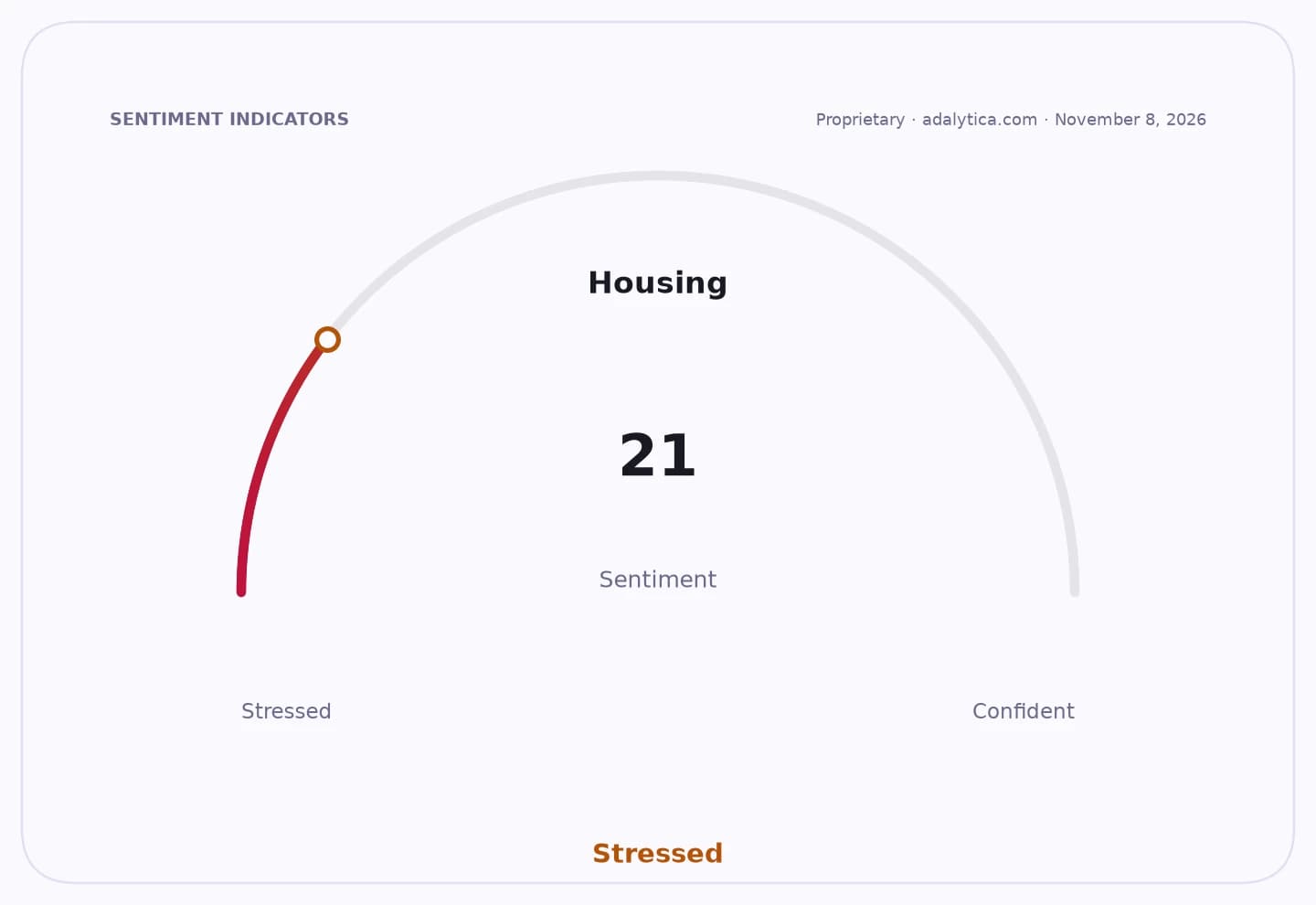
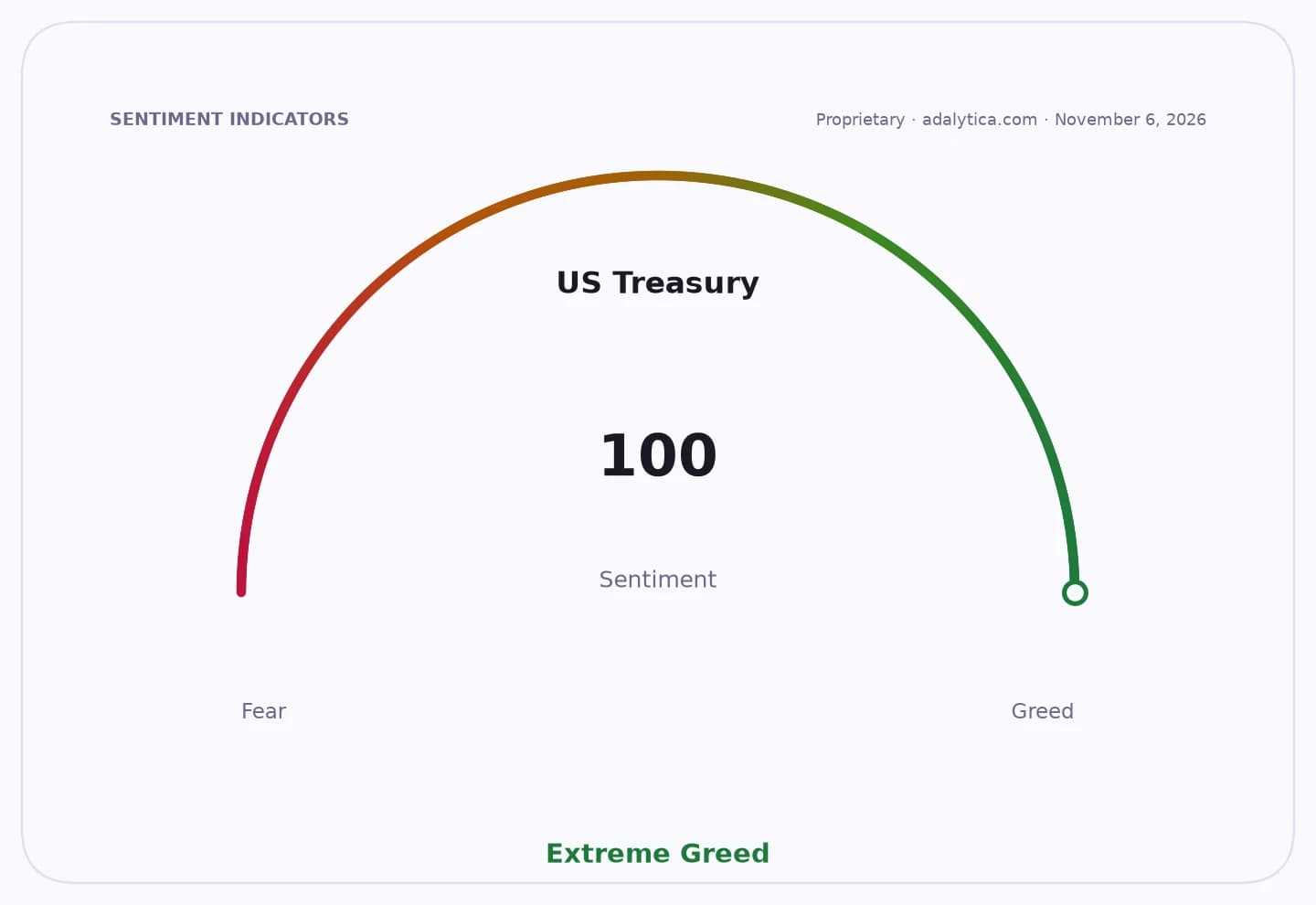
That matters because mortgage pricing is still anchored to a sticky mix of short- and long-term rates. The 10-year Treasury yield is around 5.04%, while the two-year sits near 4.76%, levels that keep borrowing costs materially above the near-zero era and limit the upside from waiting for a big refinancing opportunity. A slight recent dip has not changed the broader picture: policy remains restrictive, inflation is not low enough to force an aggressive pivot, and housing affordability remains under pressure.
Sentiment Indicators
For households, the decision between a fixed and variable mortgage is less about abstract rate theory than cash-flow risk. A fixed rate still offers protection if rates rise again or stay higher for longer, which is valuable when incomes are under strain and refinancing may not be available at a meaningful discount. A variable rate can make sense for borrowers who expect rates to fall, but the margin for error is thin. Market commentary and refinancing guidance suggest the trade only becomes compelling if borrowers can secure at least a 2 percentage point drop, a threshold that is far from the current backdrop.
The macro data reinforce that caution. U.S. unemployment has held around 4.1%, not a recessionary level by itself, but enough to slow housing turnover when combined with higher debt service costs. In other markets, the strain is more acute: Australia has seen a severe jobs wipe-out and mounting recession fears, while housing activity has weakened to a 16-year low in some regions. The common thread is the same — higher rates are suppressing demand, hurting affordability and reducing the incentive to move or refinance.
DGS10 vs DGS2 — macro contextadalytica.com
Explore this data interactively — full history, time series and cross-market comparisons.
Lenders and mortgage specialists are also navigating a narrower set of outcomes. Rocket Companies and UWM Holdings both show the effects of rate volatility in their portfolios and hedging. Rocket’s shares have been trading below its 200-day moving average, and UWM remains well below that benchmark too, reflecting a market that still sees mortgage origination as tied to a difficult rate backdrop rather than a quick rebound. For mortgage firms, rising or sticky rates can support servicing income and, in some cases, margins on existing portfolios, but they also crimp new loan volume and refinancing activity.
For investors, the key issue is that “higher for longer” rates reshape both borrower behavior and lender earnings. A fixed-rate bias tends to favor borrowers looking for stability and lenders with servicing exposure, while variable-rate products become more attractive only if central banks move decisively lower. Until then, the mortgage market is likely to remain a hold-your-breath environment: fewer refinancings, subdued home sales, and a cautious consumer base that is more likely to lock in certainty than gamble on a meaningful rate decline.
| Entity | Gains | Losses |
|---|---|---|
| Fixed-rate borrowers | ▲Payment certainty | ▼Upside if rates fall |
| Variable-rate borrowers | ▲Lower initial cost | ▼Payment shock risk |
| Mortgage lenders/servicers | ▲Steadier servicing income | ▼Weaker refinancing volumes |
| Homebuyers/sellers | ▲Clarity on budgeting | ▼Lower affordability and turnover |