Moscow says it has reduced the number of workers in its shadow economy to about 110,000, a sharp drop that matters because bringing wages into the open can lift tax revenue, improve competition and give the city and federal government a cleaner read on labor-market health.
Moscow Cuts Shadow Economy Workers to 110,000

That is a big deal for an economy where hidden pay and off-the-books hiring distort prices and drain public coffers. Moscow officials said the number was 270,000 in 2024, implying more than half of those workers have been legalized over two years. The city estimates the lost personal-income-tax revenue from evasion at about 72 billion rubles a year.
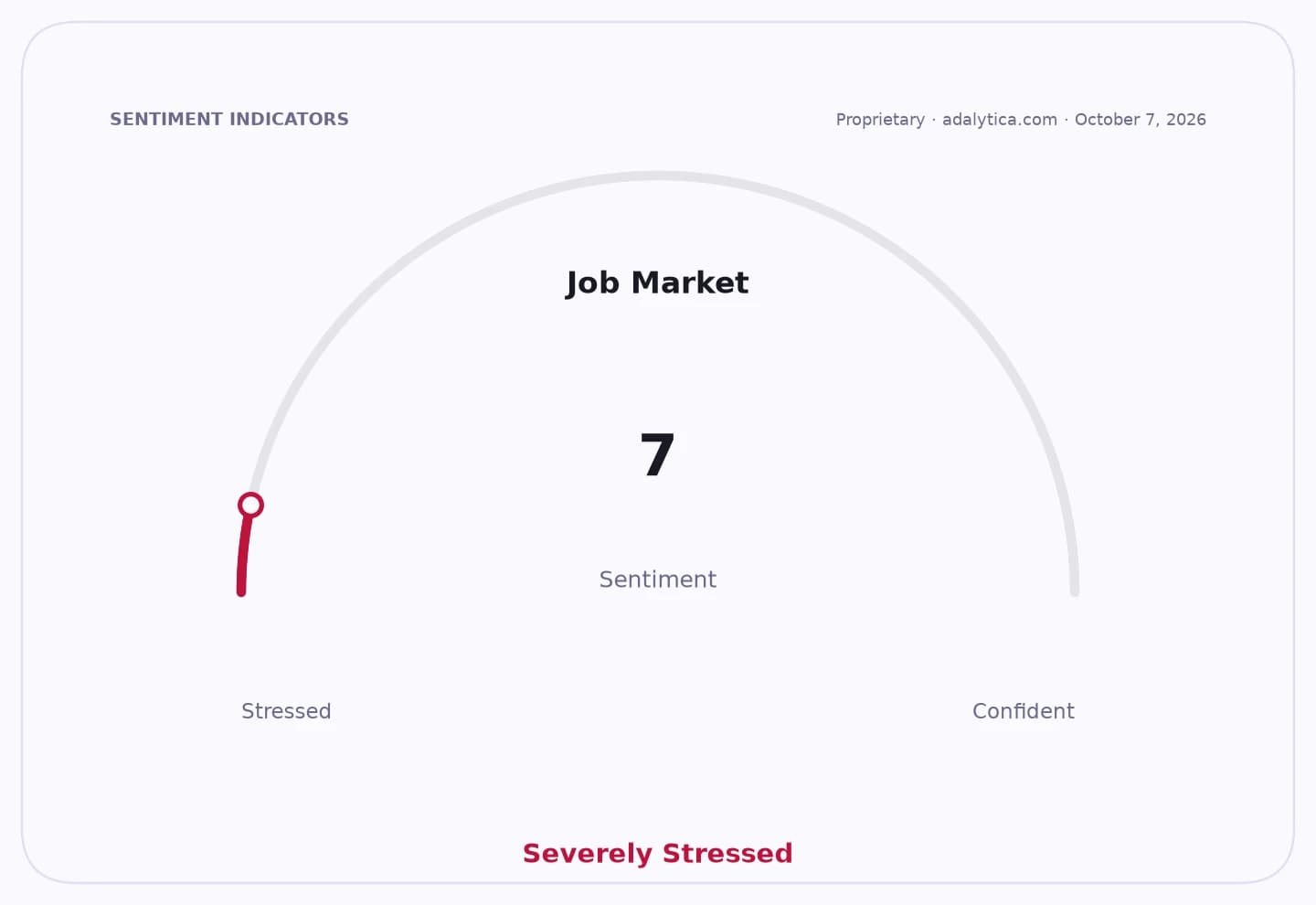
Sentiment IndicatorsⓘProprietary · adalytica.com · October 8, 2026
This is a snapshot — live sentiment, awareness and momentum for 130+ markets update continuously in the dashboard.Open AlphaPulse

The crackdown is also about fairness. Officials said industries that rely heavily on labor, especially food service and construction, can have as much as 80% of workers employed informally. That gives noncompliant businesses room to undercut rivals on price, while white-market employers say they are forced to compete against firms that skip payroll taxes and social contributions.
For investors, the significance is less about a single data point than the direction of travel. Russia’s authorities are trying to widen the tax base without raising headline rates, and that can support fiscal stability over time. It also suggests tighter oversight of labor-intensive sectors such as retail, construction and services, where compliance costs may rise and margins for gray-market operators may narrow.
The effort is part of a broader “white economy” plan approved by the government last year, with 18 measures aimed at uncovering unregistered workers, preventing violations and sharing regional best practices. Labor Minister Anton Kotyakov has said this year’s campaign aims to pull 1.3 million people out of the informal sector, after commissions reported roughly 1 million legalizations in 2025.
The challenge is that shadow employment remains deeply embedded in parts of the economy. Moscow officials said voluntary disclosure and dialogue with businesses has worked better than inspections, but that also underscores how much of the cleanup still depends on coaxing employers rather than punishing them. For long-term investors, the takeaway is straightforward: a more formal labor market can mean better tax collection and more transparent operating conditions, but it may also expose how much of the economy had been running on hidden margins all along.
| Entity | Gains | Losses |
|---|---|---|
| Moscow city government | ▲Higher tax revenue | ▼Less room for informal hiring |
| White-market employers | ▲Fairer competition | ▼Gray-market rivals |
| Workers legalized | ▲Formal pay and protections | ▼Off-books cash jobs |
| Labor-heavy sectors | ▲Clearer rules | ▼Higher compliance costs |