A direct war between Russia and NATO remains unlikely in the near term, but the alliance is treating the Baltic corridor as a genuine flashpoint because even limited Russian “nadelstiche” could force a test of Article 5 and rattle energy and defense markets.
NATO Baltic corridor risk lifts defense, oil themes
The key risk is not a full-scale invasion, but a series of smaller provocations that could expose the alliance’s political seams. In the scenario outlined by military planners and analysts, Russia does not currently have the spare capacity for a broad assault on NATO while its forces remain tied down in Ukraine. That lowers the odds of an outright conventional attack. What remains plausible is hybrid pressure: incursions by unmarked troops, border incidents, cyber or sabotage activity, and other actions designed less to seize territory than to sow doubt over whether NATO would react in unison.
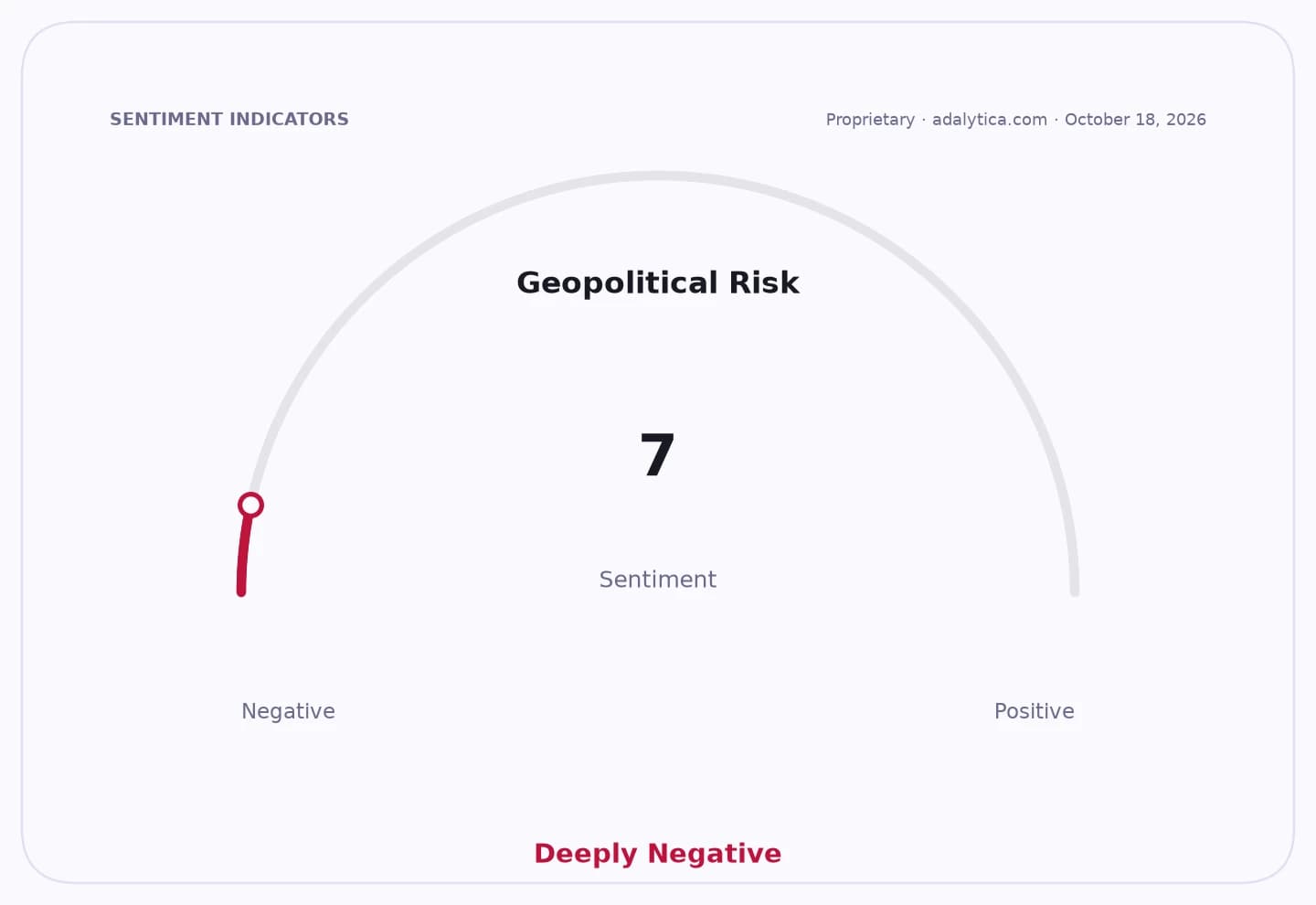
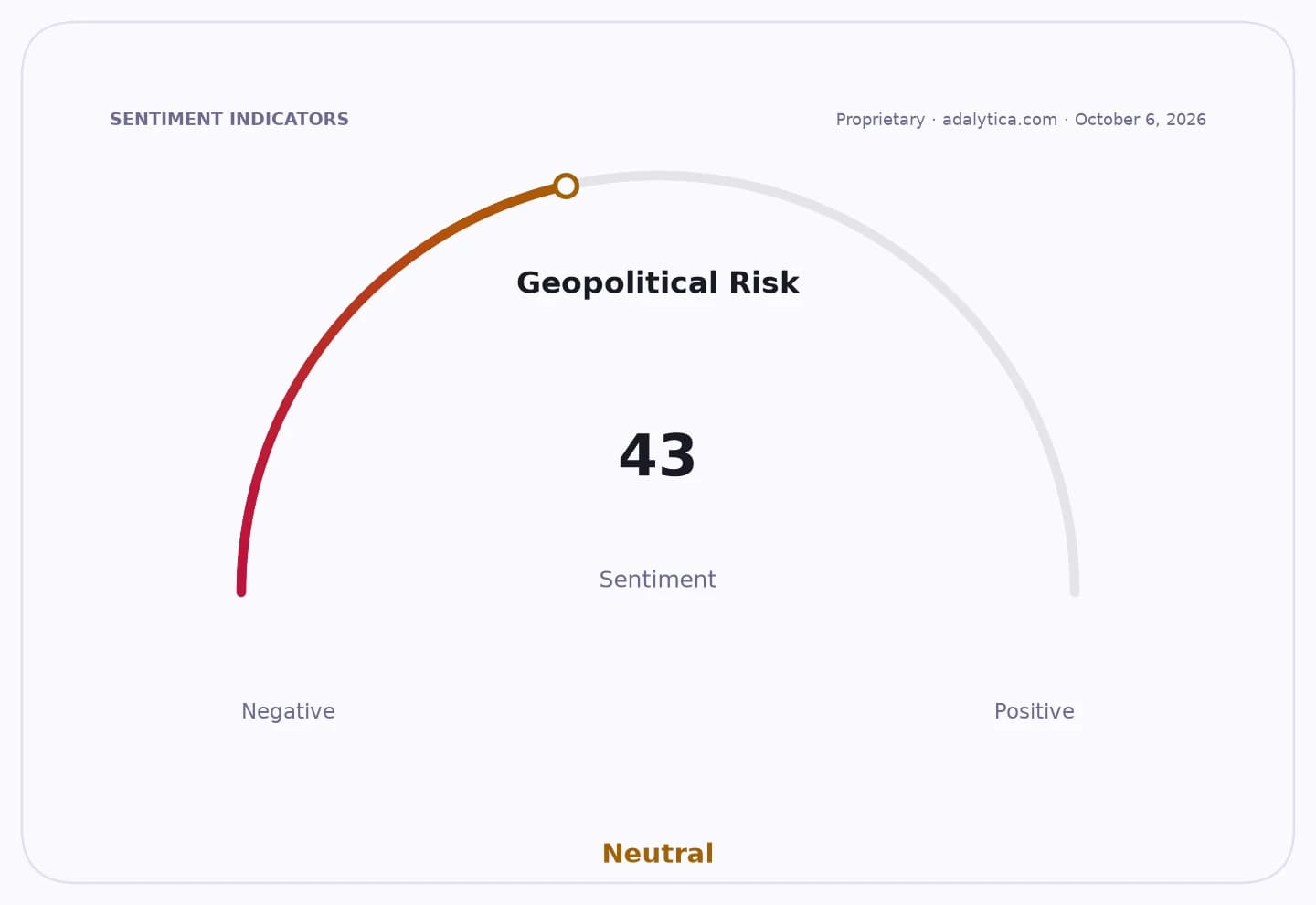
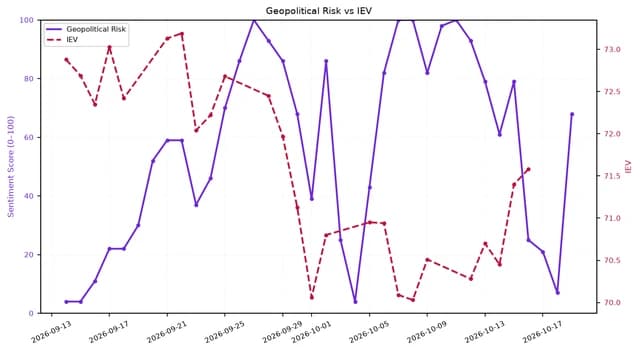
Sentiment IndicatorsⓘProprietary · adalytica.com · October 19, 2026
This is a snapshot — live sentiment, awareness and momentum for 130+ markets update continuously in the dashboard.Open AlphaPulse
That matters because the most strategically sensitive point is the Suwałki Gap, the roughly 90-kilometer strip linking Poland and Lithuania between Belarus and Russia’s Kaliningrad enclave. If disrupted, it would complicate reinforcement of the Baltic states from the rest of NATO territory and force a rapid logistical response. Poland and Lithuania have already reinforced the area since Russia’s invasion of Ukraine, and NATO has been running exercises such as Brave Griffin 26 to rehearse the route’s defense.
For investors, the story is less about an imminent battlefield event than about a durable premium in defense spending, energy risk, and European security policy. NATO officials have been signaling that the alliance is capable of overwhelming Russia militarily if required, and they are refining plans to defeat any Russian move quickly. That reinforces the long-running case for higher European defense budgets and continued orders for contractors exposed to air defense, munitions, logistics, surveillance and command systems.
The market backdrop reflects that tension. Europe-focused defense equities have held up better than broader risk assets, with the iShares Europe ETF showing a mixed but resilient technical picture while U.S. defense names have remained under accumulation after sharp moves earlier in the year. Lockheed Martin and RTX have both told investors in recent filings that global tensions are raising security requirements and can lead to higher costs, delays and procurement urgency. Northrop Grumman made a similar case, pointing to a “dynamic global security environment” and heightened instability.
Energy remains the other transmission channel. Brent-style oil proxies have risen sharply in recent sessions, with WTI trading above $100 in the supplied data, underscoring how quickly a Russia-NATO scare can feed into crude-risk premia even without an actual supply disruption. That matters for European importers, inflation expectations and the broader policy path, especially if investors start pricing a higher probability of sanctions, transport disruption or military miscalculation in the Baltic region.
The immediate bull case for markets tied to this theme is straightforward: NATO deterrence works, Russia stays overextended in Ukraine, and defense procurement continues at an elevated pace without a direct clash. The bear case is that even a low-grade incident in the Suwałki corridor or Baltics could trigger a credibility test inside the alliance, raise the cost of capital for European assets and push oil higher on geopolitics alone.
For now, the evidence points to a dangerous but contained standoff rather than a looming NATO-Russia war. But the fact that planners are openly gaming out the Suwałki Gap, and that Russia’s preferred tools are likely to be ambiguous and deniable, means investors should treat the risk as persistent, not episodic.
| Entity | Gains | Losses |
|---|---|---|
| NATO defense contractors | ▲Higher procurement demand | ▼Peace dividend |
| Russia | ▲Leverage through ambiguity | ▼Strategic flexibility in Ukraine |
| European energy importers | ▲None | ▼Higher oil risk premium |
| Poland and Baltic states | ▲More NATO attention | ▼Frontline exposure |