NATO Secretary General Mark Rutte is signaling that Russia is not on the verge of a direct attack on alliance territory, even as Moscow’s sabotage, cyber operations and nuclear threats keep Europe’s security premium elevated.
NATO Russia Risk Keeps Defense Spending High

That distinction matters because it frames the risk for investors, policymakers and the broader economy: the danger is less about an imminent conventional war and more about a prolonged campaign of pressure that forces NATO members to spend more on defense, harden infrastructure and sustain support for Ukraine.
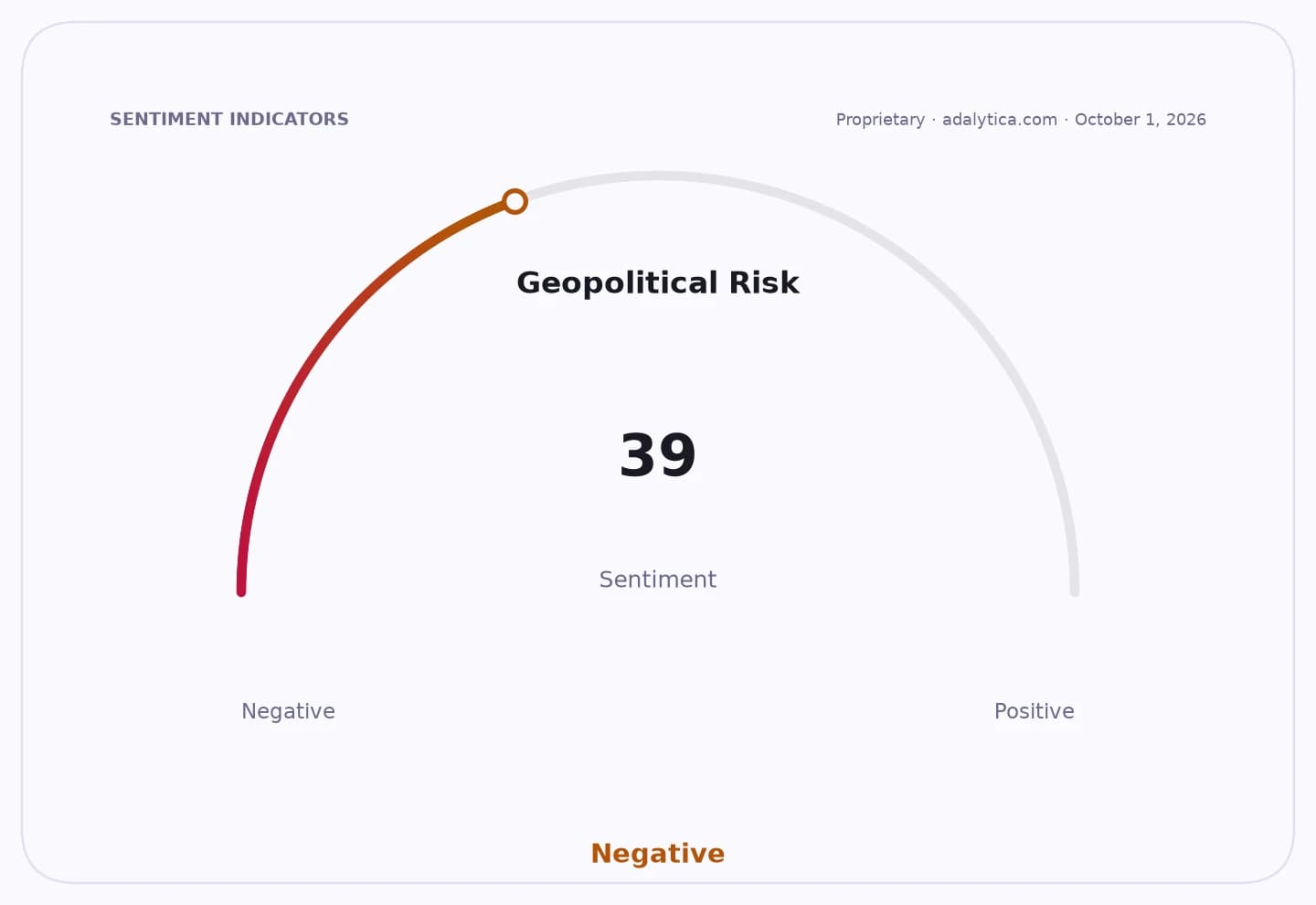
Sentiment IndicatorsⓘProprietary · adalytica.com · October 3, 2026
This is a snapshot — live sentiment, awareness and momentum for 130+ markets update continuously in the dashboard.Open AlphaPulse
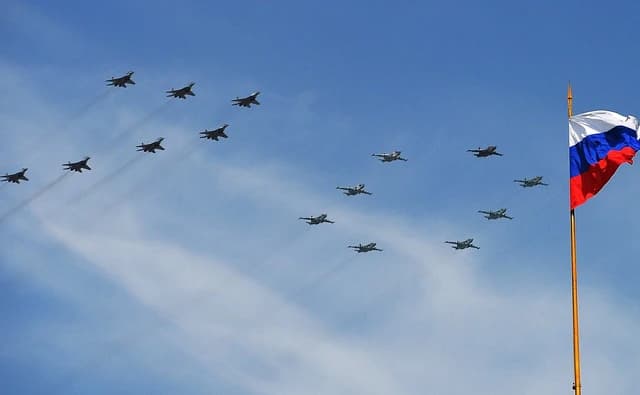
Rutte’s assessment comes as the United States and Europe try to gauge how far the Kremlin is willing to push hybrid tactics without triggering a direct response. NATO officials say Russia is attempting to test the alliance’s resolve, but the message from Brussels is that the bloc remains defensive and prepared to act if an actual attack occurs.
Markets have already priced in part of that backdrop. The iShares U.S. Aerospace & Defense ETF, ITA, has fallen to around $208 from a peak near $250 in early March, while shares of Lockheed Martin and Northrop Grumman have also retreated from earlier highs, suggesting investors are digesting defense spending as a longer-cycle story rather than a one-way trade.
Even so, the strategic backdrop remains supportive for contractors. Lockheed and Northrop both sit well below their 50-day and 200-day moving averages, but the underlying demand case for missiles, air defense, surveillance and command systems is still tied to NATO rearmament, U.S. budget growth and replenishment needs driven by Ukraine.
The macro backdrop adds to that caution. U.S. 10-year Treasury yields are hovering around 5.3%, while high-yield credit spreads have widened to about 3.3 percentage points, a sign that geopolitical stress is still feeding into financing conditions even without a full-blown escalation.
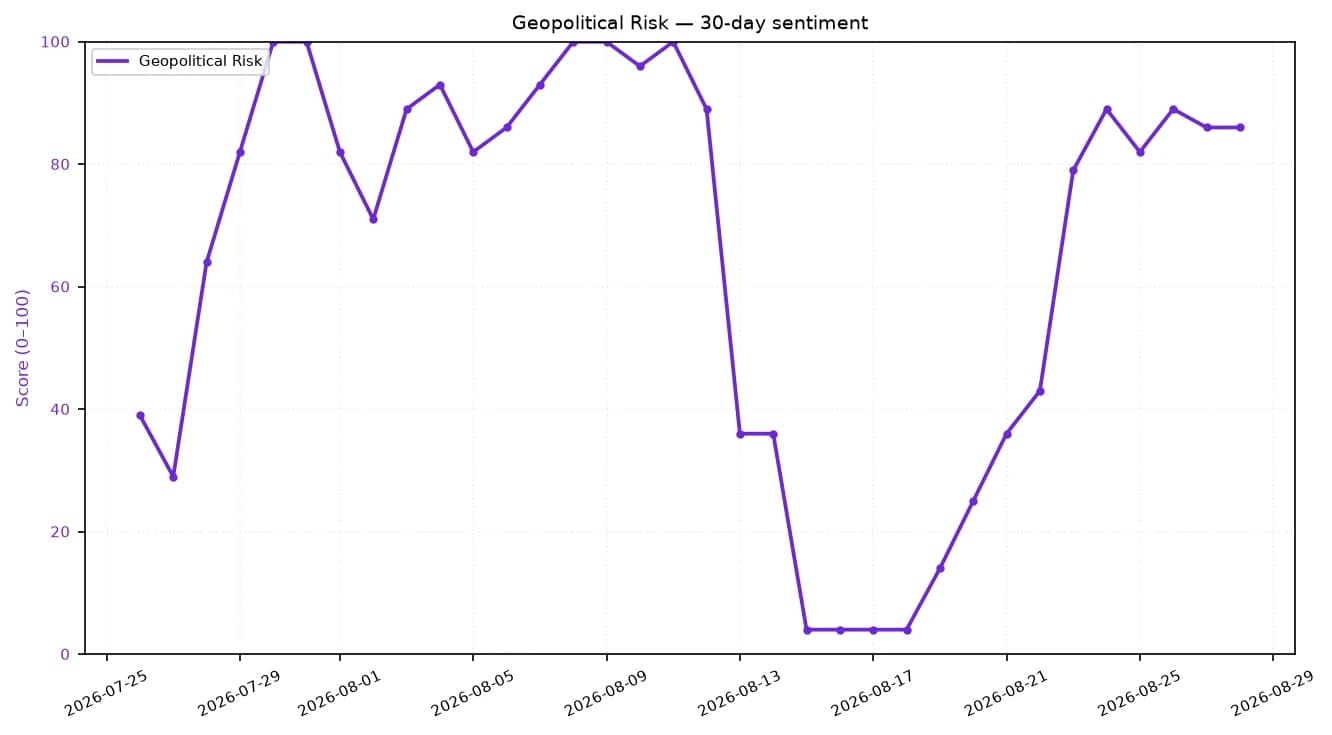
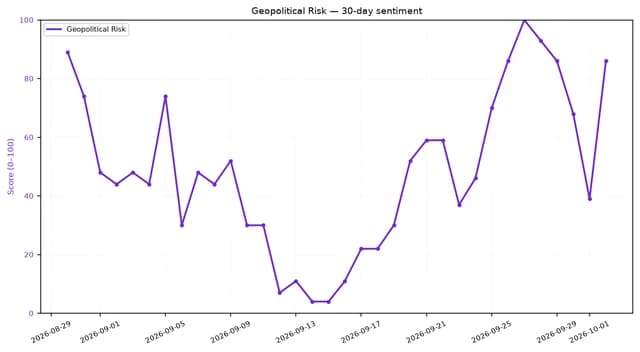
Adalytica’s Global Stability Sentiment gauge also points to a sharp swing in risk mood, showing “Extreme Greed” at 86 even as awareness remains in “Extreme Fear,” underscoring how quickly traders are rotating between complacency and concern as tensions with Russia rise and fade.
For investors, the key question is not whether NATO is under immediate invasion risk, but whether sustained hybrid pressure forces another round of military and industrial spending across Europe and the United States. That would favor primes with missile-defense, electronic warfare and secure communications exposure, while keeping transportation, industrial and European energy assets vulnerable to volatility.
The next catalyst is whether NATO members turn the rhetoric into further budget commitments, weapons orders and infrastructure protection measures, especially if Moscow expands its sabotage campaign or threatens allied territory more directly.
| Entity | Gains | Losses |
|---|---|---|
| NATO defense contractors | ▲Higher spending outlook | ▼Delayed if budgets stall |
| Russia | ▲Pressure on NATO cohesion | ▼Escalation risks sanctions |
| European governments | ▲Stronger security posture | ▼Higher fiscal burden |
| ITA holders | ▲Event-driven defense demand | ▼Weakness if threat eases |