Russia’s move to take control of Nestlé’s Russian business raises the stakes for Western companies still exposed to the country, turning a corporate asset into a geopolitical prize and adding another layer of risk for investors watching the fallout from the war in Ukraine.
Nestlé Russia Asset Seizure Raises Investor Risk
Swiss authorities said they were concerned after Moscow ordered the confiscation of foreign company assets, including Nestlé and Auchan, as part of what Russia framed as retaliation against European hostility. The seizure underscores how quickly politically sensitive operations can move from being stranded to being effectively expropriated in a conflict that is now spilling further into corporate balance sheets.
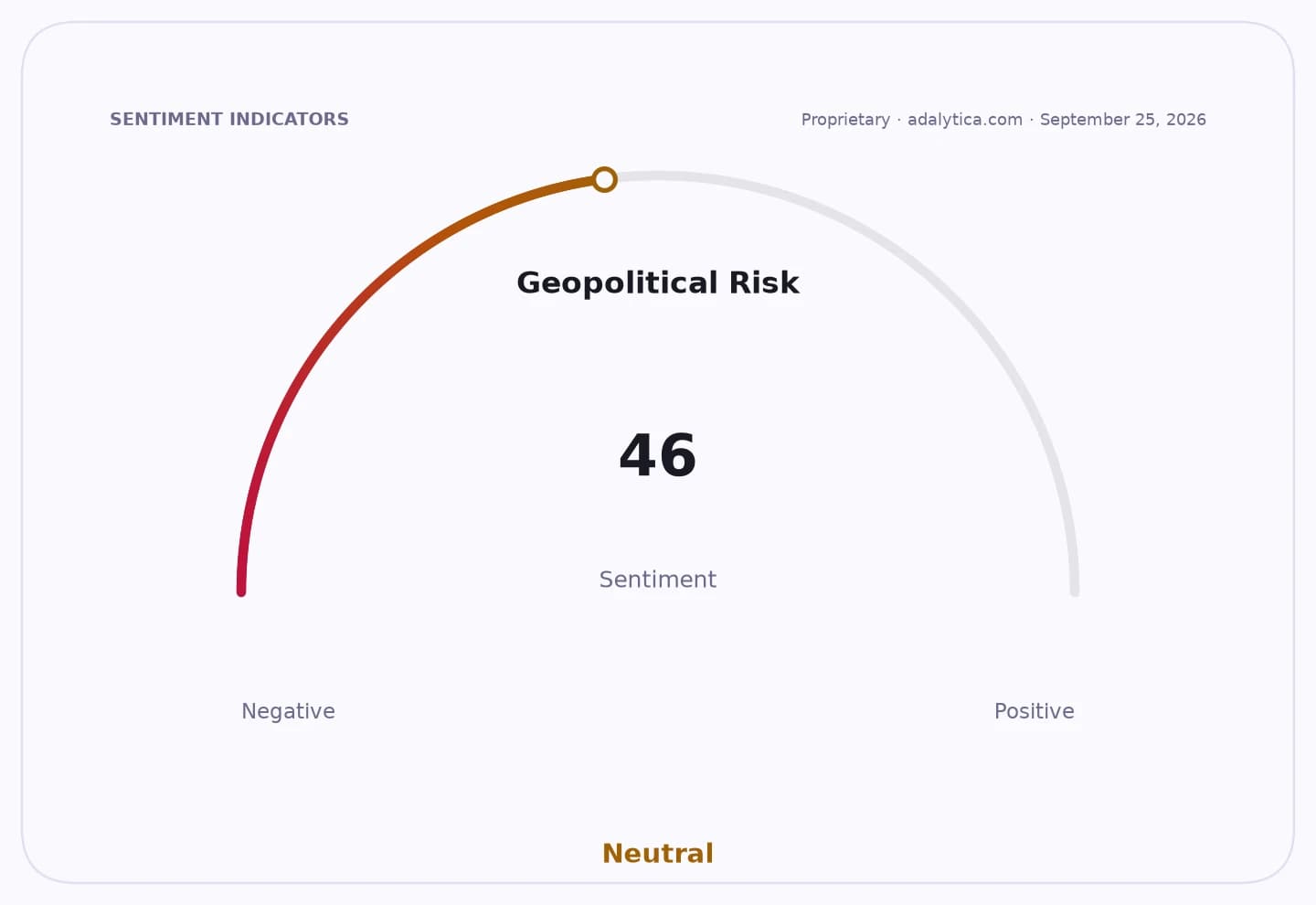
Sentiment IndicatorsⓘProprietary · adalytica.com · September 20, 2026
This is a snapshot — live sentiment, awareness and momentum for 130+ markets update continuously in the dashboard.Open AlphaPulse
For Nestlé, the development reinforces the difficulty of valuing and controlling assets in Russia, where legal protections for foreign investors have weakened sharply. For other multinationals with lingering exposure, it is a warning that leaving a market does not always eliminate risk if local assets, distribution networks or brands remain in place.
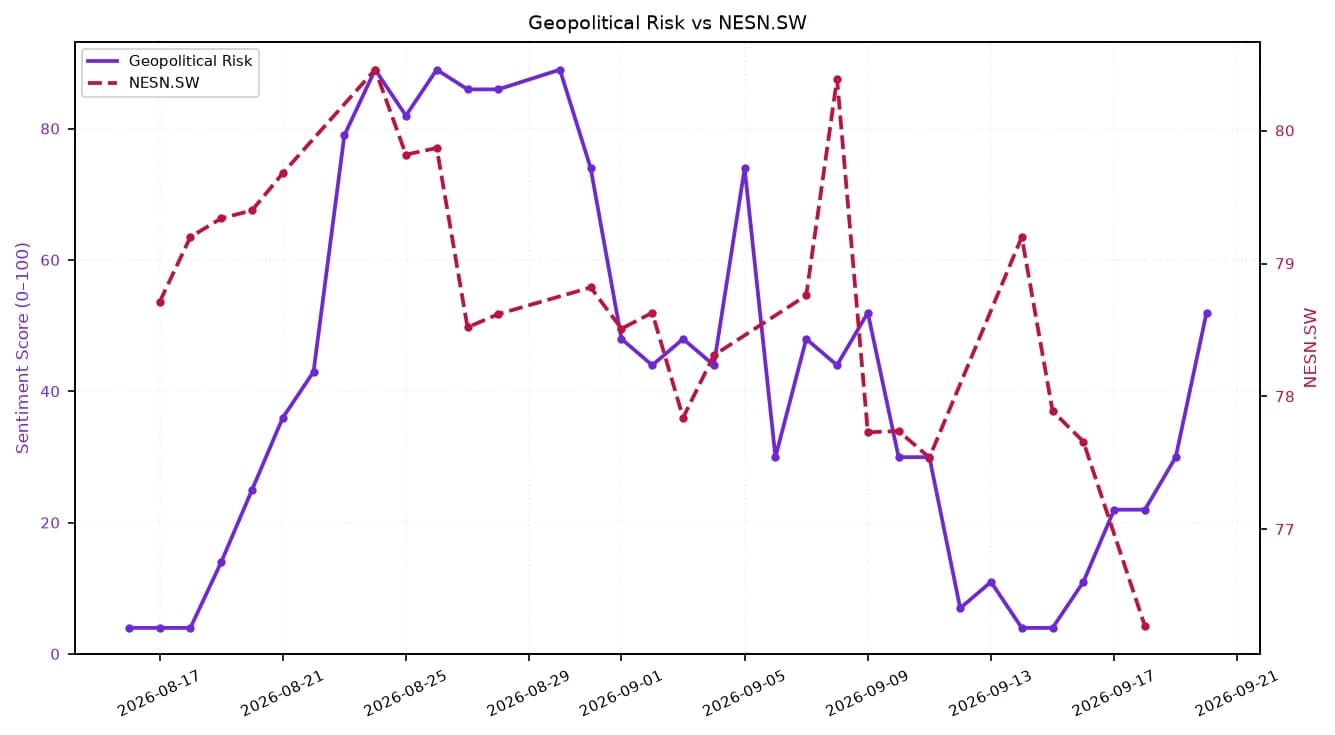
The market reaction has been measured but negative. Nestlé shares in Zurich have slipped to 76.27 francs, down from 85.12 francs in early July, while trading has picked up as the stock loses ground below its 50-day moving average. The Swiss consumer giant’s shares are now well below recent highs, reflecting investor caution over geopolitics as much as fundamentals.
The broader economic significance is that Russia is escalating a playbook already seen in sanctions-era disputes: answer foreign pressure with domestic seizures. That raises the cost of doing business across the region, chills cross-border investment and increases the probability of more asset writedowns, legal disputes and supply-chain disruption for global consumer companies.
Investors will now look for whether Nestlé quantifies any financial hit, whether Swiss officials push for a diplomatic response and whether other Western groups with residual Russian assets face the same treatment. The episode also adds another source of uncertainty for European equities at a time when risk appetite remains sensitive to war headlines and sovereign retaliation.
| Entity | Gains | Losses |
|---|---|---|
| Kremlin / Russian state | ▲Control of local assets | ▼Credibility with investors |
| Nestlé | ▲— | ▼Asset control, valuation certainty |
| Swiss government | ▲Diplomatic leverage | ▼Confidence in investment protections |
| Other multinationals in Russia | ▲Cautionary clarity | ▼Exposure to seizure risk |