NetApp used Ai Everything Abu Dhabi to make a broader commercial pitch: the next phase of enterprise AI will be won not by bigger models alone, but by the data infrastructure that can keep those models trusted, governed and deployable at scale.
NetApp AI pitch in Abu Dhabi on sovereign data
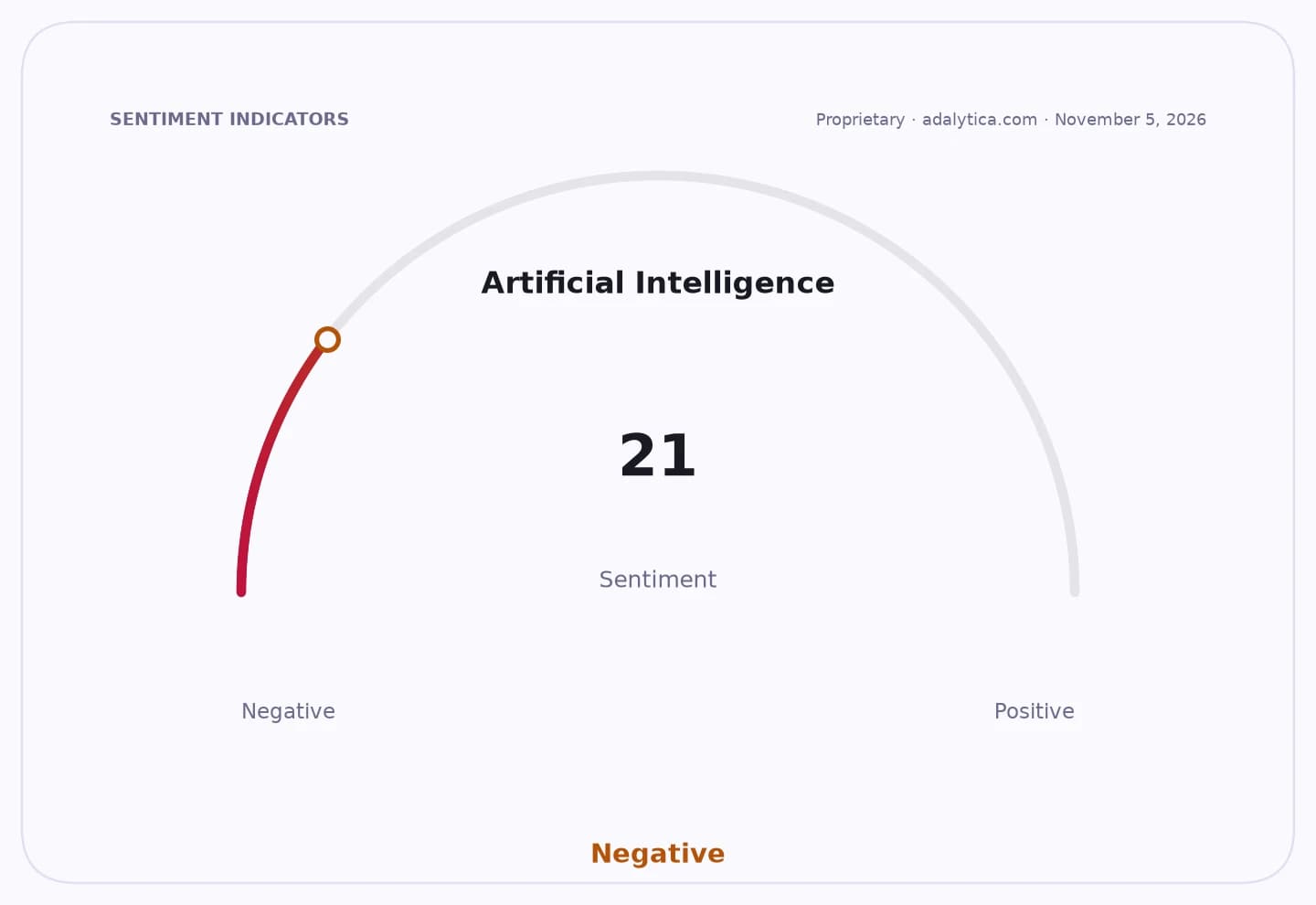
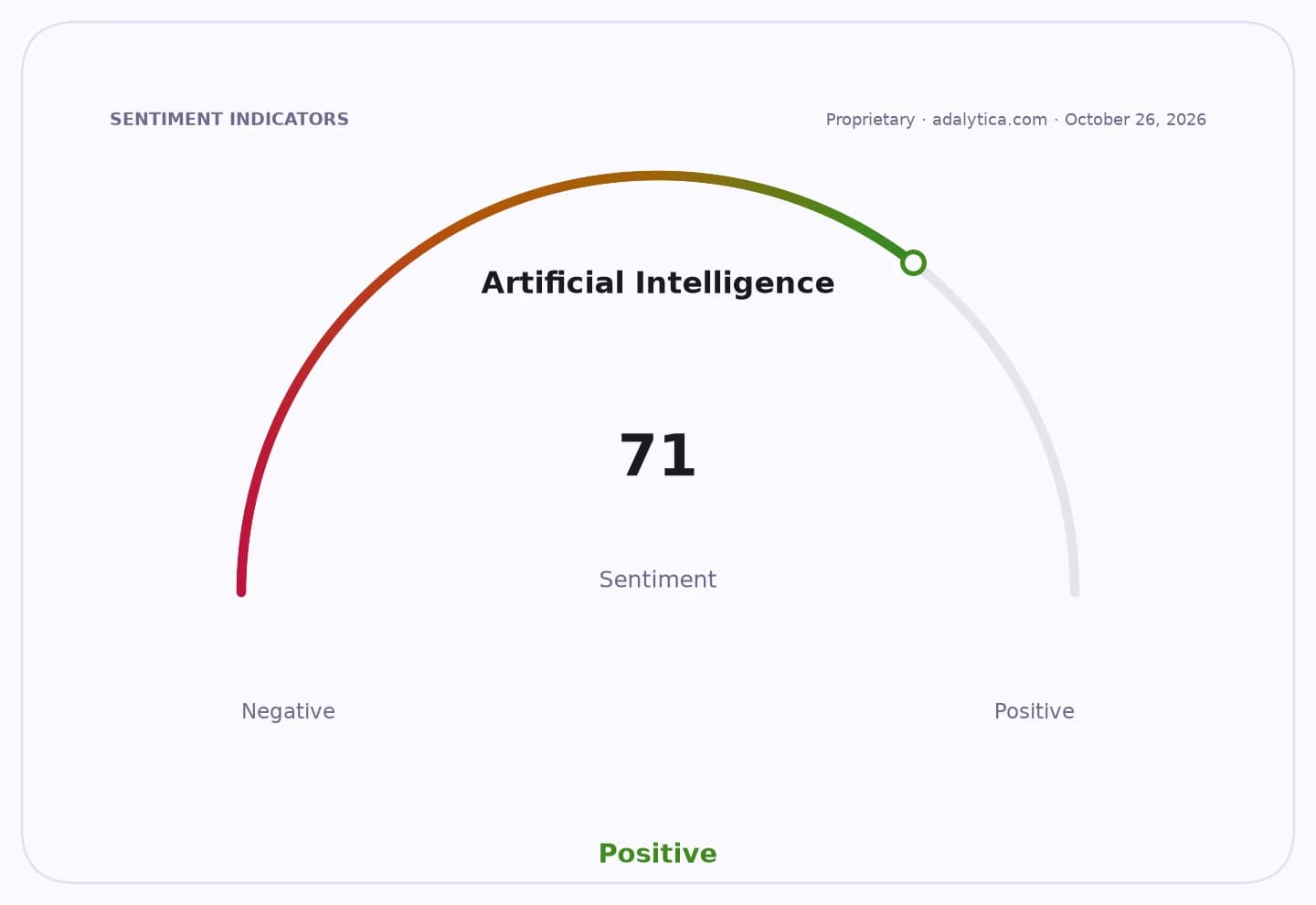
Artificial Intelligence
That matters because AI budgets are moving out of pilot projects and into production environments where security, data sovereignty and access controls become board-level issues. In the Middle East, where governments and large enterprises are racing to localize AI capabilities, the bottleneck is increasingly less about model availability than about whether organizations can move data safely across cloud, on-premises and sovereign environments without creating compliance or operational risk.
Sentiment Indicators
George Kurian, NetApp’s chief executive, framed the issue directly in a fireside chat on “Can AI Be Trusted? The New Architecture of Sovereign, Secure and Safe AI,” arguing that trust must extend beyond the model to the systems and data AI can access. That is a useful message for a vendor whose platform is built around “zero-copy” access to data and is embedded in major public clouds, because the value proposition is strongest when enterprises want to activate existing data without duplicating it, slowing it down or losing control over it.
For NetApp, the event was a sales and positioning exercise in one of the fastest-growing AI regions. Abu Dhabi has been explicit about becoming an AI-native government, and that gives infrastructure vendors a ready-made narrative: sovereign AI requires governed storage, hybrid connectivity and secure data pipelines before it requires yet another layer of model innovation. NetApp’s regional leadership said the Middle East is shifting from experimentation to large-scale deployment, which, if sustained, should favor infrastructure providers over pure software names that depend on model hype.
Artificial Intelligence vs NTAPadalytica.com
Explore this data interactively — full history, time series and cross-market comparisons.
The equity market already reflects how investors are weighing that theme. NetApp shares have rallied sharply and are trading at 231.05 dollars, well above the 50-day moving average of 197.00 and the 200-day average of 140.68. But the stock’s RSI reading of 78.6 suggests the move is technically stretched, implying investors are paying up for AI exposure and execution hopes rather than clear evidence that the company has captured a decisive share of spending.
That creates the central debate. The bull case is that NetApp is positioned as a picks-and-shovels beneficiary of enterprise AI, especially where customers need hybrid architectures, governance and compliance. The bear case is that the market is already discounting much of that opportunity, while competition from hyperscalers and storage rivals limits pricing power and makes it difficult to prove how much of the AI buildout will translate into durable revenue.
There is also a broader ecosystem angle. Nvidia has repeatedly signaled that AI demand is expanding into sovereign customers and cloud partners, while Microsoft says its AI strategy depends on third-party technologies and evolving customer demand. NetApp’s message fits into that stack: as AI deployments broaden, the economics of the sector shift from model training to data management, infrastructure reliability and regulatory control.
For investors, the key catalyst is whether NetApp can turn this positioning into measurable production wins, not just conference-stage visibility. If sovereign AI deployments in the Gulf and elsewhere accelerate, the company could see stronger demand for its governed data infrastructure and cloud-integrated storage services. If not, the stock risks continuing to trade more on the AI theme than on near-term fundamentals.
| Entity | Gains | Losses |
|---|---|---|
| NetApp | ▲AI infrastructure demand | ▼Model-only AI narratives |
| Gulf governments | ▲Sovereign data control | ▼Open-ended cloud dependence |
| Enterprises | ▲Secure production AI | ▼Pilot-stage AI spending |
| Storage rivals | ▲Sector attention | ▼NetApp if adoption accelerates |