China’s microdrama craze is becoming more than a cultural export: it is a template for how video is made, packaged and monetized, and that is forcing global streaming platforms to rethink the economics of short-form entertainment.
Netflix Shares Fall as China Microdramas Expand
The format’s appeal is straightforward and commercially powerful. Episodes often run under 20 minutes, letting producers deliver fast-moving stories at far lower cost than premium television while keeping viewers hooked across genres from romance to fantasy. That combination is why Chinese platforms and studios are pushing deeper into the space, and why the model is now spreading beyond China into markets such as South India, where plans call for 1,000 original microdramas by 2027 across multiple languages.
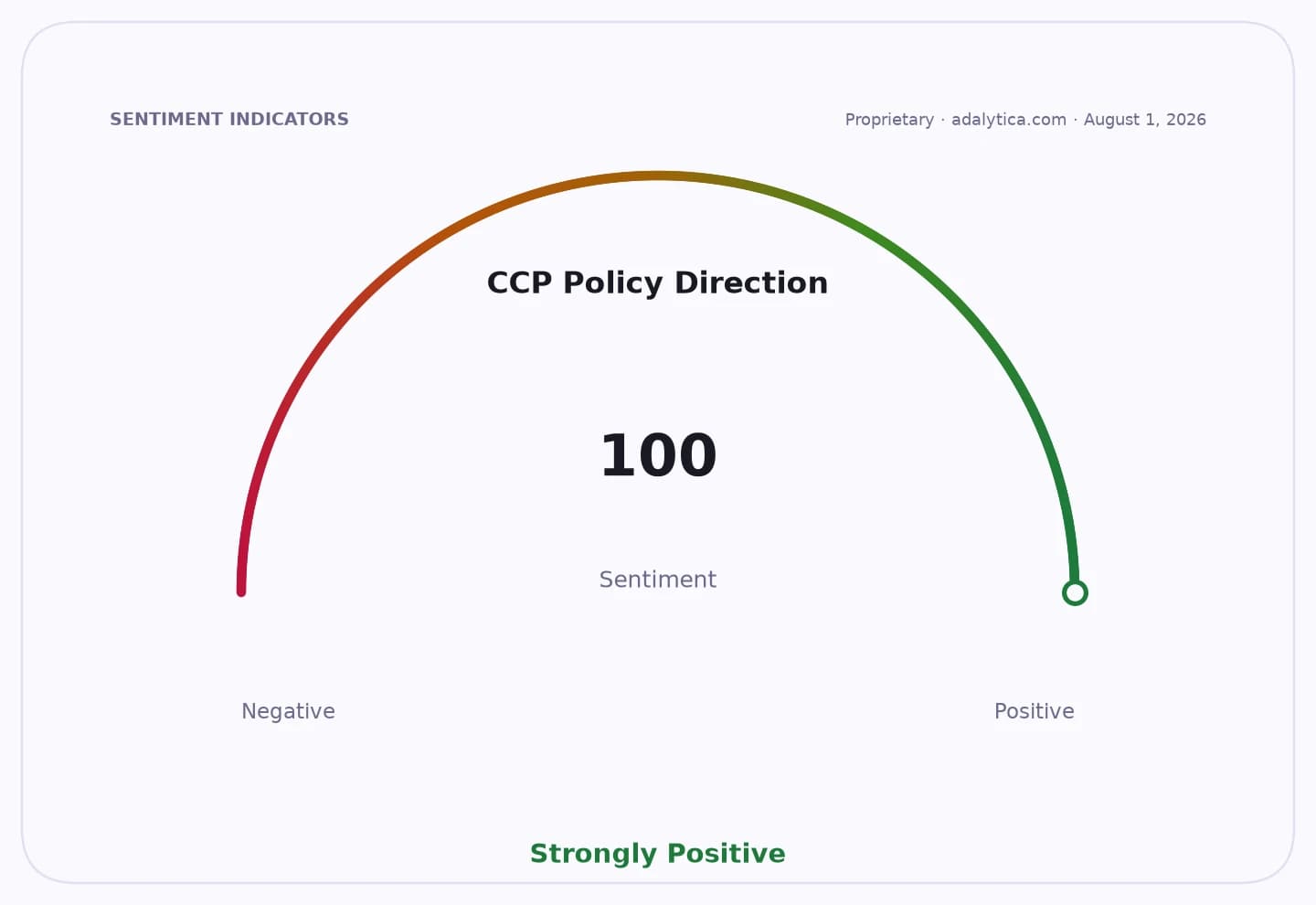
Sentiment IndicatorsⓘProprietary · adalytica.com · August 1, 2026
This is a snapshot — live sentiment, awareness and momentum for 130+ markets update continuously in the dashboard.Open AlphaPulse
For investors, the significance is that microdramas sit at the intersection of audience behavior, content economics and AI-assisted production. Short-form scripted video can be produced, localized and iterated faster than conventional series, potentially improving return on content spend in a business where streaming margins are still under pressure from heavy programming budgets. If the model scales, it could create a lower-cost rival format that competes for the same attention as long-form series while also opening new ad-supported and direct-to-consumer monetization channels.
That matters most for Netflix, the market leader in streaming, because the company’s business depends on continuously refreshing its library without letting content costs outrun subscriber and advertising growth. Netflix’s shares have been weak in recent trading, with the stock falling to $71.71 on July 31 from $122.85 in mid-September, while technical readings such as the 50-day and 200-day moving averages remain above the price, a sign of sustained pressure. The broader message is not that microdramas will replace prestige streaming, but that the economics of audience capture are shifting toward cheaper, faster, highly serialized content.
The China angle also matters geopolitically and industrially. Beijing’s entertainment ecosystem has become a proving ground for production methods that can travel internationally, especially in markets with large mobile-first audiences and lower price sensitivity. As Chinese companies export the format, they are exporting a playbook: rapid iteration, localized storytelling and monetization built around very short viewing sessions. That creates opportunity for platforms that can distribute or license the content, but it also increases competitive pressure on incumbents that rely on expensive slate-driven programming.
There are limits to the bull case. Microdramas may prove more durable as a niche than as a replacement for mainstream film and series, and the genre’s early momentum could be inflated by novelty. The bear case for incumbents is that even if short-form scripted video never dominates global viewing, it can still siphon engagement at the margins and force heavier spending to defend share of time. For investors, the key question is whether microdramas remain a low-cost experiment or become a structural reset in how streaming companies allocate capital.
| Entity | Gains | Losses |
|---|---|---|
| Chinese microdrama studios | ▲Faster monetization | ▼Higher competition |
| Mobile-first viewers | ▲Shorter, cheaper content | ▼Less premium depth |
| Netflix and global streamers | ▲New format ideas | ▼Margin and engagement pressure |
| Local-language producers in India | ▲Scalable output model | ▼Risk of commoditized content |