Japan’s Nikkei has slipped into a bear market as investors dumped SoftBank and other AI-linked names, a rout that underscores how quickly enthusiasm for artificial intelligence can give way to fears that spending is running ahead of profits.
Nikkei Falls Into Bear Market on SoftBank Selloff

SoftBank’s shares fell 11% in the latest session, deepening a decline that has helped drag the benchmark lower and leaving the index more than 20% below its recent peak. The scale of the move matters because SoftBank has become one of the clearest public market proxies for the AI trade in Japan, with investors using it as a levered bet on everything from OpenAI exposure to data-centre investment and semiconductor demand.
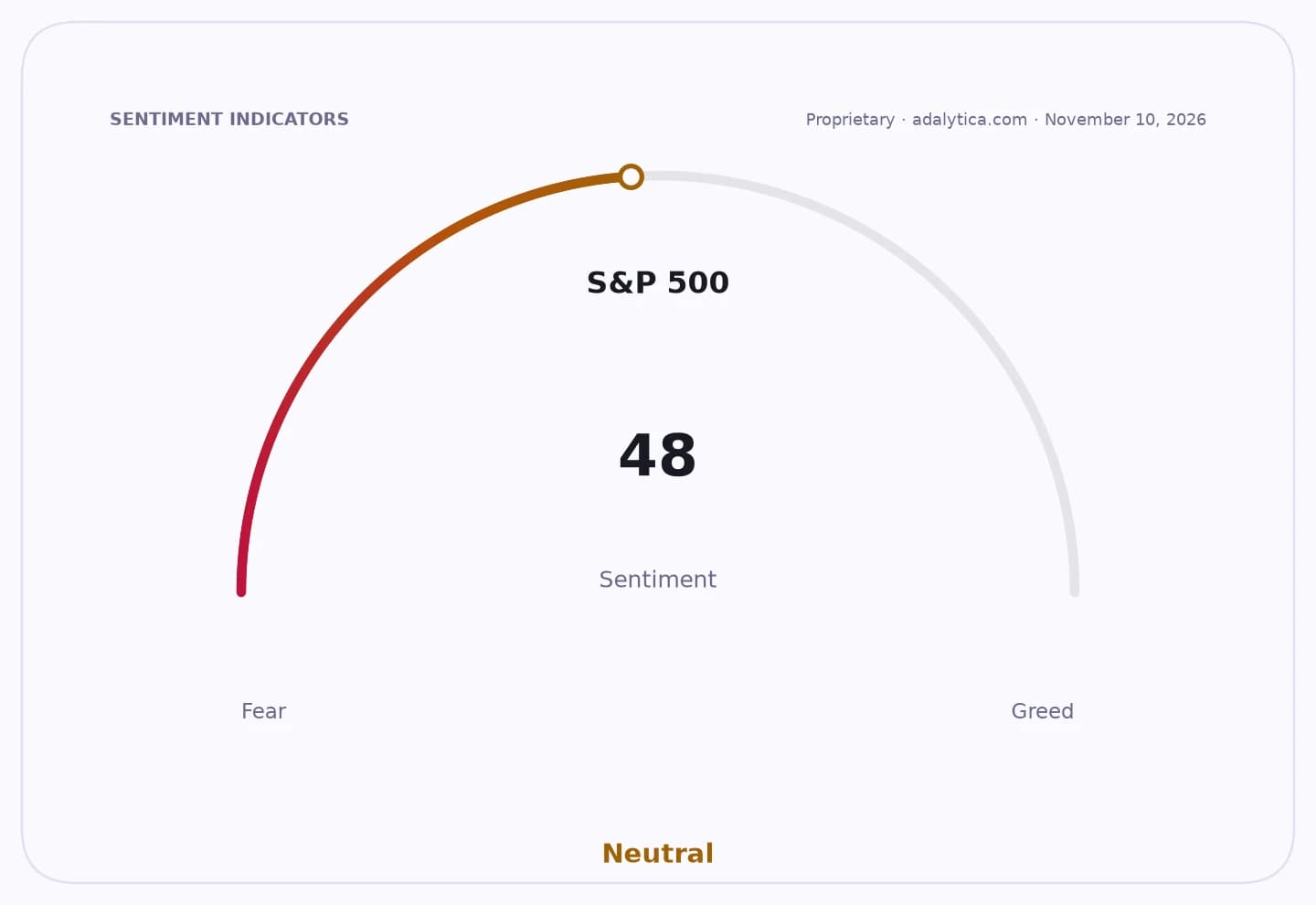
Sentiment Indicators
Safe Haven Demand
The selloff is economically significant because it reflects a broader reassessment of the capital intensity of the AI buildout. If investors conclude that the returns on AI infrastructure will arrive more slowly than expected, that can hit not only Japanese technology holdings but also global chipmakers, cloud providers and the financing conditions around the sector’s supply chain. It also highlights how concentrated gains in a handful of mega-cap AI names have become vulnerable to abrupt de-risking when market sentiment turns.
Technical damage has been severe. SoftBank’s latest close at 3,855 yen was far below its 50-day moving average of 5,365 yen and its 200-day average of 5,250 yen, while its relative strength index sat at 35.9, near oversold territory after touching 22.1 earlier in the week. The stock’s trading volume has surged, suggesting forced selling and momentum-driven unwinding rather than a calm valuation reset.
The broader market backdrop has turned defensive as well. Adalytica’s FX safe-haven trading signals showed fear at 25, while the US dollar gauge read extreme greed at 89, a combination consistent with investors seeking safety and funding currencies under pressure. That shift is important for Japan because a risk-off wave can spill into exporters, domestic financials and the wider equity complex, even if the underlying economy has not suddenly deteriorated.
Still, the bear case is not the only one. Some Wall Street commentary has argued the selloff went too far, noting that chip demand and AI-related earnings have not broken down in the way the market’s worst fears imply. The bounce in some US chip names earlier in the week also suggests buyers remain willing to step in when valuations reset sharply.
For investors, the key question is whether this is a temporary correction in an overcrowded trade or the start of a longer repricing of AI capital expenditure. SoftBank’s move makes the answer more urgent for Japan: if AI spending stays robust, the stock can recover quickly; if investors keep discounting the pace of monetisation, the Nikkei may struggle to regain its footing.
| Entity | Gains | Losses |
|---|---|---|
| Safe-haven assets | ▲Inflows from risk aversion | ▼Cyclical equity exposure |
| SoftBank bulls | ▲Sharp valuation reset | ▼Momentum traders, recent buyers |
| Chipmakers and AI suppliers | ▲Potential long-term demand if spending resumes | ▼Near-term sentiment and multiples |
| Nikkei index buyers | ▲Possible bargain entry after correction | ▼Benchmark performance in risk-off trade |