Japan’s Nikkei fell 2% as a renewed selloff in technology stocks overwhelmed support from the rest of the market, a reminder that the index’s heavy exposure to global chip and software names can quickly turn it from a domestic growth proxy into a lever on the Nasdaq trade.
Nikkei Falls 2% as Tech Selloff Hits Japan

The move matters because Japan’s equity rally over the past year has depended not just on corporate reforms and improving earnings, but also on a powerful re-rating of exporters and tech-related shares tied to the global artificial-intelligence cycle. When that leadership fades, the index can lose altitude even if other sectors remain firmer, exposing how narrow market breadth can magnify volatility.
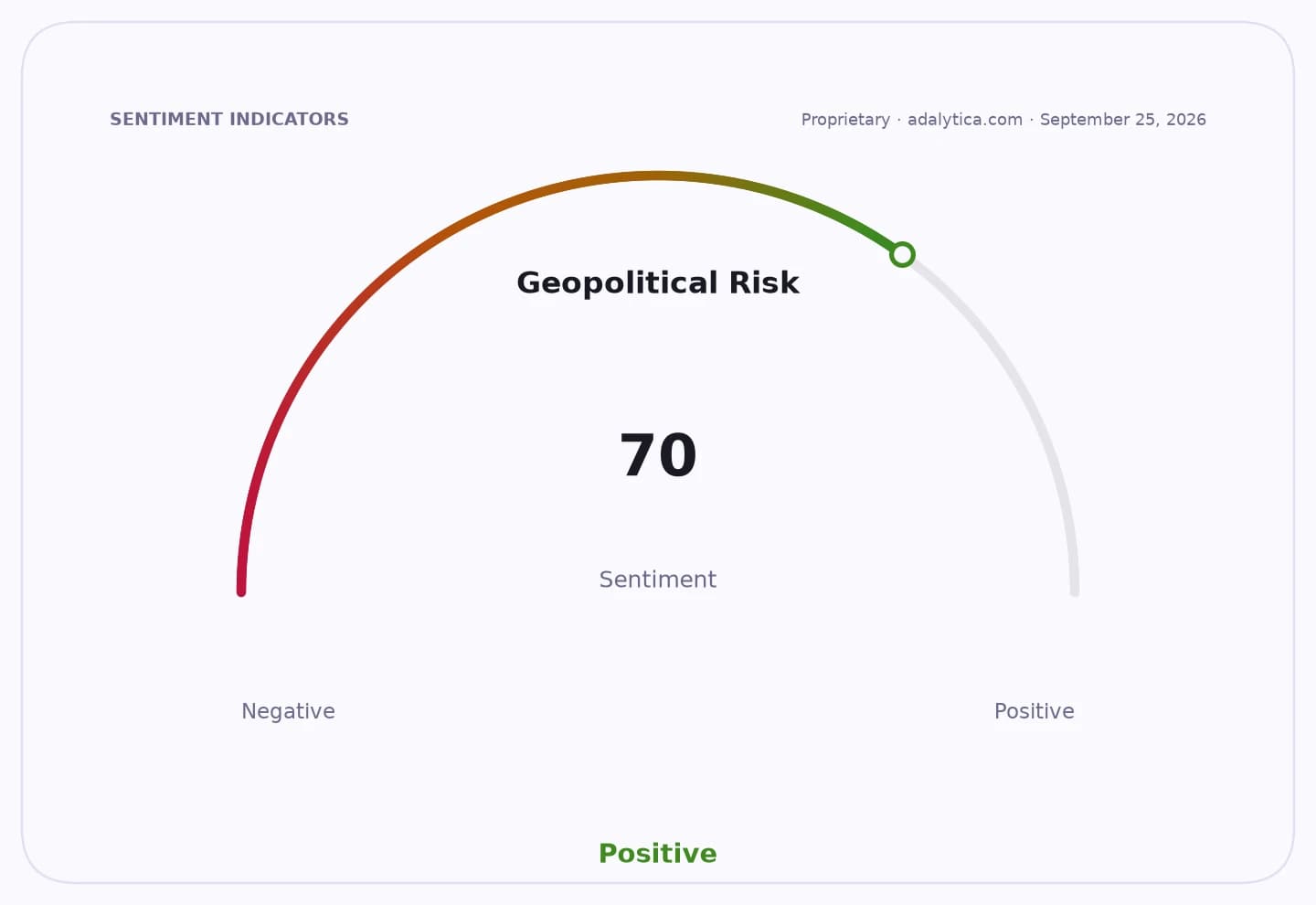
Sentiment IndicatorsⓘProprietary · adalytica.com · August 6, 2026
This is a snapshot — live sentiment, awareness and momentum for 130+ markets update continuously in the dashboard.Open AlphaPulse

The pressure was not isolated to Tokyo. U.S.-listed tech benchmarks were already under strain, with the Nasdaq-100 proxy QQQ closing at 700.07, below its 50-day moving average of 714.51 and well short of its recent highs. Its RSI of 42.1 and negative MACD reading suggest momentum has cooled after a strong run, while Apple’s shares have slipped back to 303.42 from 321.66 in late July, also below the 50-day average of 309.52. That combination points to a broader de-risking in high-valuation growth stocks rather than a Japan-specific shock.
For investors, that is important because the Nikkei’s composition means a technology-led pullback can spill into sentiment around Japanese equities even when domestic fundamentals are intact. A weaker tech tape also threatens foreign inflows that have helped underpin the market’s recent gains, especially from global funds seeking exposure to semiconductors, automation and AI beneficiaries.
The backdrop is still favorable in one sense: U.S. market sentiment, as tracked by Adalytica’s S&P 500 trade signals, remains in “Extreme Greed,” while the dollar also shows “Extreme Greed,” indicating global risk appetite has not fully broken. But those readings can shift quickly if the tech unwind deepens or if higher bond yields and a stronger dollar continue to squeeze duration-sensitive assets.
For now, the Nikkei’s 2% decline looks less like a verdict on Japan’s economy and more like a market-wide rotation away from the most crowded growth trades. The key question for the next session is whether buyers step back into semiconductors and internet names, or whether the selloff broadens into a deeper correction that drags benchmark indices lower across the region.
| Entity | Gains | Losses |
|---|---|---|
| Defensive and non-tech stocks | ▲Relative support | ▼Less capital inflow |
| Japanese exporters | ▲Weaker yen support if risk-off deepens | ▼Growth-stock drag on index |
| Global tech bulls | ▲Longer-term AI thesis intact | ▼Near-term momentum and valuations |
| Nikkei index buyers | ▲Chance to buy a dip | ▼Higher volatility and index pressure |