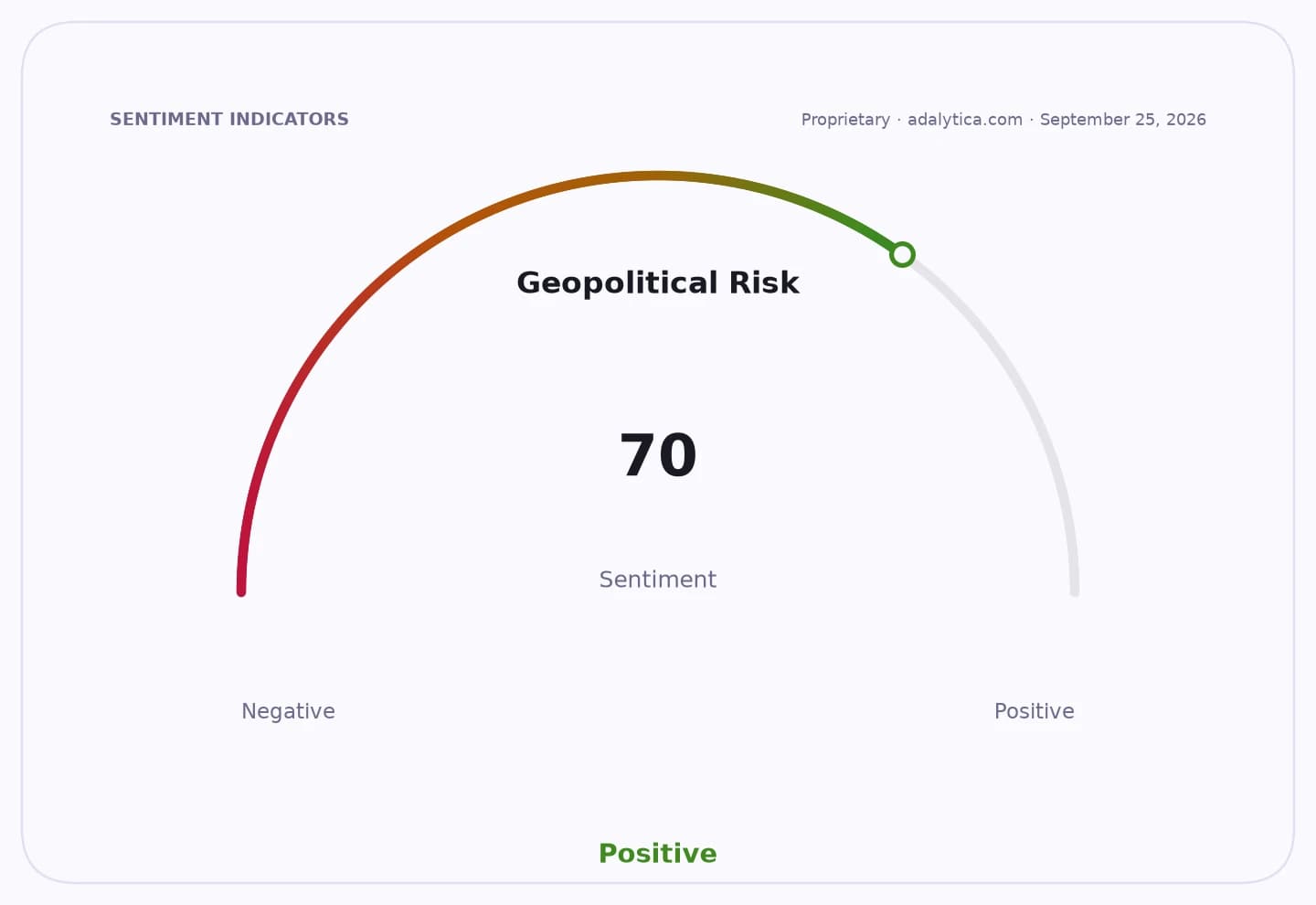
The Nikkei Average tumbled as much as 2,200 points before closing the morning session down 1,954 yen at 66,796, a sharp reversal that underscores how fragile Japan’s market leadership has become when investors are forced to price in hotter inflation, higher oil, and a stronger risk-off bias all at once.
Nikkei Rout Tests Japan Rally Resilience
The move matters because Japan’s equity advance has been built on two pillars that are now being tested simultaneously: optimism around AI and chip shares, and expectations that domestic policy would remain supportive even as global liquidity stayed abundant. A violent intraday selloff of that size suggests the market is no longer treating the Nikkei’s record-setting run as a one-way trade. It is confronting the risk that profit-taking, funding costs and imported inflation could overwhelm the earnings story that has driven benchmark gains this year.
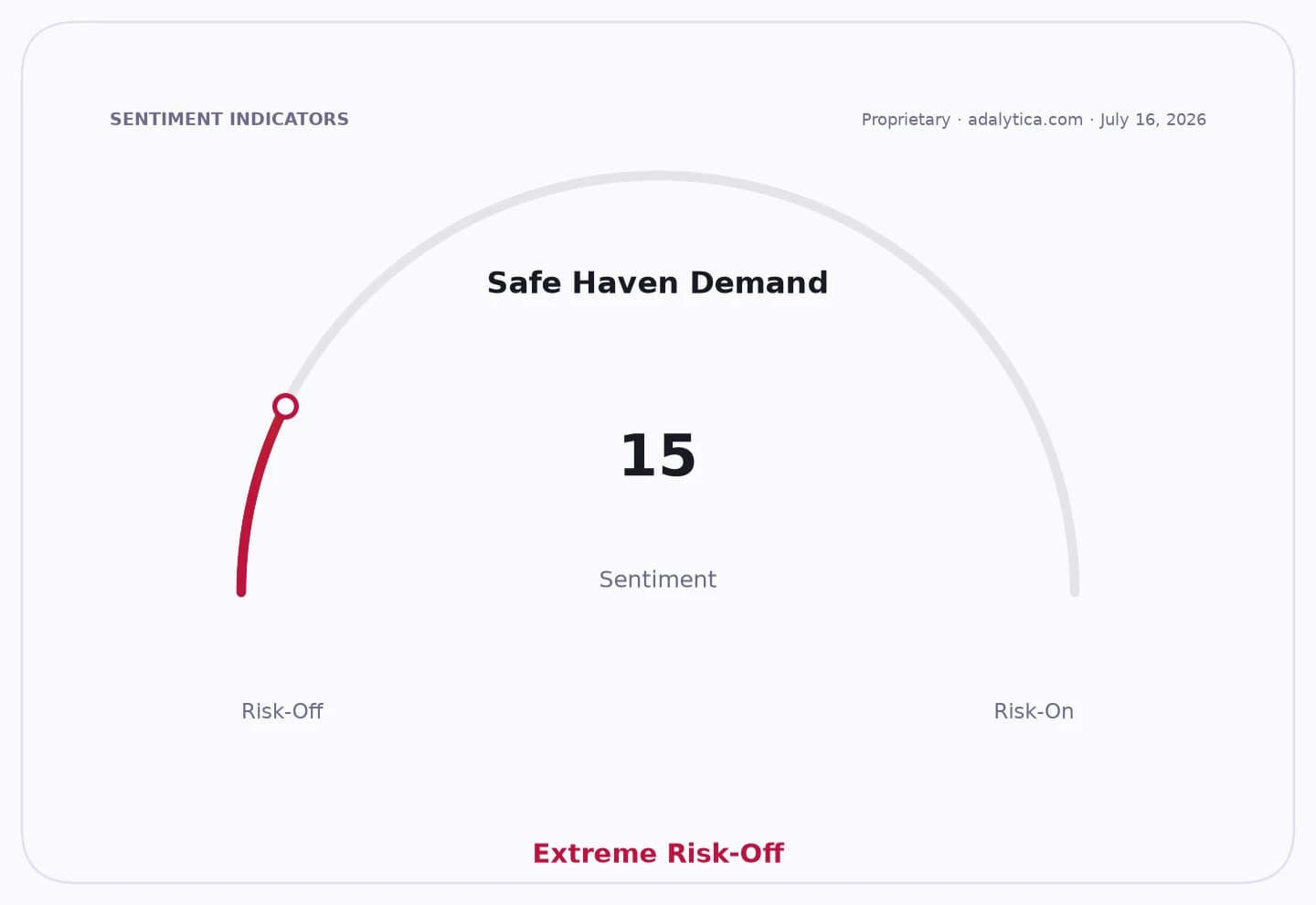
Sentiment IndicatorsⓘProprietary · adalytica.com · July 16, 2026
This is a snapshot — live sentiment, awareness and momentum for 130+ markets update continuously in the dashboard.Open AlphaPulse
The broader market picture points to a rotation away from cyclical and growth-sensitive exposures. Japanese equities had recently benefited from strength in semiconductors and other AI-linked names, while overseas technology demand kept global risk appetite intact. But the latest leg lower shows how quickly that narrative can be interrupted by macro shocks. Rising oil prices tied to U.S.-Iran tensions have fed worries about Japan’s import bill, squeezed sentiment and revived concerns that inflation may stay sticky even as the Bank of Japan edges toward normalization. That combination tends to be toxic for richly priced equities, especially when investors are already sitting on large gains.
There are signs the rally was technically stretched before the selloff. The Nikkei-linked EWJ exchange-traded fund has been trading above both its 50-day and 200-day moving averages, but momentum indicators have eased from earlier overbought levels, while recent price action in Japan-focused funds shows a pullback from recent highs. For traders, that means the market was vulnerable to a flush once headline risk turned negative. The sharp drop in the yen, according to Adalytica’s Japanese Yen Trade Signals, also points to severe fear in currency markets, while safe-haven trading signals remain elevated. That matters for equities because a weaker yen can support exporters, but abrupt currency moves often accompany forced de-risking rather than healthy portfolio rotation.
Investors will be watching whether the selloff stays confined to a profit-taking episode or broadens into a more durable de-rating. A bear case is that higher energy costs, policy tightening and geopolitical stress begin to erode the earnings expectations that had justified Japan’s re-rating. The bull case is that this is another volatility burst in a market that has repeatedly recovered on the back of corporate governance reform, AI exposure and still-solid overseas demand.
For now, the scale of the morning decline suggests Japan’s market is being priced less as a structural winner and more as a trade vulnerable to abrupt macro repricing. The next catalyst will be whether oil, the yen and U.S. risk sentiment stabilize quickly enough to let domestic fundamentals reassert themselves.
| Entity | Gains | Losses |
|---|---|---|
| Exporters | ▲weaker-yen support | ▼risk-off selling |
| Importers | ▲none | ▼higher energy costs |
| Chip/AI bulls | ▲structural growth narrative | ▼profit-taking and volatility |
| Shorts / hedgers | ▲downside momentum | ▼if rebound follows oversold conditions |