Nokia’s third-quarter numbers matter because they show the Finnish vendor’s fastest growth is now coming from AI infrastructure, not its legacy telecom core, even as restructuring costs keep reported earnings well below adjusted profit.
Nokia Q3 sales rise on AI and cloud demand
That shift is economically important because the AI buildout is moving beyond chips and into the network layer that links data centers, cloud platforms and mobile systems. Nokia said sales to AI and cloud customers rose 123% from a year earlier to 631 million euros, while orders in that segment climbed 118% to 1.5 billion euros. For a company long valued as a cyclical network equipment supplier, that is the clearest sign yet that AI demand is becoming a material revenue engine.
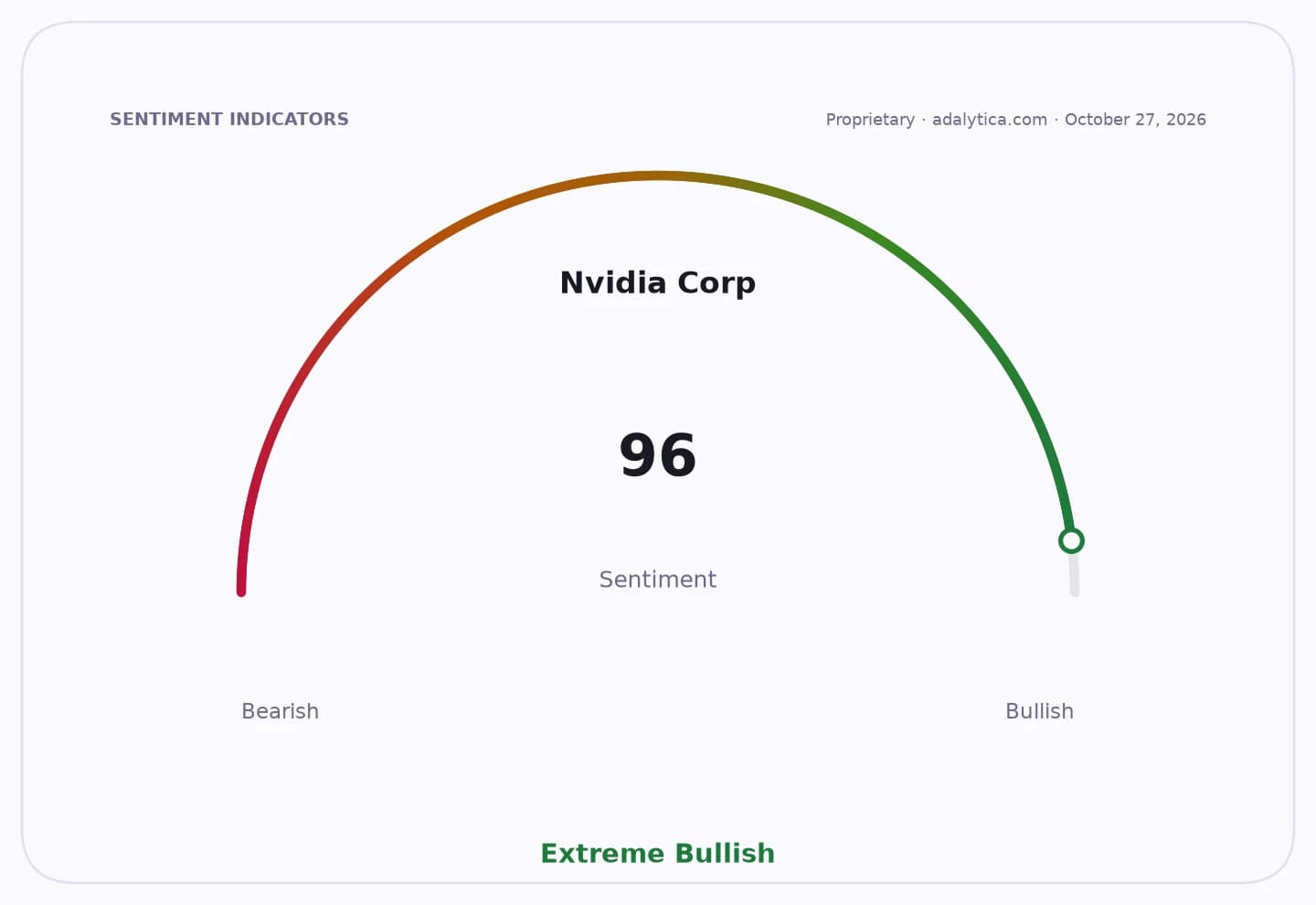
Sentiment Indicators
The quarter also showed that the growth is broader than one-off deals. Group sales rose 10% on a reported basis and 9% in constant currency, while adjusted operating margin improved to 11.7% from 9.5% a year earlier. Network Infrastructure, the part of the business most exposed to data-center interconnect and cloud traffic, posted 15% constant-currency growth, with IP Networks up 43% and Optical Networks up 18%. Management said it still expects 25% to 30% growth in Optical Networks and IP Networks in 2027.
For investors, the key question is whether Nokia can convert that demand into durable earnings power. Adjusted diluted earnings per share from continuing operations rose to 0.09 euros, but reported diluted EPS was only 0.03 euros because restructuring and integration charges dragged on the bottom line. Reported operating margin fell to 3.8% from 5.4%, underscoring how much of the earnings recovery is still buried under costs linked to the turnaround and the integration of Infinera.
The strategic narrative is straightforward: Nokia is trying to reposition itself from a traditional mobile-infrastructure vendor into a supplier of the plumbing for the AI economy. Its partnership activity supports that case. The company said it worked with Nvidia and T-Mobile on the world’s first AI-RAN call in a live commercial network, a technical milestone that could help open a new product cycle if carriers decide to spend on AI-enabled radio access networks. Nokia is also tied to Google’s planned investment in Finland, which should support demand for optical and IP gear.
But the bull case still comes with caveats. The company left its full-year 2026 outlook unchanged, which suggests management is staying conservative even after a strong quarter. A portion of mobile-infrastructure revenue was also pulled forward from the fourth quarter into the third, which may dampen near-term comparisons. And while Nokia expects 200 million euros of net synergies from Infinera and aims to complete the integration by the end of 2026, those benefits have yet to fully appear in reported results.
The market has already started to price in the shift. Nokia’s shares have rallied sharply in recent months, reflecting optimism that AI-related demand can support a higher valuation. The challenge now is execution: investors will want to see the order book turn into recurring sales, margins hold up as integration costs fade, and the AI story broaden from headline partnerships into sustained free-cash-flow growth. If that happens, Nokia can be valued less like a mature telecom vendor and more like a structural beneficiary of AI infrastructure spending.
| Entity | Gains | Losses |
|---|---|---|
| Nokia | ▲AI-led revenue mix | ▼Legacy telecom identity |
| Nvidia and T-Mobile | ▲AI-RAN ecosystem momentum | ▼Need for proof of commercial scale |
| Cloud and data-center customers | ▲Faster network capacity | ▼Higher infrastructure spending |
| Short-term bears | ▲Volatility from reported margins | ▼Momentum from AI orders |