The fight over how to slow China’s AI advance is widening from semiconductors to software, with Anthropic arguing for tighter model restrictions while Nvidia is pressing Washington to keep selling advanced chips to Chinese customers.
Nvidia, Anthropic Split Over China AI Controls
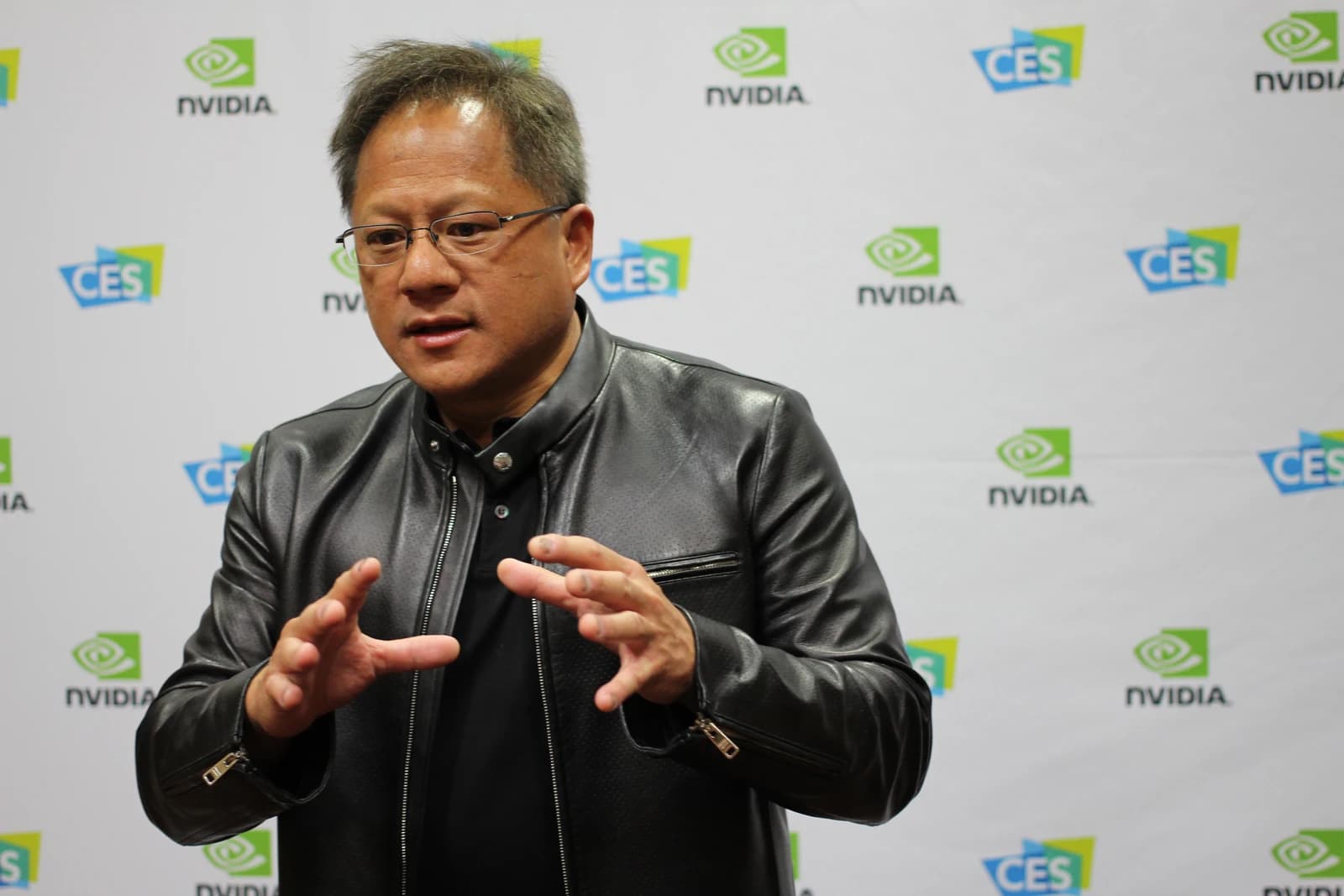
That divergence matters because it goes to the heart of how the U.S. can contain a fast-moving rival without breaking the economics of the global AI supply chain. If policymakers lean harder on model access, they would be targeting the software layer where training know-how and frontier capabilities spread. If they focus on chip denial, they are aiming at the compute layer that powers those models, but also risking more revenue leakage for U.S. chipmakers and faster incentives for China to localize production.
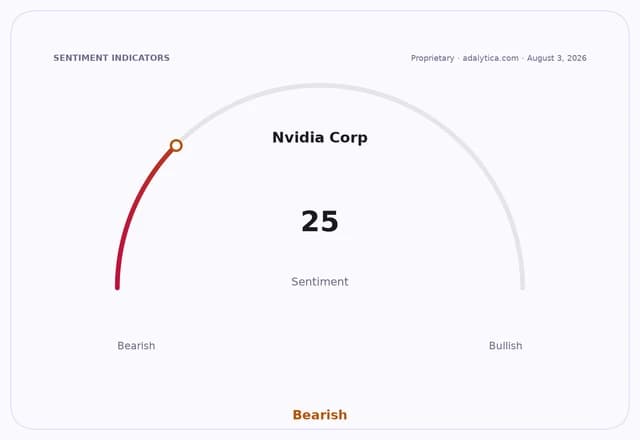
Sentiment IndicatorsⓘProprietary · adalytica.com · August 3, 2026
This is a snapshot — live sentiment, awareness and momentum for 130+ markets update continuously in the dashboard.Open AlphaPulse
For investors, the split is significant because it frames the next phase of AI export controls as a direct contest between policy and profits. Nvidia has become one of the clearest beneficiaries of AI infrastructure spending, and its shares have been volatile around the issue even as the stock has rebounded to about $200.75, with a 50-day moving average near $206.12 and a 200-day average around $192.93. The recent price action suggests the market is still treating China exposure as a swing factor rather than a settled risk.
The semiconductor backdrop underscores that tension. Taiwan Semiconductor Manufacturing Co., Nvidia’s key foundry partner, has seen its shares pull back to about $404.25 from a recent peak above $477, while remaining well above its 200-day average near $356. That points to a market still willing to pay for AI demand, but increasingly sensitive to any policy move that could crimp orders, reshape supply chains or force customers to redesign systems around less capable parts.
Anthropic’s argument for model barriers reflects a broader view inside parts of Washington that the most advanced AI systems should be controlled not just at the hardware level but through the software stack, where open access can accelerate diffusion. Nvidia’s position is economically more straightforward: chip sales support the company’s revenue base and help preserve U.S. influence over China’s AI ecosystem, even under restrictions. A total choke on high-end chips could also accelerate domestic Chinese alternatives and encourage Chinese buyers to stockpile, smuggle or shift to less controlled suppliers.
That is why the debate is not just about export policy but about the shape of the AI market itself. The U.S. can try to slow China by limiting the most advanced chips, but that approach raises costs for American firms and their Asian manufacturing partners. A model-focused strategy could be harder to enforce globally, yet it would be less immediately damaging to hardware vendors. Either way, the policy mix will help determine whether AI remains a concentrated U.S.-led capital expenditure boom or fragments into regional stacks with lower margins and more duplication.
The market is already signaling that the broader AI trade remains bid, but fragile. Sentiment around Nvidia sits in “fear” territory even as awareness remains high, while the wider AI sentiment gauge has dropped to “extreme fear,” suggesting investors are still wrestling with geopolitics, valuation and the durability of infrastructure spending. The next catalyst is whether Washington treats chip sales and model access as interchangeable tools or settles on a more aggressive, layered approach that could hit both software and hardware.
| Entity | Gains | Losses |
|---|---|---|
| U.S. policymakers | ▲More control over AI diffusion | ▼More enforcement complexity |
| Nvidia | ▲Sales if chip exports continue | ▼Revenue if China curbs tighten |
| Anthropic | ▲Influence on frontier AI policy | ▼Less leverage if chip controls dominate |
| Chinese AI developers | ▲More room if model barriers are weaker | ▼Slower progress under tighter chip denial |




