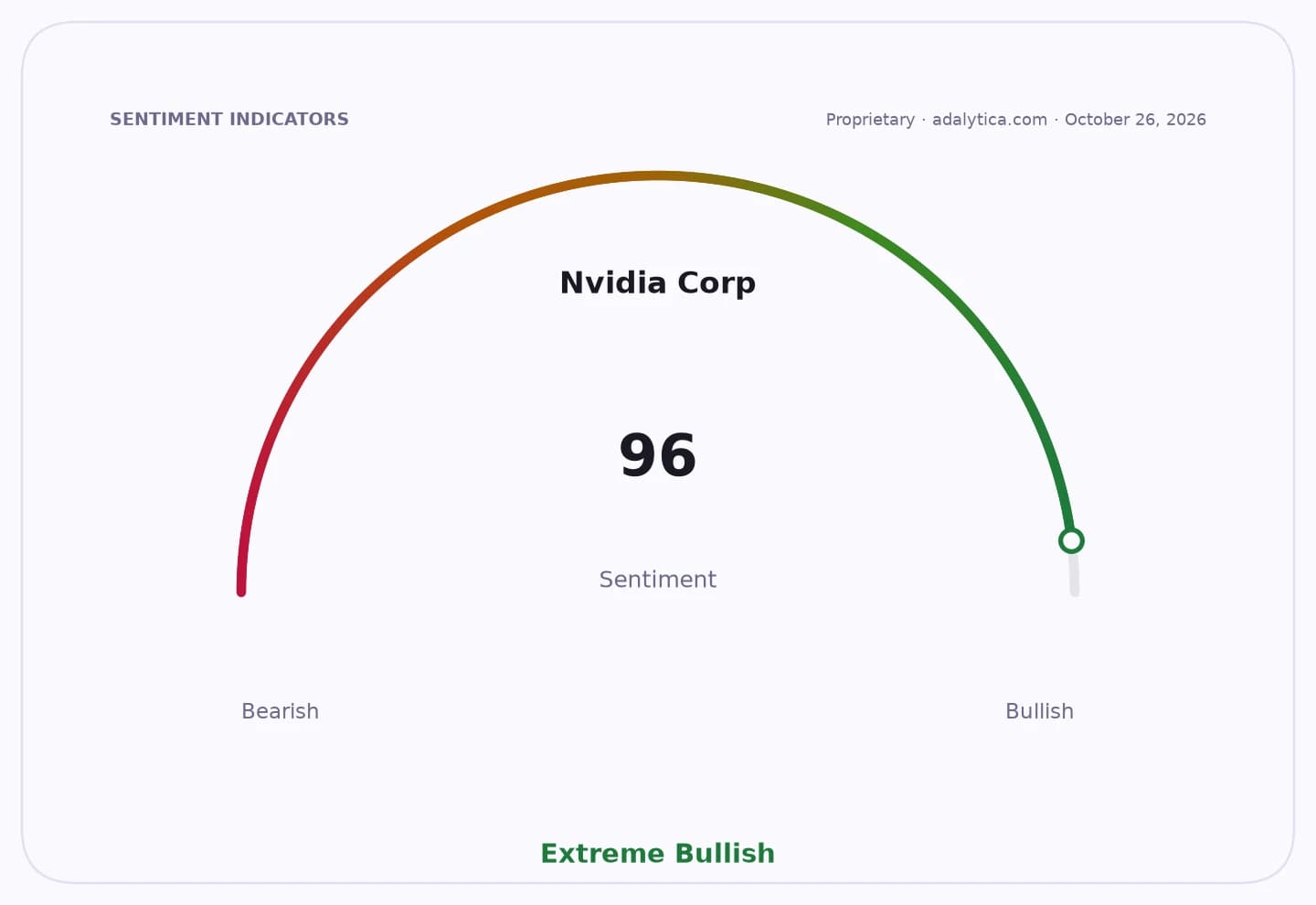
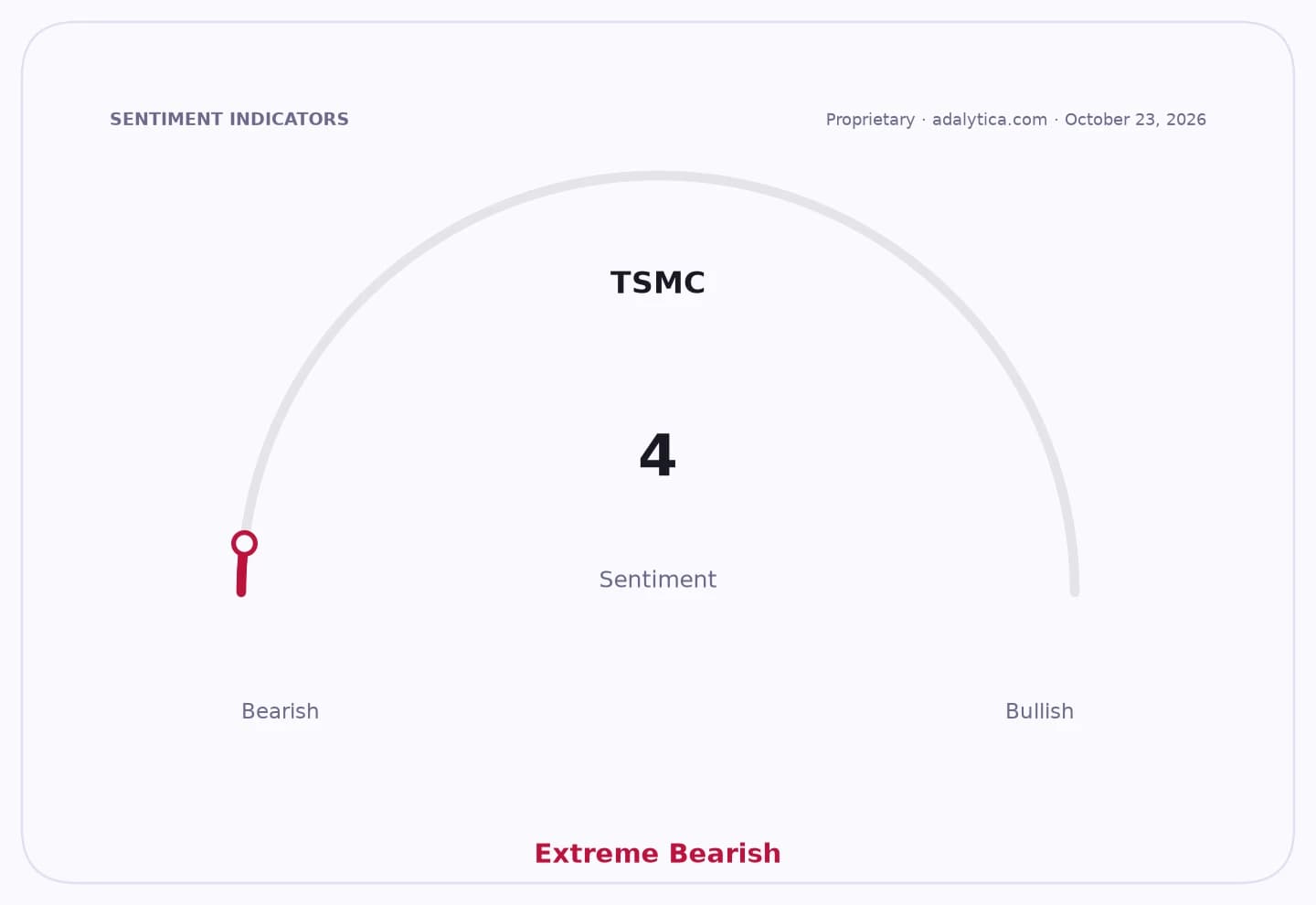
Nvidia Chief Executive Jensen Huang said US export controls are accelerating China’s bid to build a self-sufficient semiconductor industry, a reminder that Washington’s technology restrictions may be narrowing Nvidia’s near-term sales in China while hastening the emergence of a longer-term rival.
Nvidia CEO says China chip self-sufficiency is accelerating
Huang told CNBC the curbs have compressed what could have been a decade of development into roughly five years, as Chinese companies and policymakers pour capital into domestic manufacturing, memory, power systems and other industrial inputs needed to support a homegrown chip stack. That makes the policy trade-off clearer for investors: export controls can protect US technological advantages in the short run, but they can also incentivize China to localize faster and reduce future dependence on American suppliers.
Sentiment Indicators
The comments land at a sensitive moment for the AI hardware trade. Nvidia has repeatedly warned in filings that export controls are already limiting its ability to sell advanced data-center GPUs and related networking products, and could further weaken demand in China while giving overseas customers a reason to lean on competitors. Huang’s remarks suggest that the strategic cost of those restrictions may extend beyond lost sales today to a more competitive China-driven supply base tomorrow.
For Nvidia, the issue is not just revenue at risk in one market. China remains one of the world’s largest technology markets, and Huang said the company wants to keep competing there if access remains open. But the longer restrictions stay in place, the greater the incentive for Chinese firms such as Huawei and others across the supply chain to build substitute products, partnerships and domestic capacity that could eventually pressure margins, pricing power and market share.
There is also a broader industrial-policy implication. Huang’s view that China’s manufacturing ecosystem is “better” than any other country collectively underscores why chip controls alone may not fully contain China’s progress: Beijing can mobilize scale across semiconductors, batteries, solar, cooling and power infrastructure in ways that accelerate ecosystem development. For investors, that raises the risk that the AI supply chain becomes more regionally fragmented, with US firms facing both restricted access to China and a faster-improving Chinese competitive base.
The near-term market effect is likely to remain mixed. Bulls can argue Nvidia still has a major lead in advanced AI chips, software and system design, while bearish investors will focus on the possibility that policy constraints cap one of the company’s biggest addressable markets and hasten local substitution. The key watch point is whether US restrictions stay tight enough to slow China’s access to frontier chips without unintentionally financing the next generation of Chinese rivals.
| Entity | Gains | Losses |
|---|---|---|
| US policymakers | ▲Tech leverage | ▼Near-term China sales |
| Nvidia | ▲Global demand outside China | ▼China revenue growth |
| Chinese chipmakers | ▲Domestic investment | ▼US technology access |
| AI buyers in China | ▲Local supply alternatives | ▼Access to Nvidia chips |