Washington’s decision to let Chinese customers buy NVIDIA’s H200 chips is a selective easing of export restrictions that could unlock a new stream of AI revenue for the U.S. leader while leaving the broader technology rivalry intact.
NVIDIA Gains Limited China Access
The move matters economically because China remains one of the largest addressable markets for advanced semiconductors, and even constrained access can translate into billions of dollars in potential sales for NVIDIA and demand across its supply chain. It also signals that the Biden-era export-control architecture, designed to slow China’s access to frontier AI hardware, is being adapted rather than dismantled, with Washington still trying to balance national-security concerns against the commercial weight of U.S. chipmakers.
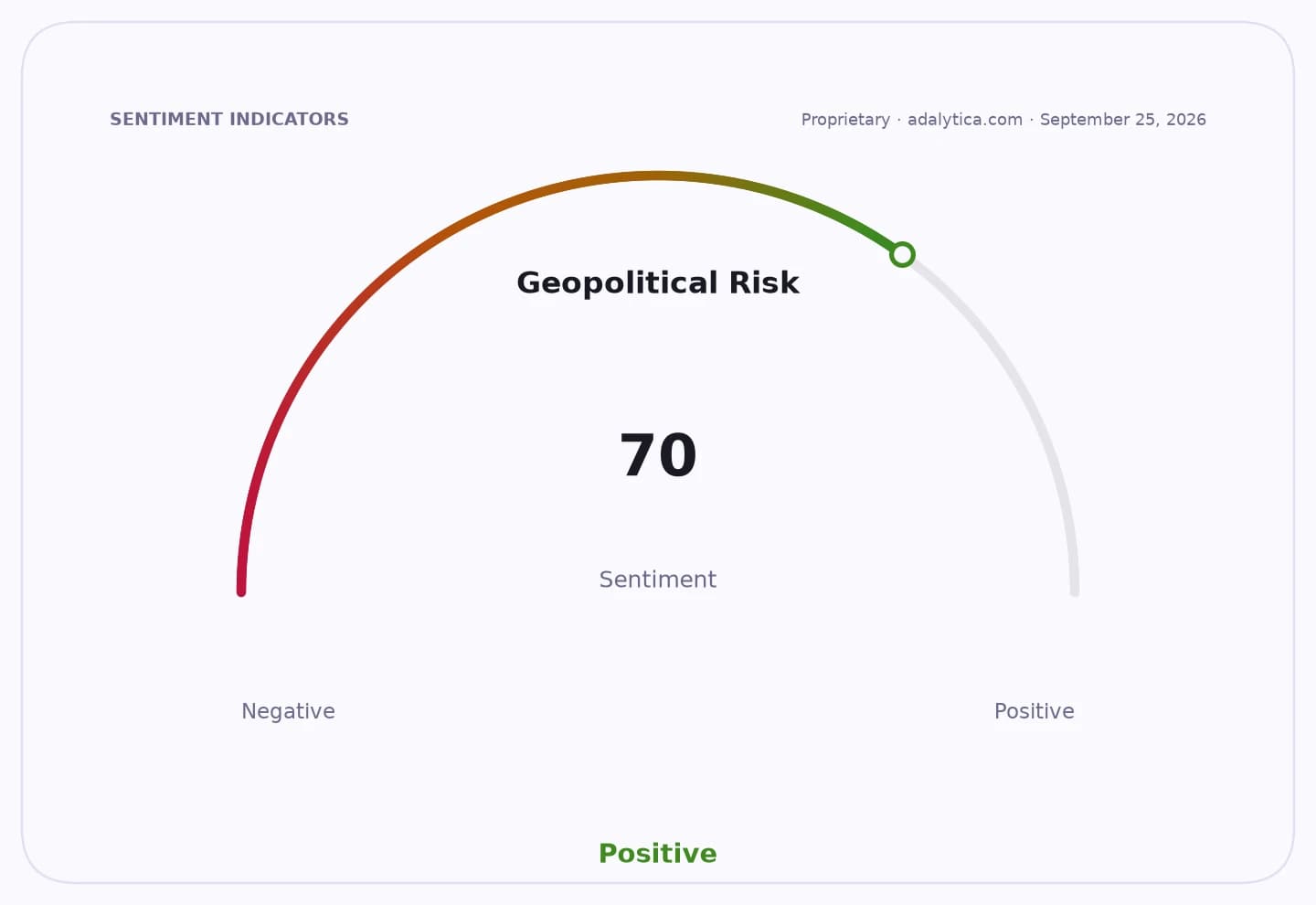
Sentiment IndicatorsⓘProprietary · adalytica.com · July 24, 2026
This is a snapshot — live sentiment, awareness and momentum for 130+ markets update continuously in the dashboard.Open AlphaPulse
For NVIDIA, the approval gives it a way to sell a less-advanced but still highly capable part into a market that had been increasingly cut off from its most powerful data-center accelerators. That is important because investors have long viewed China as both a growth opportunity and a policy risk. Reopening even a limited channel can cushion the blow from lost sales of top-end GPUs, while keeping the company’s pricing power and ecosystem relevance intact in the world’s second-largest economy.
The stock has reflected that tension. NVIDIA shares have held near record territory, with the latest close at $208.76 and the 50-day moving average at $209.38, suggesting the market has already priced in strong demand but not necessarily a full normalization of China revenue. Technical indicators show the shares cooling from overbought levels, with RSI around 62, after a sharp run earlier this year. Adalytica’s earnings sentiment gauge still reads “Extreme Greed,” though it slipped 14 points on the day, underscoring how quickly expectations can reset on policy headlines.
For the semiconductor industry, the approval reinforces a broader narrative: Washington is not sealing China off completely, but rationing access to the most strategic technology. That creates a more complex operating environment for chipmakers and their customers. NVIDIA may gain incremental sales, but the permission also underscores how vulnerable its China business remains to future regulatory changes. Rivals and substitute suppliers could still benefit if Chinese buyers continue to diversify toward domestic chips or non-U.S. alternatives in response to uncertainty.
The decision also has implications beyond NVIDIA. Taiwan Semiconductor Manufacturing, a key supplier to advanced chip designers, stands to benefit from any uplift in AI hardware shipments even if the policy limits the very highest-spec products. TSMC shares have also been strong, though they have recently pulled back from highs, reflecting the same mix of demand strength and macro caution that is visible across the sector.
The larger market message is that the AI buildout is not stopping at the border, but it is being reshaped by geopolitics. Investors will now focus on whether the H200 authorization is a one-off concession or the start of a more pragmatic licensing regime. The key question is not just how much NVIDIA can sell into China, but whether Washington has found a formula that preserves U.S. technological leverage without sacrificing too much commercial upside.
| Entity | Gains | Losses |
|---|---|---|
| NVIDIA | ▲China sales access | ▼Policy uncertainty |
| Chinese buyers | ▲Access to H200 chips | ▼No top-tier AI access |
| TSMC | ▲More chip demand | ▼Export-control volatility |
| U.S. policymakers | ▲Tighter trade leverage | ▼Pressure on hardline limits |