Nvidia Chief Executive Jensen Huang is throwing his support behind Chancellor Friedrich Merz’s bid to make Germany a leader in industrial artificial intelligence, a shift with immediate implications for Europe’s largest economy, its technology supply chain and investors betting on AI infrastructure spending.
Nvidia backs Germany's industrial AI push

The public backing comes after Huang recently questioned how far behind Germany has fallen technologically, but in Berlin he struck a more upbeat tone as Merz pressed ahead with an investment summit aimed at turning the country into a hub for factory-grade AI. For Germany, the message matters because industrial AI is increasingly central to productivity, manufacturing competitiveness and the ability to attract capital in a region still lagging the US and Asia in core digital infrastructure.
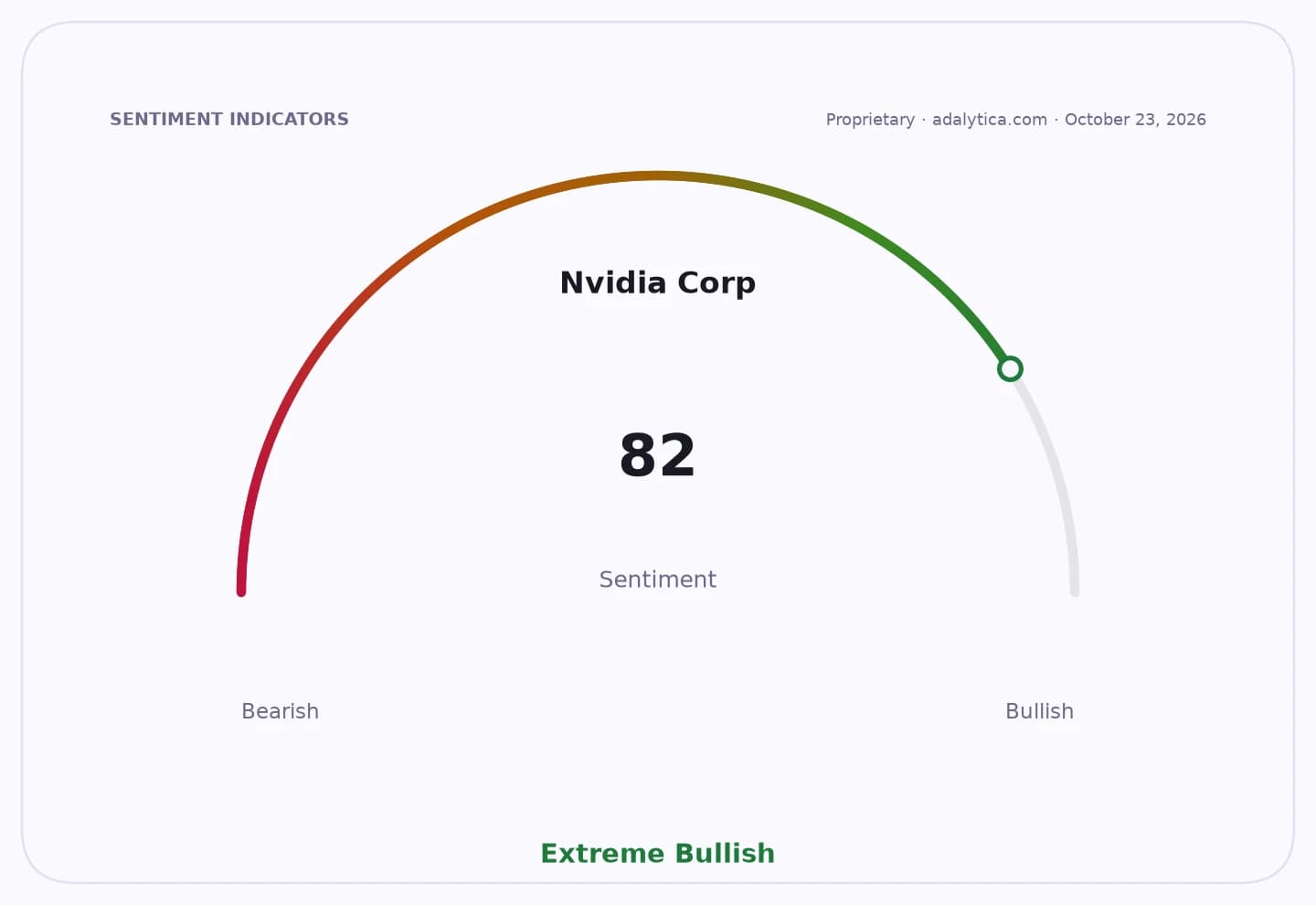
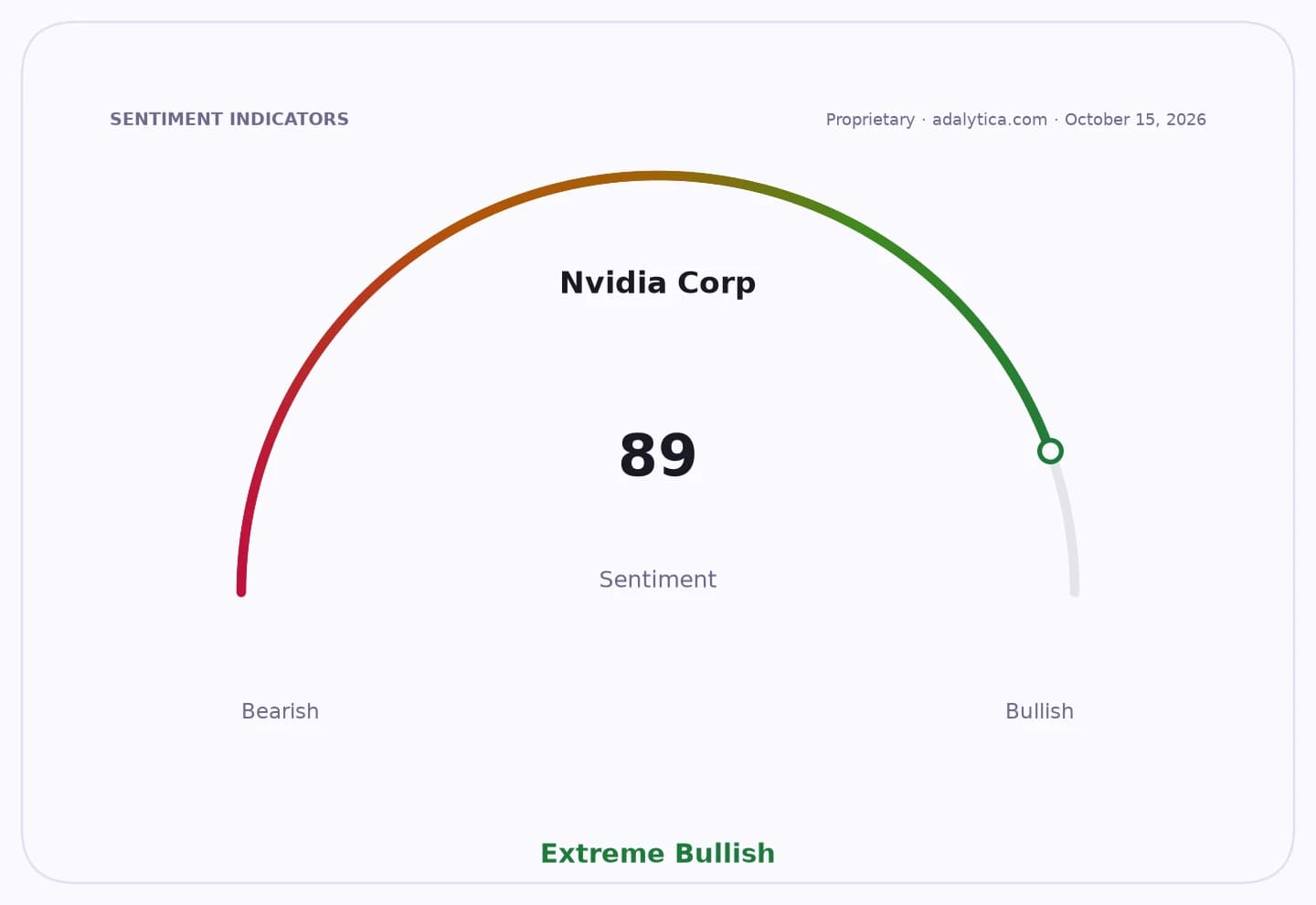
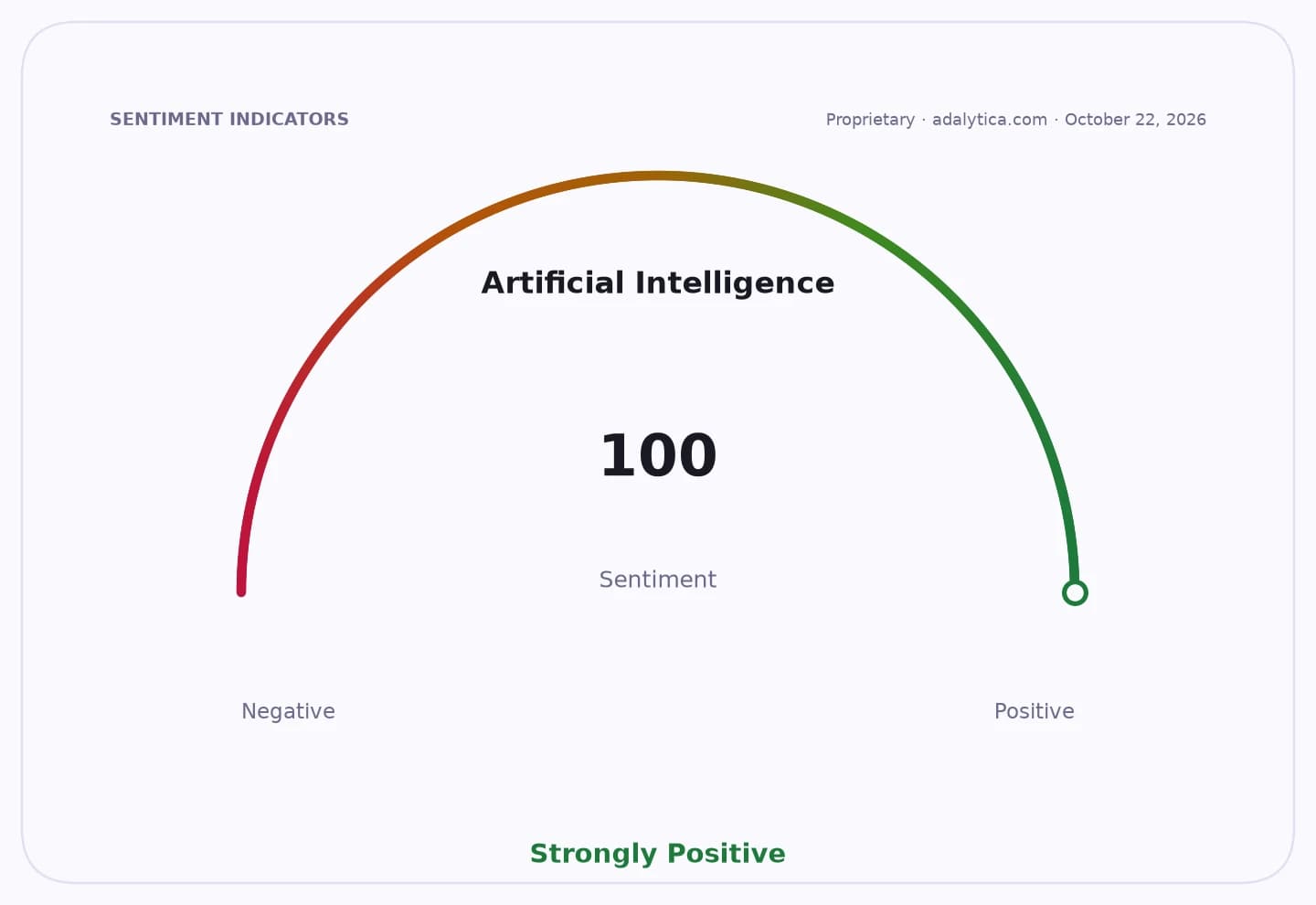
Sentiment IndicatorsⓘProprietary · adalytica.com · October 24, 2026
This is a snapshot — live sentiment, awareness and momentum for 130+ markets update continuously in the dashboard.Open AlphaPulse
For Nvidia, Germany is not just a political stop. It is a potential demand center for AI chips, data-center gear and enterprise software partners as Europe tries to modernize factories, logistics and industrial automation. That makes Huang’s appearance more than optics: it supports the case that AI spending remains a multi-year theme even as the stock has cooled from recent highs.
Nvidia shares closed at $210.96 on Oct. 23, down from $221.97 the prior session, leaving the stock below its 50-day moving average of $222.39 and well above its 200-day average of $203.36. The Relative Strength Index at 22.0 points to deeply oversold conditions, while the MACD remains negative, underscoring the recent pullback even as the broader AI trade stays in focus.
Microsoft, another key AI infrastructure beneficiary, also remains central to the story. Its shares finished at $524.51 on Oct. 23, above both the 50-day and 200-day moving averages, with RSI at 49.6. That positioning suggests investors are still treating AI spending as a durable capex theme, even if individual names are digesting sharp runs and uneven sentiment.
The stakes for Europe are broader than one corporate endorsement. Germany’s industrial base depends on staying competitive in automotive, engineering and manufacturing, sectors that could see efficiency gains from AI-driven design, production and maintenance. If Berlin can convert summit pledges into actual investment, it could help narrow the gap with the US while creating a larger market for Nvidia, Microsoft and Asian chipmakers including Taiwan Semiconductor Manufacturing.
TSMC shares closed at $418.51 on Oct. 23, below the 50-day average of $433.62 and with RSI at 21.9, reflecting the broader reset in chip stocks even as demand expectations for AI hardware remain intact. Investors will now watch whether Merz can translate Huang’s support into concrete factory, cloud and semiconductor commitments, and whether Germany can turn symbolic praise into measurable industrial investment.
| Entity | Gains | Losses |
|---|---|---|
| Germany/Chancellor Merz | ▲AI investment pitch | ▼Tech credibility gap |
| Nvidia | ▲New enterprise demand | ▼Short-term stock momentum |
| Microsoft | ▲Industrial AI adoption | ▼Near-term valuation pressure |
| TSMC | ▲AI chip orders | ▼Broader semiconductor weakness |