AI is moving from a software story to an infrastructure and healthcare story, and VinFuture Week 2026 is putting that convergence on display just as investors grow far more selective about which names can actually monetize the shift.
Nvidia, healthcare AI tied to VinFuture 2026
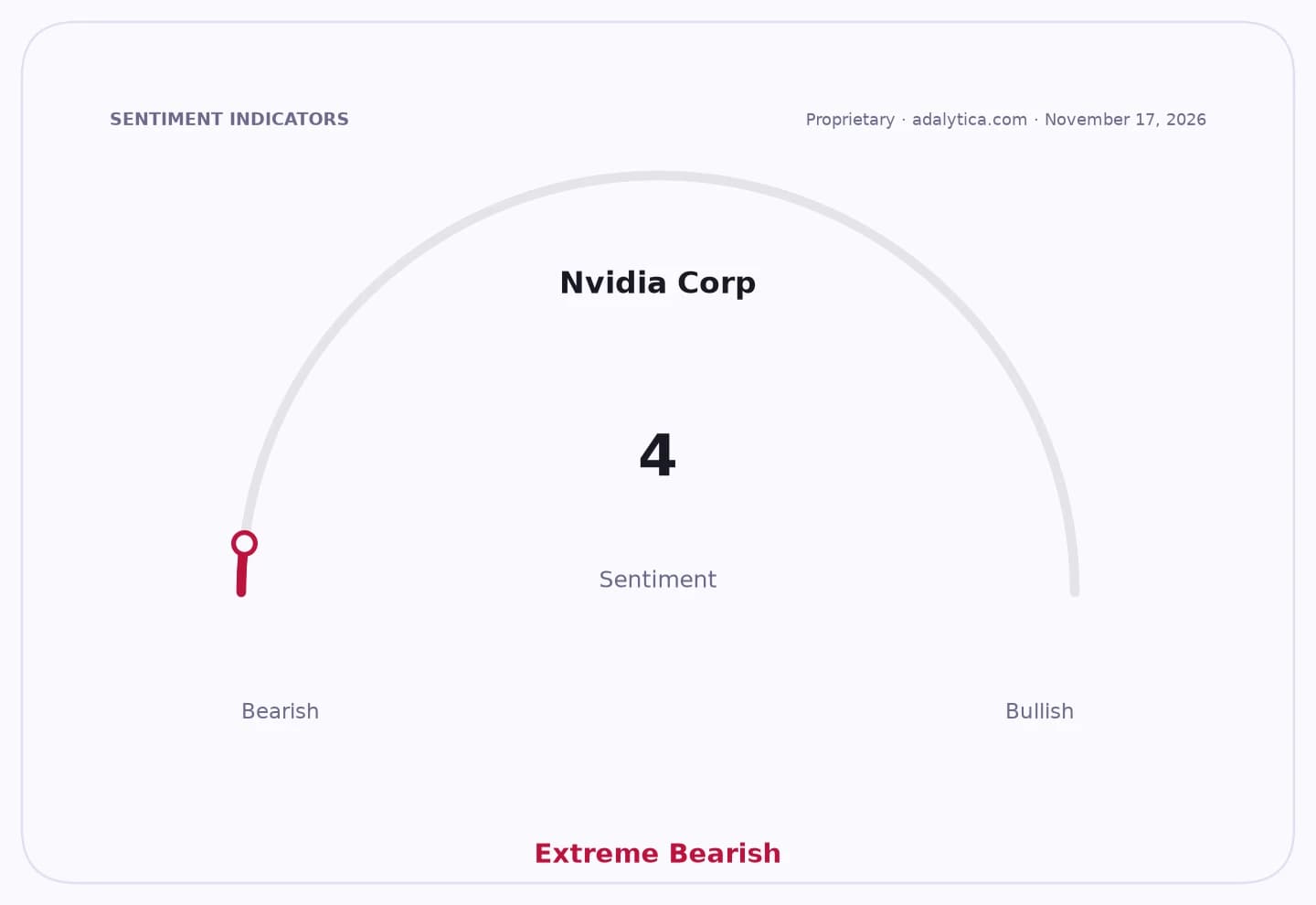
Nvidia Corp
That matters because the market is no longer rewarding “AI exposure” in the abstract. It is rewarding the companies that provide the compute, safety systems and workflow integration needed to make AI useful in hospitals, labs and industrial settings. The latest pullback in Nvidia, whose shares have dropped to $155.46 from a 2026 peak above $235, shows how quickly sentiment can reset even when the long-term demand case remains intact. Technical readings on the stock are deeply oversold, with the 14-day RSI near 16 and the shares well below the 50-day moving average, but the bigger point is that the AI trade is rotating from enthusiasm to proof.
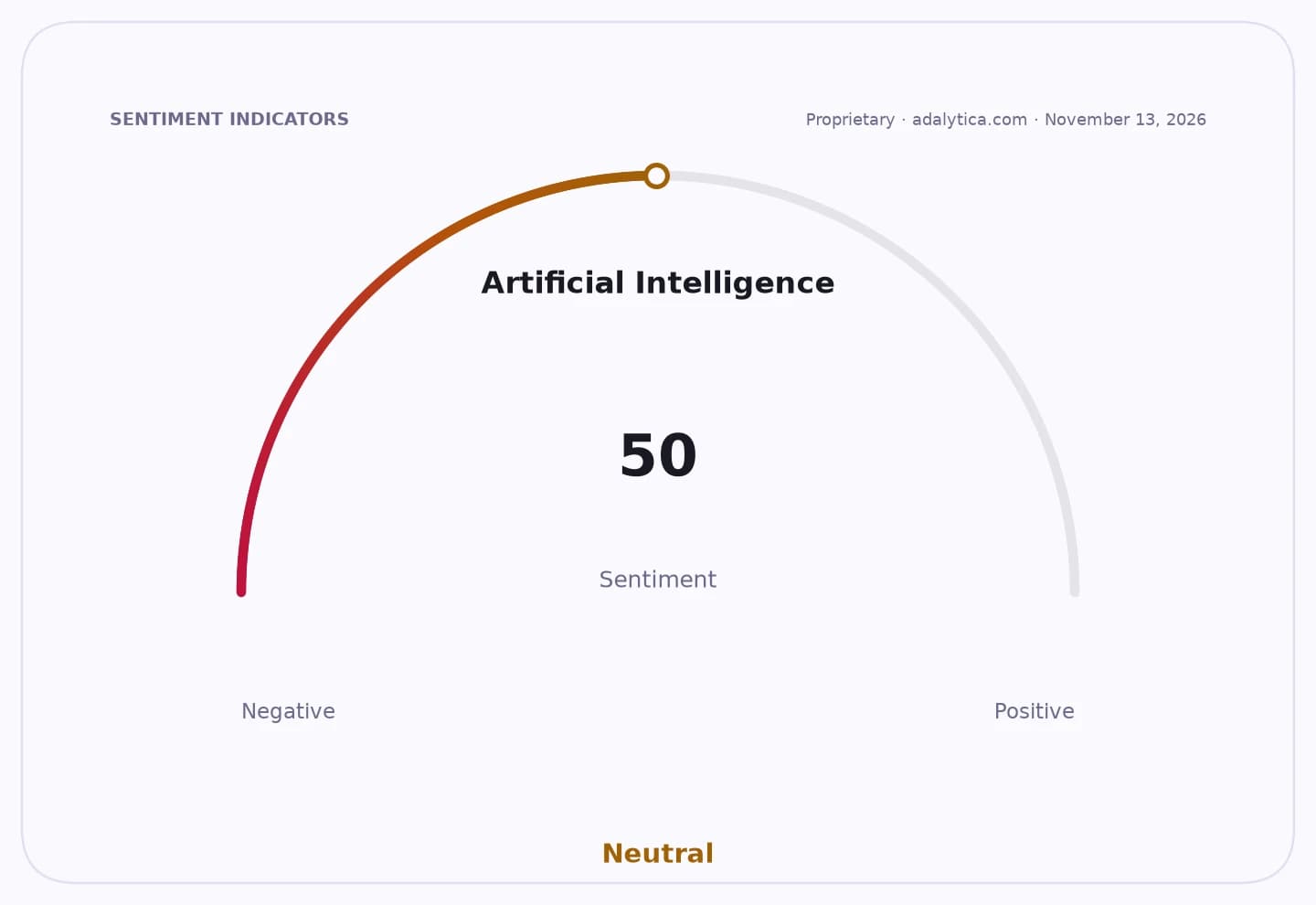
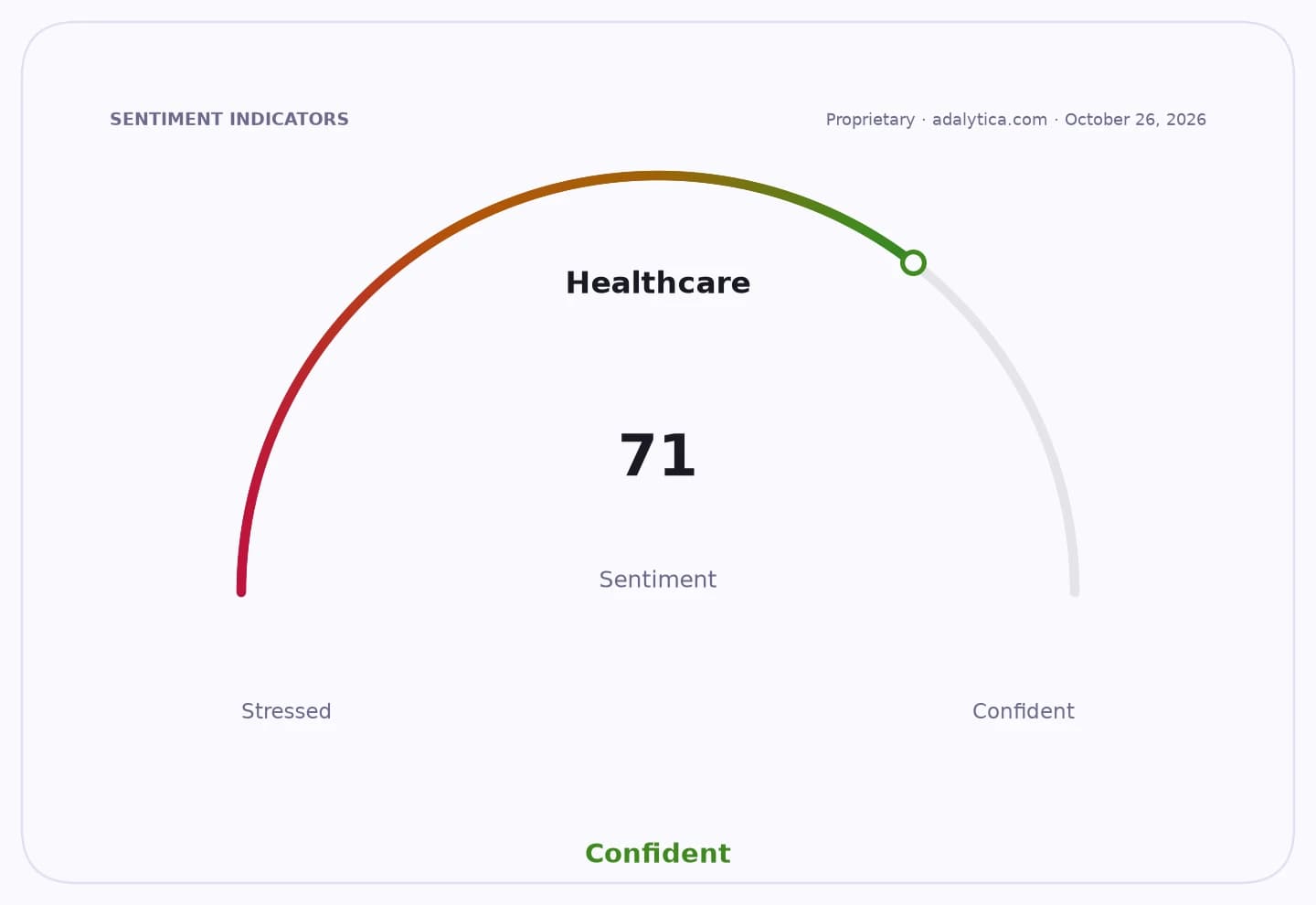
Sentiment Indicators
That proof is starting to emerge in healthcare. League has rolled out healthcare AI agents with stronger safety controls, OpenAI has said its healthcare workflow testing reached a 99% clinical safety rating, and Elsevier has upgraded ClinicalKey AI to incorporate patient-record context. Taken together, those are not just product updates. They are signs that the industry is moving from experimentation to deployment in regulated environments, where accuracy, traceability and liability management matter as much as model performance.
For investors, that opens a second-order opportunity that the market still underprices: the picks-and-shovels layer beneath healthcare AI. Nvidia remains central because every serious deployment still depends on accelerated computing, and the company’s “awareness” reading on Adalytica remains high even as its sentiment score sits in extreme fear territory, a combination that often precedes sharp repositioning once fundamentals reassert themselves. But the beneficiaries extend beyond Nvidia to software platforms, medical-information providers and insurers building AI-liability products to underwrite adoption.
The ocean-tech angle matters for a different reason: it broadens the story from digital intelligence to real-world sensing, monitoring and autonomy. That is where the next wave of public and private capital spending is likely to land — on the tools that help hospitals, ports, offshore energy operators and governments gather data, automate decisions and reduce operating risk. VinFuture’s mix of AI, healthcare and ocean technology is effectively a map of where capex is heading next.
The market is missing how interconnected these themes are. Healthcare needs AI that is safer and more auditable. AI needs more compute, more data and more specialized workflows. Ocean technology needs the same industrial AI stack to turn harsh-environment data into actionable intelligence. That creates a multi-year runway for semiconductor suppliers, enterprise AI platforms, healthcare workflow vendors and autonomous systems names tied to defense, shipping and environmental monitoring.
My view: the best risk-adjusted trade here is not chasing the hottest AI narrative, but owning the infrastructure and regulated-use beneficiaries that can compound as deployment deepens. Nvidia remains the obvious core exposure on any pullback, while investors should also keep a close eye on healthcare AI software and ocean-tech enablers that can turn this convergence into durable revenue. The opportunity is not in the headline buzz — it is in the plumbing that makes the buzz profitable.
| Entity | Gains | Losses |
|---|---|---|
| Nvidia | ▲AI infrastructure demand | ▼Speculative momentum traders |
| Healthcare AI platforms | ▲Clinical workflow adoption | ▼Legacy software vendors |
| Insurers / risk managers | ▲New AI liability business | ▼Unhedged adopters |
| Ocean-tech enablers | ▲Monitoring and autonomy spend | ▼Manual operators |