Nvidia’s move to join the Klarna co-founder’s foundation in launching a Stockholm AI hub underscores how the AI race is widening beyond the U.S. and into Europe’s bid to build a more self-sufficient technology stack.
Nvidia Joins Stockholm AI Hub Launch

The significance is less about one office in Sweden than about where the next layer of AI infrastructure, talent and capital could accumulate. For Europe, the risk has long been that it becomes a consumer of U.S. and Asian AI hardware, cloud capacity and model training, while the value capture stays elsewhere. A Stockholm hub backed by Nvidia gives the region a better shot at keeping more of that activity onshore, while also tying one of the world’s most important AI suppliers more closely to European startups, researchers and enterprises.
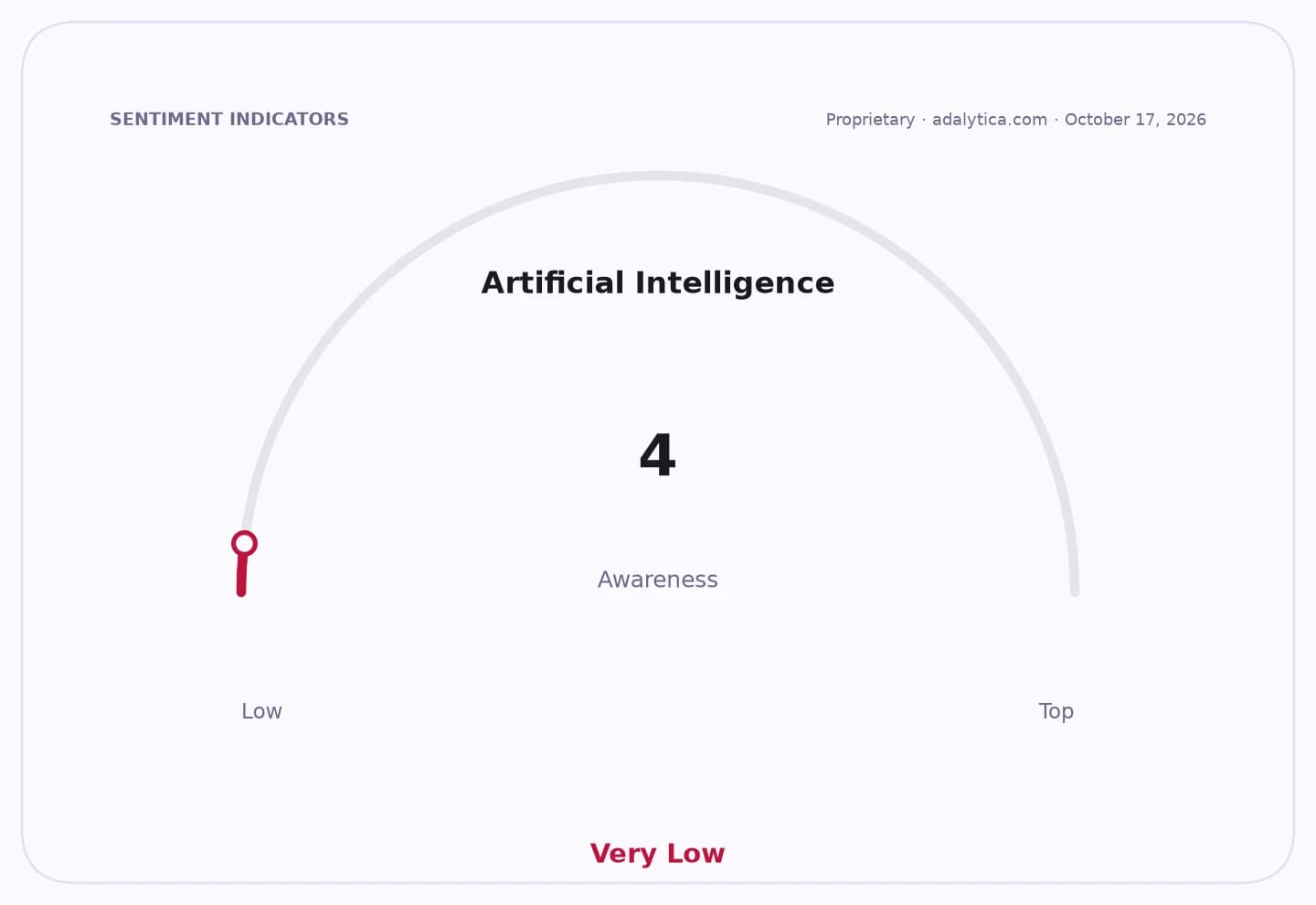
Sentiment IndicatorsⓘProprietary · adalytica.com · October 17, 2026
This is a snapshot — live sentiment, awareness and momentum for 130+ markets update continuously in the dashboard.Open AlphaPulse
That matters economically because AI hubs are becoming real industrial policy tools. They can concentrate engineers, founders, compute access and early-stage financing in the same place, accelerating adoption in sectors from finance and logistics to manufacturing and public services. Sweden already has a deep technology base, and a well-capitalized hub could help the Nordic region translate research strength into commercial deployment. For Nvidia, the initiative is also strategically useful: it extends the company’s influence at a time when governments are asking how AI will be governed, where data will sit and who supplies the underlying hardware.
Investors should read the announcement as another sign that Nvidia’s growth story is no longer only about selling accelerators to hyperscalers. The company is increasingly embedded in a broader ecosystem of AI labs, cloud providers, sovereign initiatives and startup networks. That is consistent with its recent filings, which describe longer-duration commitments and a push to broaden access to its data center infrastructure products for startups, enterprises and sovereign customers. In other words, Nvidia is not just shipping chips; it is helping shape the market structure around them.

The market backdrop is still constructive for AI infrastructure, even if sentiment has become more volatile. Nvidia shares have recently retreated from earlier highs, with the stock closing at $214.13 on Oct. 16, below its 50-day moving average of $222.96, while RSI readings had fallen to 32.9, suggesting the rally had cooled. But the longer-term setup remains stronger than the short-term chart implies, with the stock still well above its 200-day moving average of $202.66. Adalytica’s NVIDIA Earnings Sentiment gauge also points to continued investor appetite, even after a recent pullback in awareness.
For Europe, the Stockholm hub fits a broader scramble to avoid being left behind in the buildout of AI capacity. Chinese leaders are pushing standardized AI development in smart cities, Moldova has launched its own AI hub, and governments from Brussels to national capitals are increasingly treating AI as an economic competitiveness issue rather than a niche technology policy debate. The common thread is that AI is moving from experimentation to infrastructure, and infrastructure tends to cluster where capital, talent and policy align.
The bull case is that Nvidia’s support for a Stockholm hub deepens demand for its ecosystem and helps seed new customers across Europe. The bear case is that the initiative remains mostly symbolic unless it is paired with meaningful compute, power and regulatory support. Either way, it shows the AI race is shifting from model launches to local ecosystems — and Nvidia wants to be present wherever that next phase gets built.
| Entity | Gains | Losses |
|---|---|---|
| Nvidia | ▲Deeper European reach | ▼Less ecosystem control if rivals localize |
| Stockholm AI hub | ▲Talent and capital inflow | ▼Pressure to deliver real compute scale |
| European startups | ▲Better access to AI infrastructure | ▼Dependence on external chip supply |
| U.S. hyperscalers | ▲Stronger partner network | ▼More competition for regional AI projects |