Oversea-Chinese Banking Corp has priced $1.36 billion of covered bonds, underscoring how strong credit demand is letting top Asian lenders lock in long-term funding even as markets remain cautious on broader corporate debt.
OCBC Prices $1.36 Billion Covered Bonds

The deal matters because covered bonds are among the safest forms of bank debt, backed by pools of high-quality assets and usually priced tighter than unsecured borrowing. For OCBC, the issue provides stable financing at a time when deposit competition, regulatory capital pressure and uncertainty around global rates are shaping banks’ funding strategies. For investors, it is another sign that money is still available for high-grade issuers even as risk appetite stays selective.
Sentiment IndicatorsⓘProprietary · adalytica.com · August 20, 2026
This is a snapshot — live sentiment, awareness and momentum for 130+ markets update continuously in the dashboard.Open AlphaPulse

OCBC’s shares have also reflected that resilience. The stock closed at S$30.63 on Aug. 20, well above its 50-day moving average of S$27.22 and the 200-day average of S$21.98, suggesting the market has rewarded the bank’s earnings and balance-sheet strength. At the same time, the 14-day relative strength index of 69.1 shows momentum is still firm but approaching overbought territory, which implies the rally has been strong enough to leave less room for error.
The broader backdrop is favorable for large Singapore lenders. OCBC, DBS and United Overseas Bank have benefited from the city-state’s reputation for credit quality, a sticky deposit base and deep Asian wealth inflows. In that environment, covered bonds are a useful tool because they diversify funding away from deposits and wholesale unsecured debt while helping banks manage maturity profiles more efficiently.

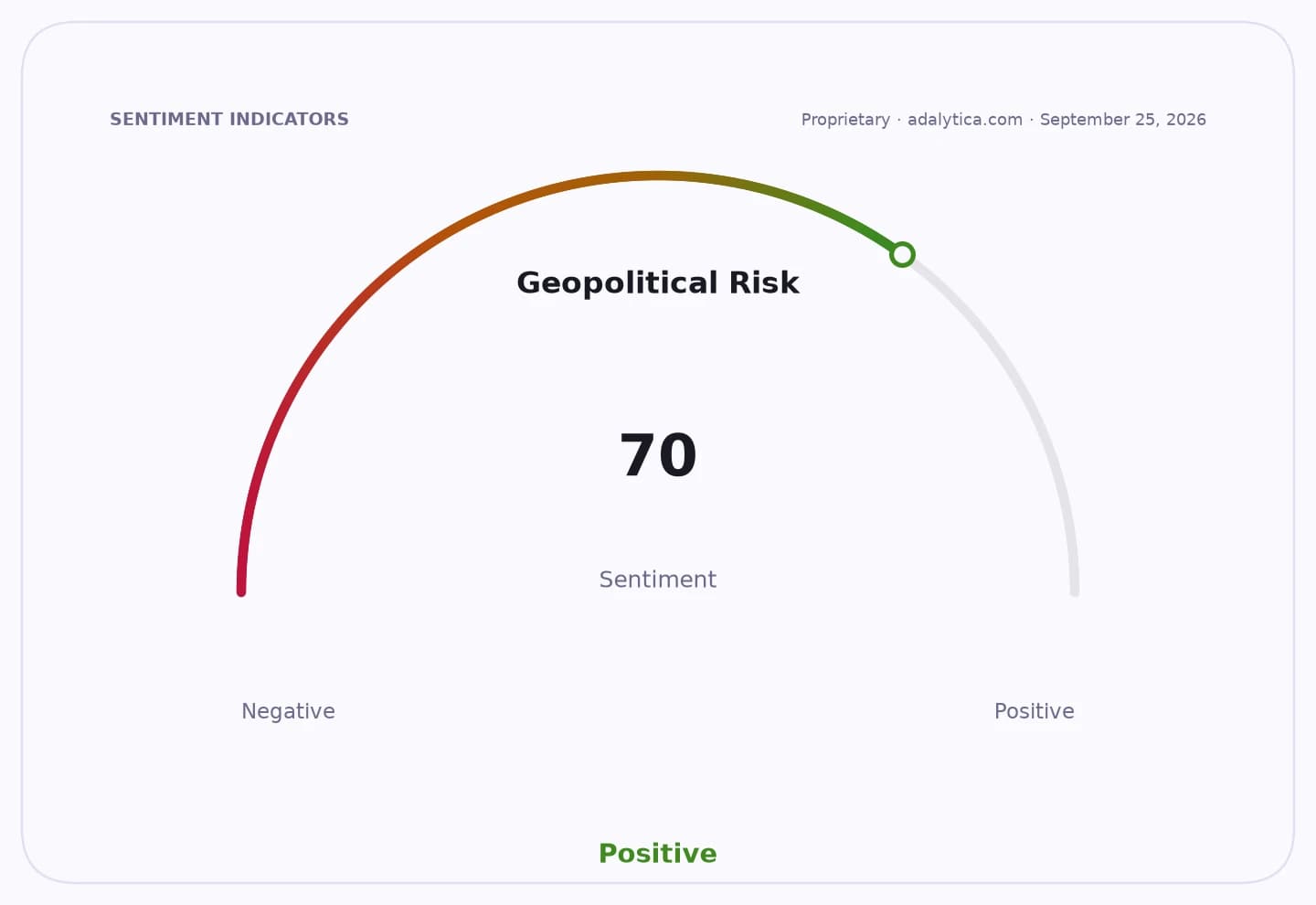
The issuance also lands in a market where investors remain wary of lower-rated borrowers and macro risks. Adalytica’s U.S. dollar trade signal shows extreme fear, while the S&P 500 snapshot points to a more cautious tone in broader risk assets. That contrast helps explain why top-tier bank paper can still clear quickly even when appetite for weaker credits is uneven.
For OCBC, the transaction should support lending flexibility and liquidity planning into year-end. For bond investors, it reinforces a simple split in credit markets: premier financial institutions can still borrow on attractive terms, while everyone else faces a tougher test of demand and pricing.
| Entity | Gains | Losses |
|---|---|---|
| OCBC | ▲Cheaper long-term funding | ▼Less reliance on deposits |
| Bond investors | ▲High-grade bank exposure | ▼Limited yield pickup |
| Competing lenders | ▲Benchmark for pricing | ▼Pressure to match funding terms |
| Lower-rated borrowers | ▲— | ▼Tighter risk appetite |