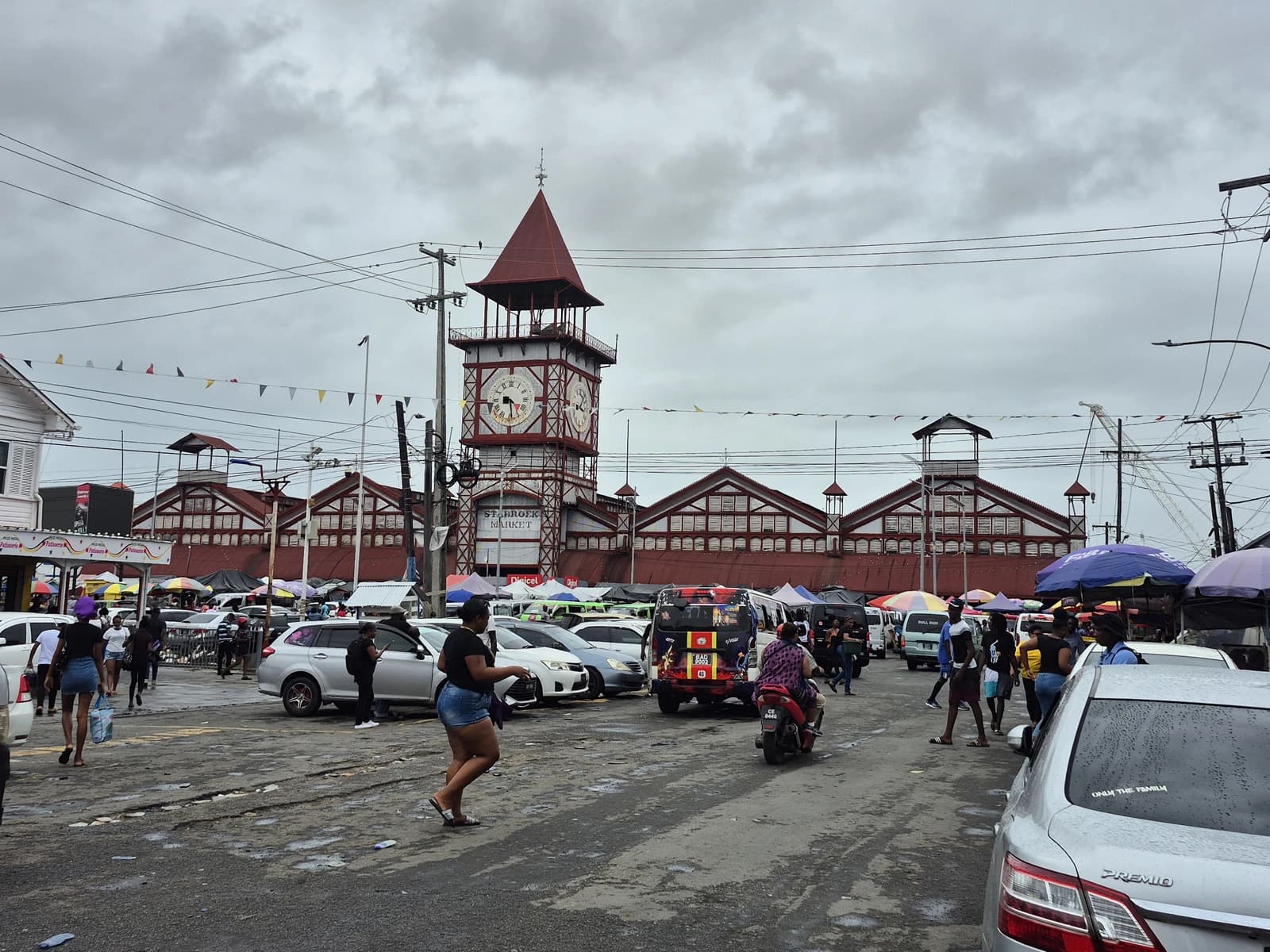
Odessa’s shipping shutdown is more than another wartime headline — it is a direct hit to one of the world’s most important trade arteries, and it raises the odds of higher freight costs, tighter grain supplies and renewed volatility in energy-linked shipping markets.
Odessa Shutdown Raises Freight and Grain Risks
For investors, the key point is simple: when a major Black Sea port goes dark, the shock does not stay local. Ukraine’s move to suspend port shipping underscores how the naval conflict is turning commercial sea lanes into military targets, forcing exporters, shipowners and commodity buyers to reprice risk across the region. That matters economically because Odessa has been central to moving grain and bulk cargoes out of Ukraine, and any prolonged interruption can ripple through food markets, freight rates and insurance premiums.
Sentiment IndicatorsⓘProprietary · adalytica.com · July 26, 2026
This is a snapshot — live sentiment, awareness and momentum for 130+ markets update continuously in the dashboard.Open AlphaPulse
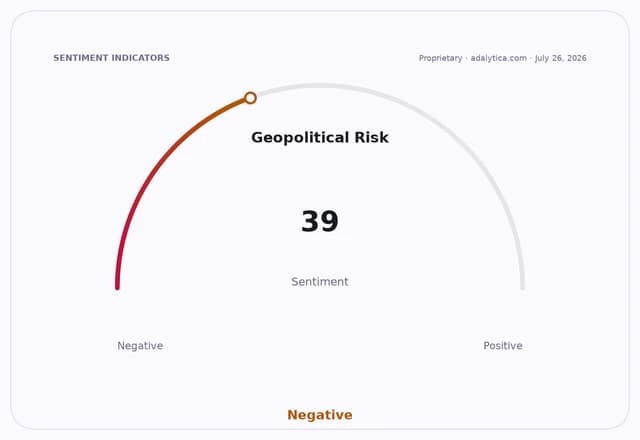
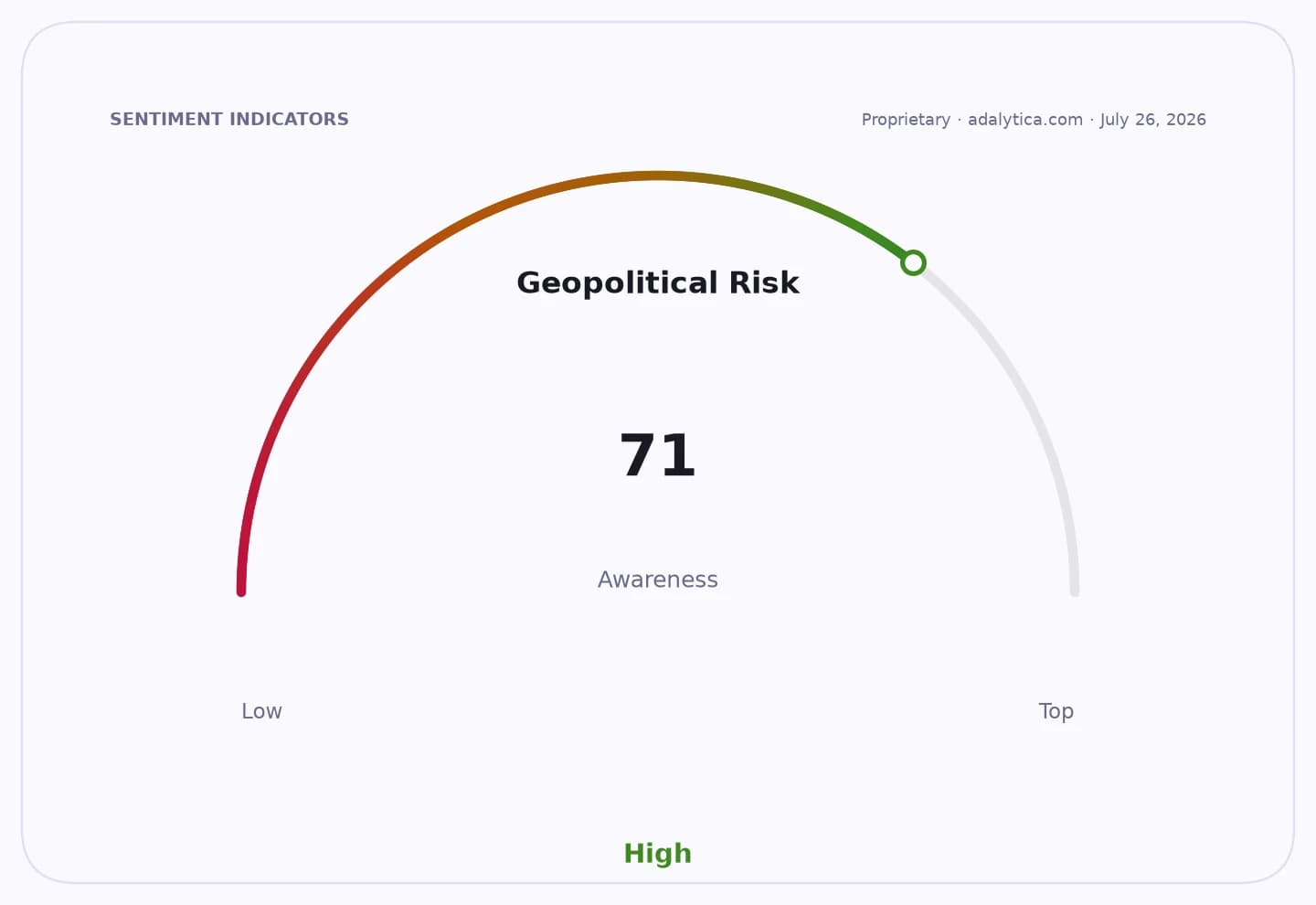
The timing is especially important because market conditions are already fragile. Adalytica’s Global Stability Sentiment has slid to neutral at 39, while its awareness reading sits at 71, a sign that investors are paying close attention even if broader confidence has not fully cracked. At the same time, Adalytica’s WTI oil trade signals show extreme fear, reflecting how geopolitical stress keeps energy traders on edge whenever conflict threatens shipping routes and regional supply chains.
The economic damage is not confined to Ukraine. A sustained halt at Odessa could tighten global grain availability, particularly for import-dependent countries that rely on Black Sea supplies. That can feed through to food inflation, which is painful for consumers and politically sensitive for governments. It also puts pressure on logistics firms, marine insurers and commodity merchants that depend on predictable routing through the Black Sea and the Azov Sea.
Geopolitical Risk vs BDRYadalytica.com
Explore this data interactively — full history, time series and cross-market comparisons.Open AlphaPulse

Investors should also note the second-order effects. When cargo vessels and port infrastructure become targets, freight contracts can reset quickly, and the winners are often fewer in number than the losers. Companies with exposure to alternative routes, higher rates or regional supply bottlenecks can benefit, while exporters, grain buyers and operators tied to Black Sea throughput may see margins squeezed. The broader market lesson is that geopolitics can act like a hidden tax on trade, and those costs tend to linger long after the headlines fade.
This is why long-term investors should watch more than just the immediate news flow. Black Sea disruptions can change shipping patterns, alter commodity pricing and support persistent demand for transport redundancy, storage and security. They can also keep energy and grain markets unusually sensitive to fresh developments, which is exactly the kind of environment that rewards patience and diversification rather than short-term guessing.
For now, Odessa’s shipping halt looks like another reminder that war risk in Eastern Europe is not only a military issue — it is a market issue, a food-security issue and, for investors, a reason to stay alert to the companies and commodities most exposed to the Black Sea.
| Entity | Gains | Losses |
|---|---|---|
| Black Sea freight and insurers | ▲Higher risk premiums | ▼Trade disruption |
| Grain exporters outside the region | ▲Better pricing power | ▼None directly |
| Ukraine’s port economy | ▲None | ▼Lost shipping activity |
| Importers and consumers | ▲None | ▼Higher food costs |