Higher oil prices and a U.S. 10-year Treasury yield creeping toward 5.3% are doing more to shape the market outlook than central bank messaging, because they point to inflation and financing pressure that policy language alone cannot erase.
Oil and 10-Year Yield Rise Pressure Markets
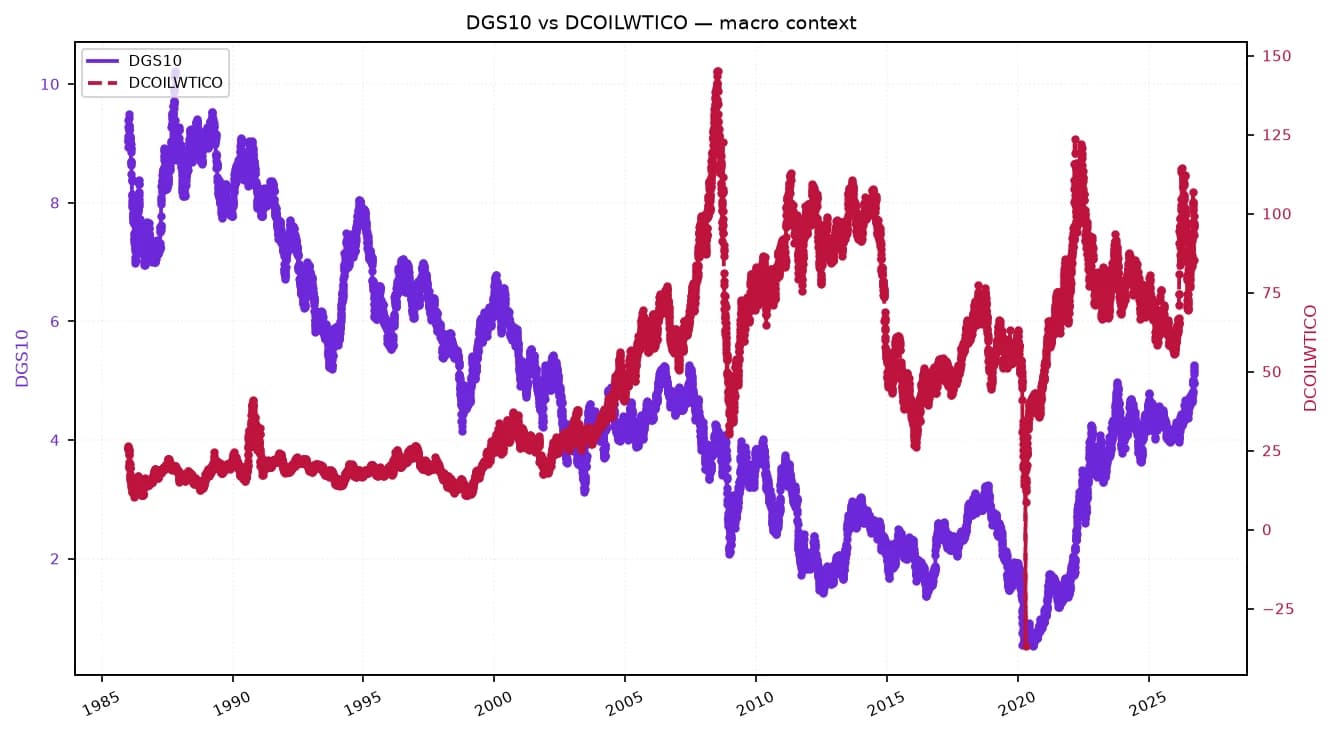
West Texas Intermediate crude is projected at $96.72 a barrel, up from $85.23 only days earlier, while the 10-year yield is forecast at 5.3% after holding around 5.26% in the latest reading. Together, those moves reinforce a late-cycle macro setup in which energy costs and borrowing rates remain elevated even if policymakers strike a more cautious tone.
That matters economically because oil near $100 acts like a tax on consumers and businesses, raising transport and input costs across the economy, while a 10-year yield above 5% keeps mortgage rates, corporate funding costs and government interest expense high. In other words, the transmission from commodities and bond markets is immediate and broad, whereas central bank signaling works with a lag and can be overwhelmed when external shocks keep inflation sticky.
For investors, the combination is uncomfortable. Higher crude can support energy shares and producers, but it pressures airlines, transport, chemicals and consumer discretionary names. Elevated long-end yields tend to favor cash-generating defensives and financials while weighing on rate-sensitive equities, highly leveraged balance sheets and long-duration growth stocks whose valuations depend on lower discount rates.
The latest move in oil also complicates the inflation narrative. A jump to the mid-90s suggests supply discipline and geopolitical risk are still overpowering demand concerns, which raises the odds that inflation expectations remain anchored above levels central banks would prefer. If that persists, policymakers may be forced to keep rates higher for longer even if growth softens.
At the same time, the bond market is effectively delivering its own verdict on policy credibility. When the 10-year yield refuses to retreat materially, it signals investors still demand a substantial term premium to hold duration, a sign that fiscal deficits, sticky inflation and resilient growth are all competing for attention. That leaves central banks with less room to guide markets through rhetoric alone.
The bull case is that this is a temporary squeeze: if oil eases and growth cools, yields could drift lower and restore some relief to rate-sensitive assets. The bear case is that energy and long yields stay elevated long enough to tighten financial conditions on their own, flattening earnings expectations and keeping volatility high into the next policy cycle.
| Entity | Gains | Losses |
|---|---|---|
| Energy producers | ▲Higher realized prices | ▼Demand destruction risk |
| Consumers | ▲Temporary fuel inventory buffers | ▼Higher fuel and living costs |
| Long-duration equities | ▲Stable growth scenario | ▼Higher discount rates |
| Central banks | ▲Stronger anti-inflation backdrop | ▼Less room to ease rhetoric |