Oil is trading in a tight range even as attacks on ships and refinery infrastructure across the Middle East keep a geopolitical risk premium embedded in crude, a sign the market is no longer pricing outright disruption but is still too nervous to let prices fully reset lower.
Oil Holds Near $92 as Middle East Tensions Persist
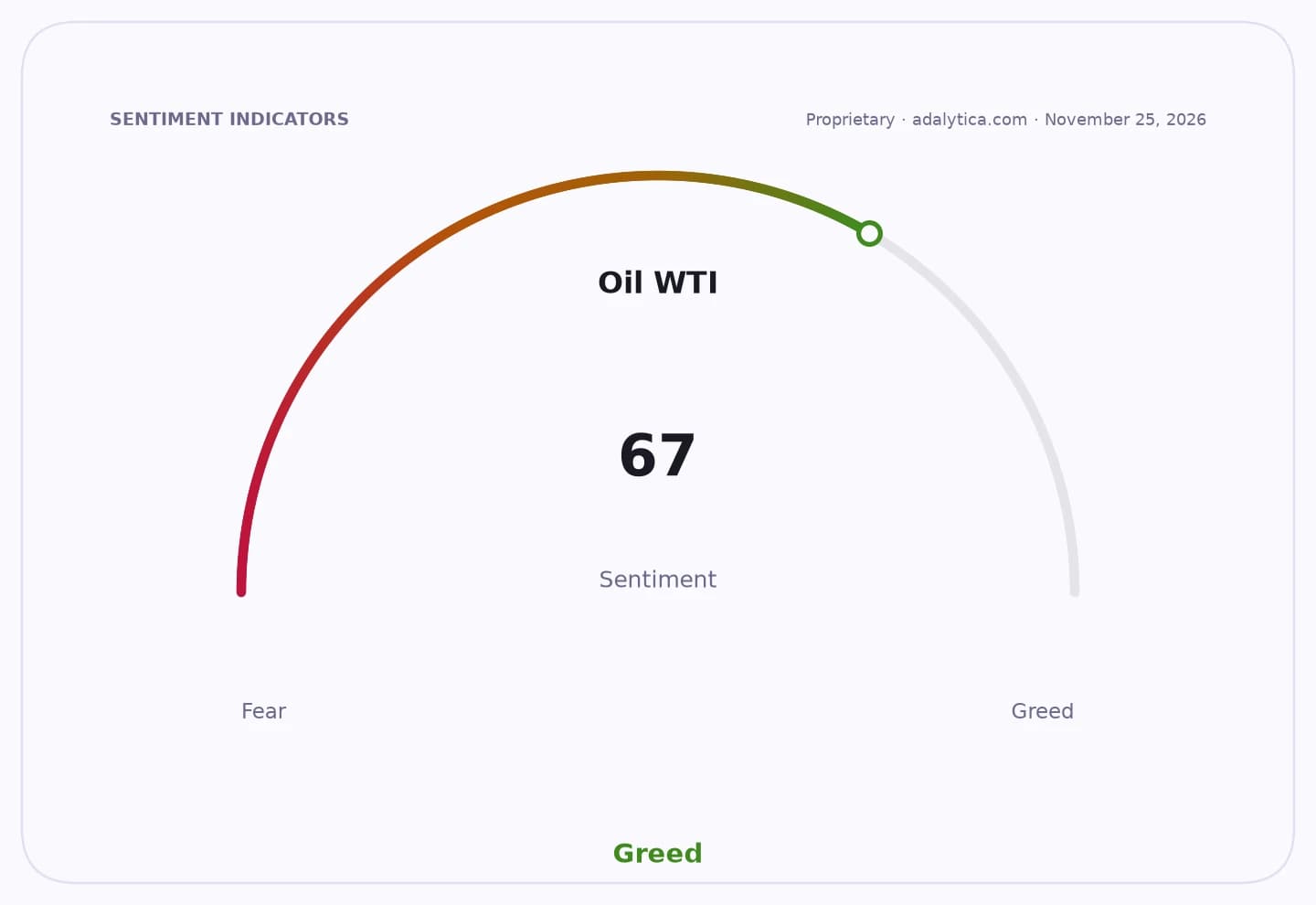
Oil WTI
Brent was little changed at $92.67 a barrel and West Texas Intermediate at $83.57, after both benchmarks briefly slipped earlier in the session. That muted reaction matters: traders are balancing the threat of a shipping shock in the Persian Gulf and around the Strait of Hormuz against the reality that supply has not yet been materially interrupted.
Sentiment Indicators
The market’s restraint also follows a sharp pullback last week, when Brent fell 4% and U.S. crude lost 5%, underscoring that investors are not blindly chasing every headline from the region. Instead, prices are being anchored by a familiar Middle East playbook — elevated tension, higher insurance and freight costs, but no confirmed shortage severe enough to trigger a breakout.
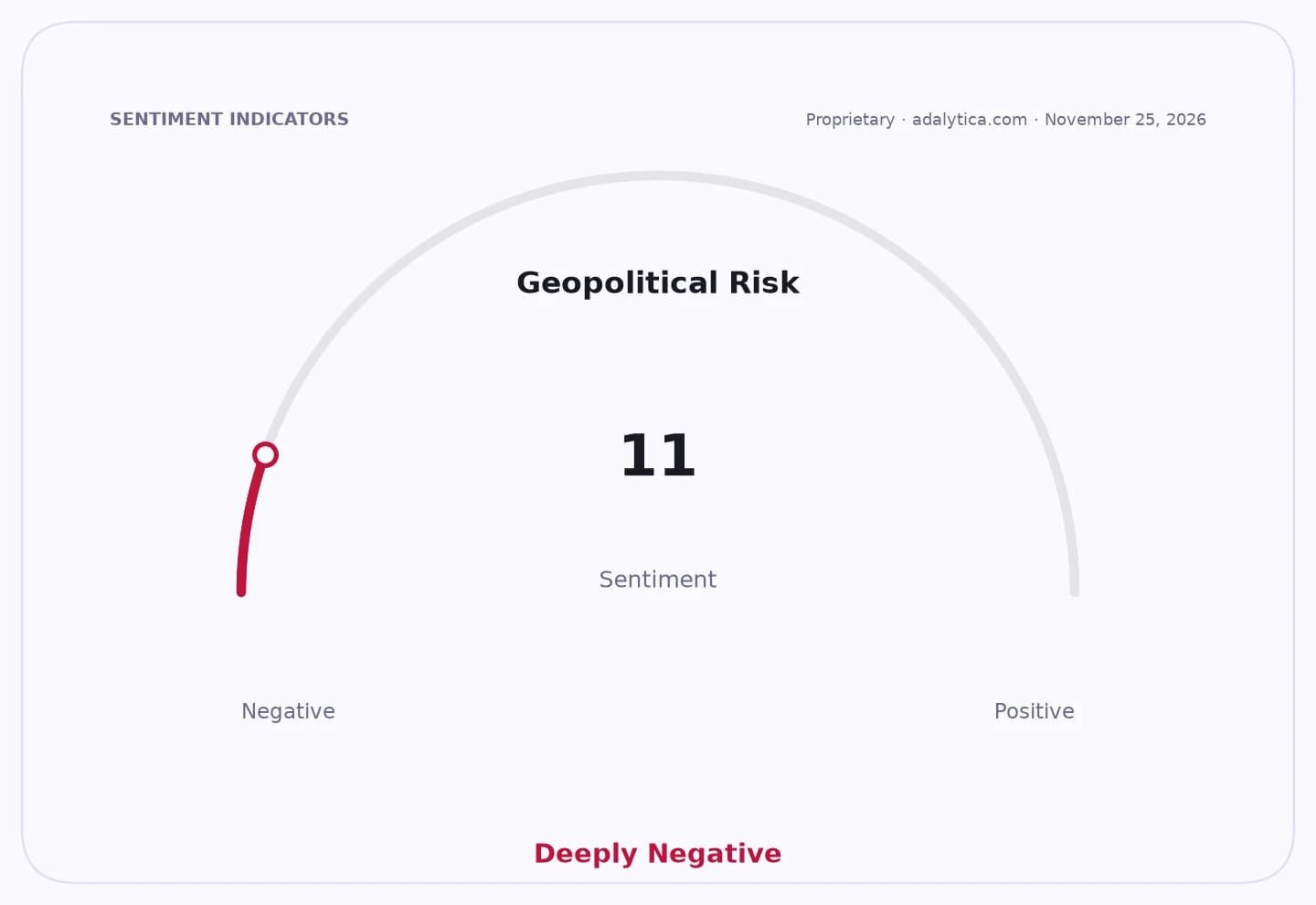
The latest flashpoints are enough to keep energy markets on edge. Yemen’s Houthis said they struck a refinery in Saudi Arabia, while the British maritime agency reported multiple attacks on ships in the Gulf and near the Strait of Hormuz over the weekend. Any sustained interference in that corridor would be economically meaningful well beyond oil, lifting transport costs, squeezing margins for refiners and manufacturers, and pressuring importers across Asia and Europe.
DCOILWTICO — macro contextadalytica.com
Explore this data interactively — full history, time series and cross-market comparisons.
That is why investors should care even when the chart looks dull. Energy remains one of the clearest geopolitical hedges in the market, and the current setup suggests crude is pricing a chronic risk rather than a one-off shock. If the attacks remain contained, oil may stay range-bound. If they expand into a genuine transit disruption, the move higher could be fast, because inventories and positioning are not built for a true Hormuz supply event.
For now, the message is straightforward: the market is underpricing the tail risk of escalation, but overpricing the odds of immediate disruption. That leaves integrated producers, tanker operators and select energy infrastructure names as the cleaner ways to express the trade, while refiners, airlines and broader transport-sensitive stocks remain exposed if insurance costs or freight rates start to climb. In a market like this, the next big move will not come from supply and demand fundamentals alone — it will come from whether the Gulf stays a pressure point or becomes a choke point.
| Entity | Gains | Losses |
|---|---|---|
| Oil producers | ▲Higher risk premium | ▼Price volatility |
| Tanker/shipping firms | ▲Higher freight rates | ▼Route disruption risk |
| Importers/airlines | ▲None | ▼Higher fuel and insurance costs |
| Geopolitical hedgers | ▲Portfolio protection | ▼Missed upside if tensions ease |