Oil prices rose in a volatile session after a larger-than-expected drop in U.S. crude inventories and a congressional election outcome that could reshape Washington’s energy and foreign-policy agenda, even as traders remained focused on the risk of supply disruption from the Iran conflict.
Oil Rises on U.S. Inventory Draw and Iran Risk
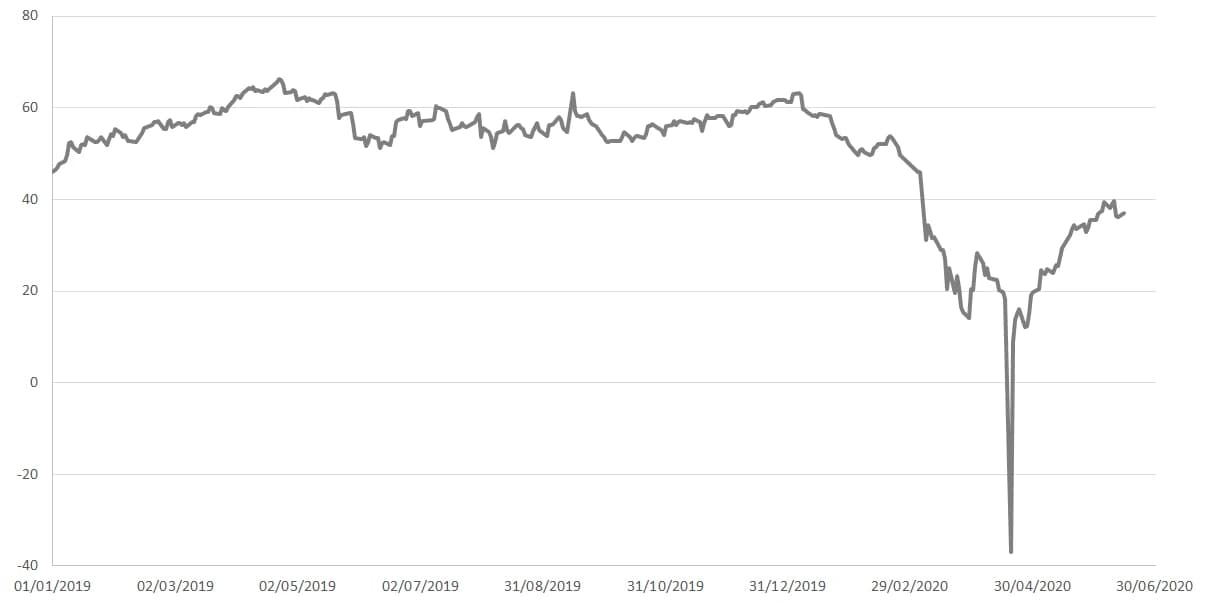
Brent crude climbed 82 cents to $104.42 a barrel, while U.S. West Texas Intermediate gained about 50 cents to $96.59. The advance came as market participants digested an estimated 5.27 million-barrel draw in U.S. crude stockpiles for the week ended Oct. 30, according to American Petroleum Institute figures cited by market sources, defying expectations for a small build.
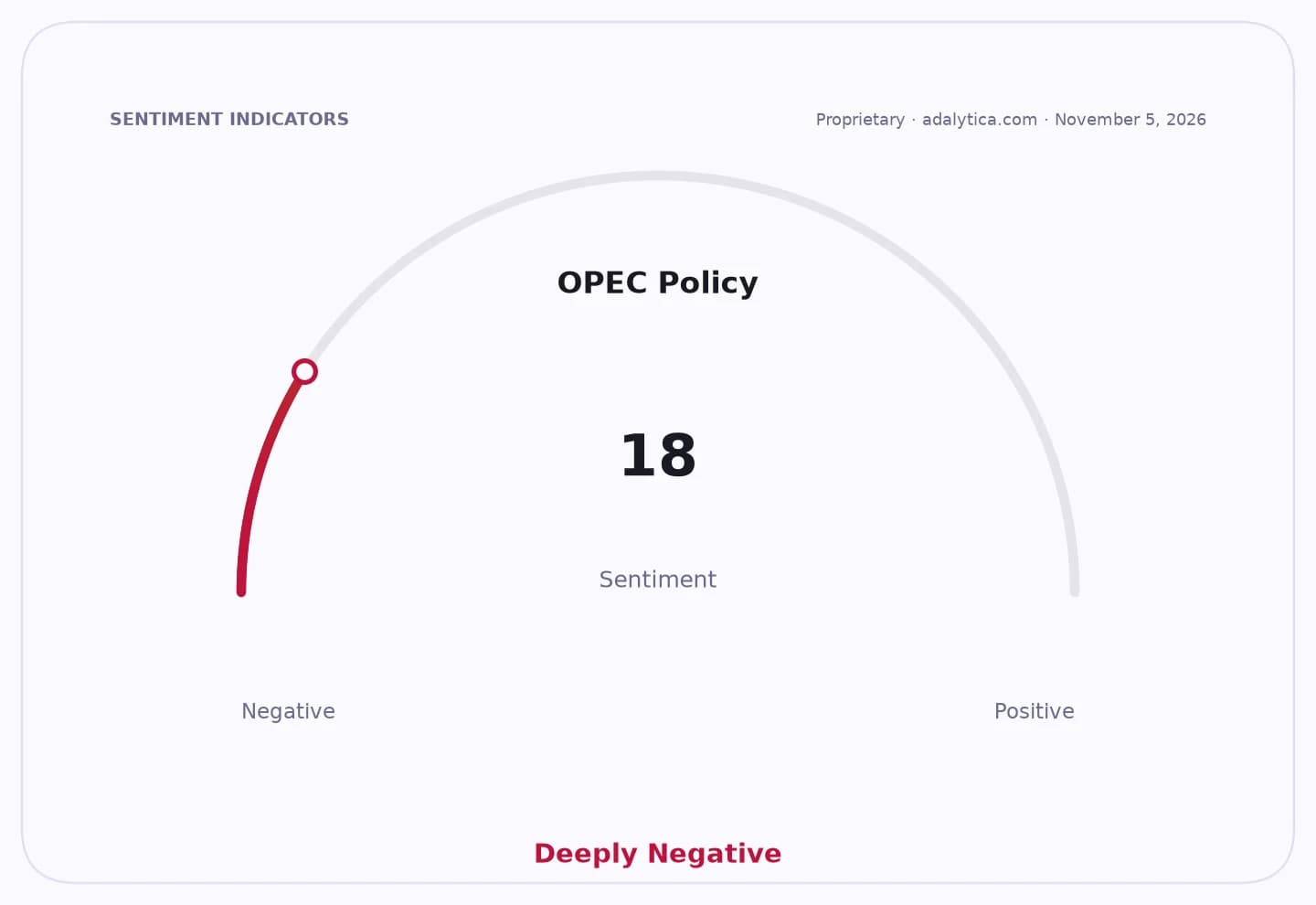
Sentiment Indicators
The inventory decline matters because it points to tighter near-term physical balances in the world’s biggest oil-consuming country, supporting prices at a time when supply remains vulnerable to geopolitical shocks. A draw of that size suggests refiners are still pulling barrels through the system despite volatile pricing and uncertainty around global demand, and it increases the chance the official Energy Information Administration data will confirm a constructive supply picture.
Politics added another layer of uncertainty. Results from the U.S. midterm elections indicated Democrats would seize control of Congress, a shift that could influence debates over energy regulation, sanctions and the administration’s approach to the Middle East. Traders have been watching Washington closely for signs of whether the White House will intensify military pressure on Iran or seek a diplomatic off-ramp. With the Strait of Hormuz still a potential flashpoint, any disruption there would ripple quickly through global shipping and crude markets.
Oil WTI — 30-day sentimentadalytica.com
Explore this data interactively — full history, time series and cross-market comparisons.
For investors, the combination of a supply draw and heightened geopolitical risk reinforces the case for elevated oil volatility rather than a clean directional break. Energy equities and crude-linked exchange-traded funds such as XLE and USO have already seen sharp swings, and technical readings on USO show the fund below its 50-day moving average with a weakening RSI, underscoring how quickly sentiment can turn even as the fundamental backdrop tightens.
The broader market read is that oil is being pulled by two forces at once: physical fundamentals that are still supportive, and politics that can reprice risk in a matter of hours. Until the official U.S. inventory figures and clearer signals from Washington on Iran emerge, crude is likely to remain sensitive to every headline.
| Entity | Gains | Losses |
|---|---|---|
| Oil bulls | ▲Tighter U.S. inventories | ▼Volatility risk |
| Refiners | ▲Near-term feedstock access | ▼Higher crude costs |
| U.S. energy producers | ▲Firmer crude prices | ▼Policy uncertainty |
| Oil consumers | ▲— | ▼Higher fuel bills |