President Donald Trump’s push for oil companies to lower prices is landing at a moment when crude markets have already turned sharply lower, increasing the chances that U.S. drivers see relief at the pump and that energy profits give back some of this year’s gains.
Oil prices fall to $83 Brent, $122 WTI

The key economic point is that gasoline prices are ultimately tethered to crude, refinery margins and distribution costs, so any sustained slide in benchmark oil tends to filter through the consumer economy with a lag. Brent crude has dropped from about $90 a barrel to $83 after the easing of U.S.-Iran tensions, while WTI has fallen back from recent peaks near $129 for USO to about $122. That move matters because energy costs remain one of the quickest transmission channels from geopolitics to inflation, and lower fuel prices can soften headline CPI even if other prices stay firm.
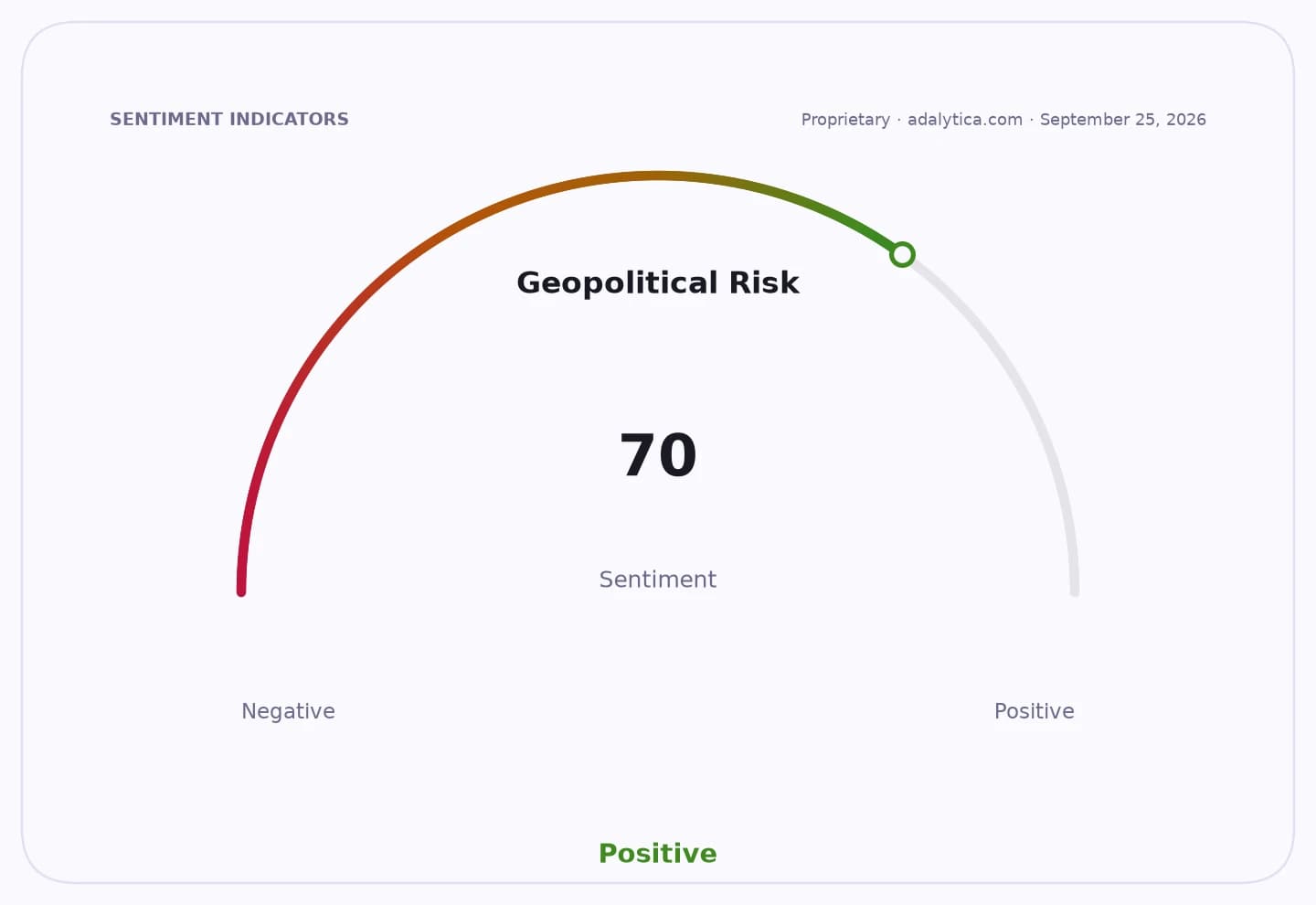
Sentiment IndicatorsⓘProprietary · adalytica.com · August 3, 2026
This is a snapshot — live sentiment, awareness and momentum for 130+ markets update continuously in the dashboard.Open AlphaPulse
For Trump, the pressure campaign serves both a political and macroeconomic purpose: cheaper gasoline is visible, popular and immediately measurable. For markets, the more important issue is whether the decline in crude is a short-lived geopolitical unwind or the start of a broader reset in oil prices after a period of outsized sector profits. The energy industry has been one of the market’s strongest performers, with XLE still trading well above its longer-term average and XOP holding a large premium to where it sat earlier in the year, reflecting expectations that tight supply and strong cash generation would persist.
The recent price action suggests investors are starting to test that assumption. WTI’s latest print around $122 remains far above pre-2022 levels and well above its long-run average, but the pullback from the spring spike has already trimmed the momentum trade. USO’s recent move has also cooled from a blistering run that left the fund extended above its 50-day moving average and, at points, pushed its RSI into overbought territory. Energy stocks have held up better than crude itself, which typically happens when investors still expect strong refining and upstream earnings, but they are vulnerable if the drop in oil proves durable.
That is where the economics become more complicated. Lower crude prices help consumers, airlines and transport firms, and they ease pressure on the inflation rate. But they also squeeze producers’ cash flow and could force a reassessment of capital spending, dividends and buybacks if prices stay lower for long enough. Companies such as ConocoPhillips have already flagged that commodity volatility can affect investment decisions, while major integrated and refining players have benefited from the high-margin environment that followed the oil shock.
The near-term bull case for consumers and the wider economy is straightforward: if the détente in the Middle East holds, oil could stabilize at lower levels and gasoline should follow. The bear case for producers is equally clear: if crude falls back too fast, the earnings and share repurchase support that lifted energy equities over the past year weakens. Investors will be watching whether Trump’s pressure on oil firms simply coincides with a geopolitical-driven dip or becomes part of a more durable political and market shift toward lower energy prices.
| Entity | Gains | Losses |
|---|---|---|
| U.S. motorists | ▲Lower gasoline prices | ▼Less urgency for energy shares |
| Trump administration | ▲Political win on inflation | ▼Exposure if prices rebound |
| Oil producers | ▲Higher prices if cuts stick | ▼Margin and cash-flow pressure |
| Consumers and transport stocks | ▲Cheaper fuel input | ▼Energy sector outperformance fades |