Oil prices are slipping from their recent surge, with Brent crude trading at $92.13 a barrel and WTI at $85.16, a pullback that matters because it can cool inflation expectations just as bond yields are pressing higher.
Oil Pulls Back as Inflation Pressure Eases
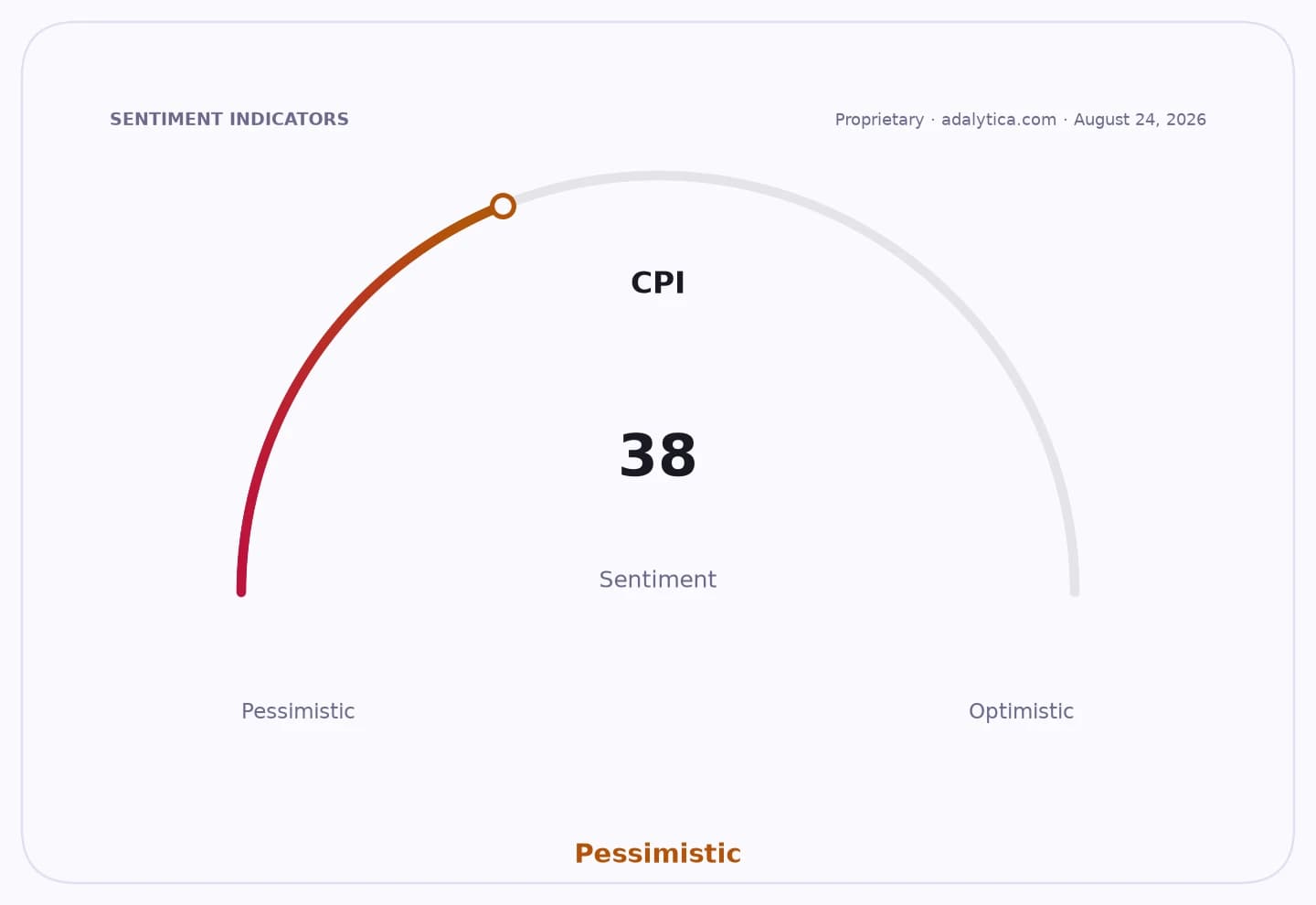
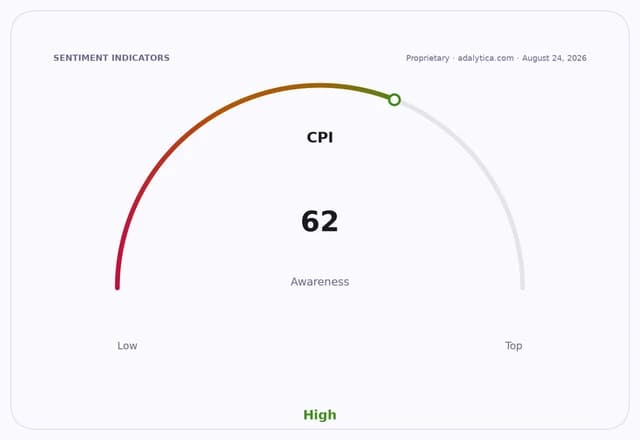
That combination is important for markets. A retreat in crude gives central banks a little more room to keep policy restrictive without immediately worsening the energy shock, while easing the cost squeeze on importers, airlines and consumer-facing companies. It also takes some heat out of the broad inflation trade, which has been helped by a year in which U.S. consumer prices have climbed to 333.98 on the CPI index and Treasury yields have risen sharply, with the 10-year note at 4.65%.
Sentiment IndicatorsⓘProprietary · adalytica.com · August 24, 2026
This is a snapshot — live sentiment, awareness and momentum for 130+ markets update continuously in the dashboard.Open AlphaPulse
The decline comes after a powerful run that pushed Brent well above its longer-term trading range and left oil sentiment stretched. Brent’s price on Aug. 24 is still more than 7% above its 50-day moving average of 83.88, but the recent drop from the March spike near $103 and the July-August volatility show how quickly geopolitical premiums can unwind. Adalytica’s oil trade signals still show extreme greed in the market, suggesting positioning remains crowded even after the pullback.
For investors, that sets up a more nuanced trade than a simple “higher oil” bet. The biggest risk is that traders extrapolate the earlier spike and overpay for energy exposure just as crude begins to normalize. The better opportunity may be in the second-order winners: refiners, pipelines and select integrated producers can still benefit from elevated absolute prices, while the broader market may breathe easier if crude’s retreat helps curb the inflation impulse feeding higher rates. Energy shares have already outperformed, with XLE at 63.11 and sitting well above both its 50-day and 200-day moving averages, but that strength now depends more on cash flow discipline than on another leg higher in oil.
DCOILWTICO vs DGS10 — macro contextadalytica.com
Explore this data interactively — full history, time series and cross-market comparisons.Open AlphaPulse
The larger narrative is that oil is still the market’s most important macro swing factor. Supply fears, sanctions risk and geopolitics can keep a floor under prices, but if crude continues to ease from the low-90s toward the high-80s, the winners shift from outright price momentum trades to companies with strong balance sheets, low break-even costs and return of capital policies. I believe that is where the asymmetric setup sits now: not in chasing the headline, but in owning the infrastructure and cash-rich operators that can profit even if the next move in oil is sideways to lower.
| Entity | Gains | Losses |
|---|---|---|
| Airlines and importers | ▲Lower fuel costs | ▼Margin pressure eases less |
| Energy producers | ▲High nominal oil prices | ▼Less upside from momentum |
| Refiners and pipelines | ▲Stable throughput and cash flow | ▼Smaller crude rally trade |
| Bond bulls and consumers | ▲Softer inflation pressure | ▼Less need for aggressive tightening |