Australia is facing a fresh inflation scare, and the market implication is straightforward: higher petrol prices could keep the Reserve Bank cautious for longer, squeezing households and raising the risk that rate cuts stay out of reach. Treasurer Jim Chalmers’ warning that inflation has not peaked yet lands at the wrong moment for consumers and investors alike, because the latest oil surge threatens to feed directly into transport costs, goods prices and inflation expectations.
Oil Spike Risks Delaying Australian Rate Cuts

The economic significance is bigger than a single fuel spike. Oil is one of the fastest ways a global shock turns into domestic pain, and Australia is particularly exposed because higher petrol prices hit households quickly while also lifting input costs across freight, retail and services. That matters when unemployment is holding at 4.4% and the economy is already trying to absorb years of higher borrowing costs. If energy costs keep climbing, the inflation slowdown could stall even as growth remains soft.
Sentiment IndicatorsⓘProprietary · adalytica.com · July 27, 2026
This is a snapshot — live sentiment, awareness and momentum for 130+ markets update continuously in the dashboard.Open AlphaPulse
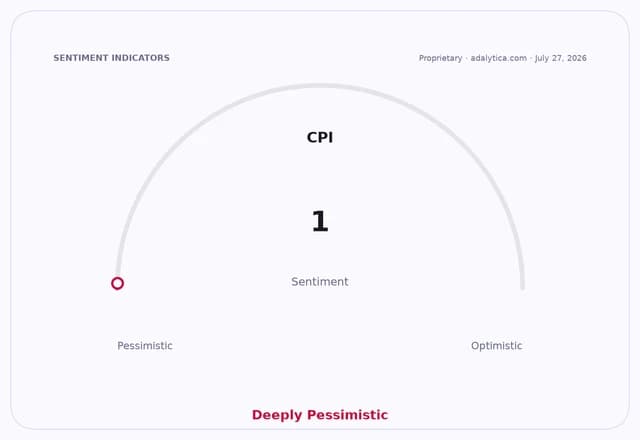
Markets are already treating the oil shock as a serious macro catalyst. US crude has rebounded sharply, and the surge in oil-linked assets has been strong enough to push conventional technical indicators into overheated territory, with USO’s RSI reading still elevated after a violent run-up. For Australia, that means the inflation outlook is being shaped less by domestic demand than by geopolitics and commodities — a combination that can keep central bankers defensive even when households are under pressure for relief.
The Australian dollar has also been caught in the crosscurrents. FXA has held up reasonably well, but currency strength alone will not shield consumers from imported inflation if energy prices stay high. In that setup, the winners are producers and energy-linked assets; the losers are households, retailers, transport-heavy businesses and rate-sensitive sectors that need easier policy to re-rate. The market underestimates how quickly an oil shock can harden inflation psychology, especially when policymakers are already warning that the peak may still be ahead.
That is why this matters for investors. If Chalmers is right and inflation has another leg higher, the odds of a near-term policy pivot fall, and the most exposed parts of the market are the ones that need cheaper money the most. By contrast, energy producers, resource exporters and defensive cash-generating businesses gain relative appeal. Investors should be positioning for a longer-for-higher inflation backdrop, not a clean disinflation story. The next move in Australia may be less about relief and more about resilience.
| Entity | Gains | Losses |
|---|---|---|
| Energy producers | ▲Higher realizations | ▼None |
| Households | ▲None | ▼Petrol, grocery strain |
| Rate-sensitive stocks | ▲Sticky pricing power | ▼Delayed easing |
| Resource exporters | ▲Stronger commodity tailwind | ▼Higher cost pressures |




