The Canadian dollar is firming against the pound as crude oil surges past $90 a barrel, giving the commodity-linked loonie a fresh tailwind while traders reassess inflation risks and the outlook for central banks.
Oil Surge Supports Canadian Dollar Versus Pound

Oil’s jump matters because Canada is a major energy exporter, so higher crude prices typically boost export revenues, widen the terms of trade and support demand for the currency. The move also complicates the policy picture: more expensive energy can lift inflation, keeping the Bank of Canada sensitive to how long price pressures last even as growth risks remain.
Sentiment IndicatorsⓘProprietary · adalytica.com · July 20, 2026
This is a snapshot — live sentiment, awareness and momentum for 130+ markets update continuously in the dashboard.Open AlphaPulse
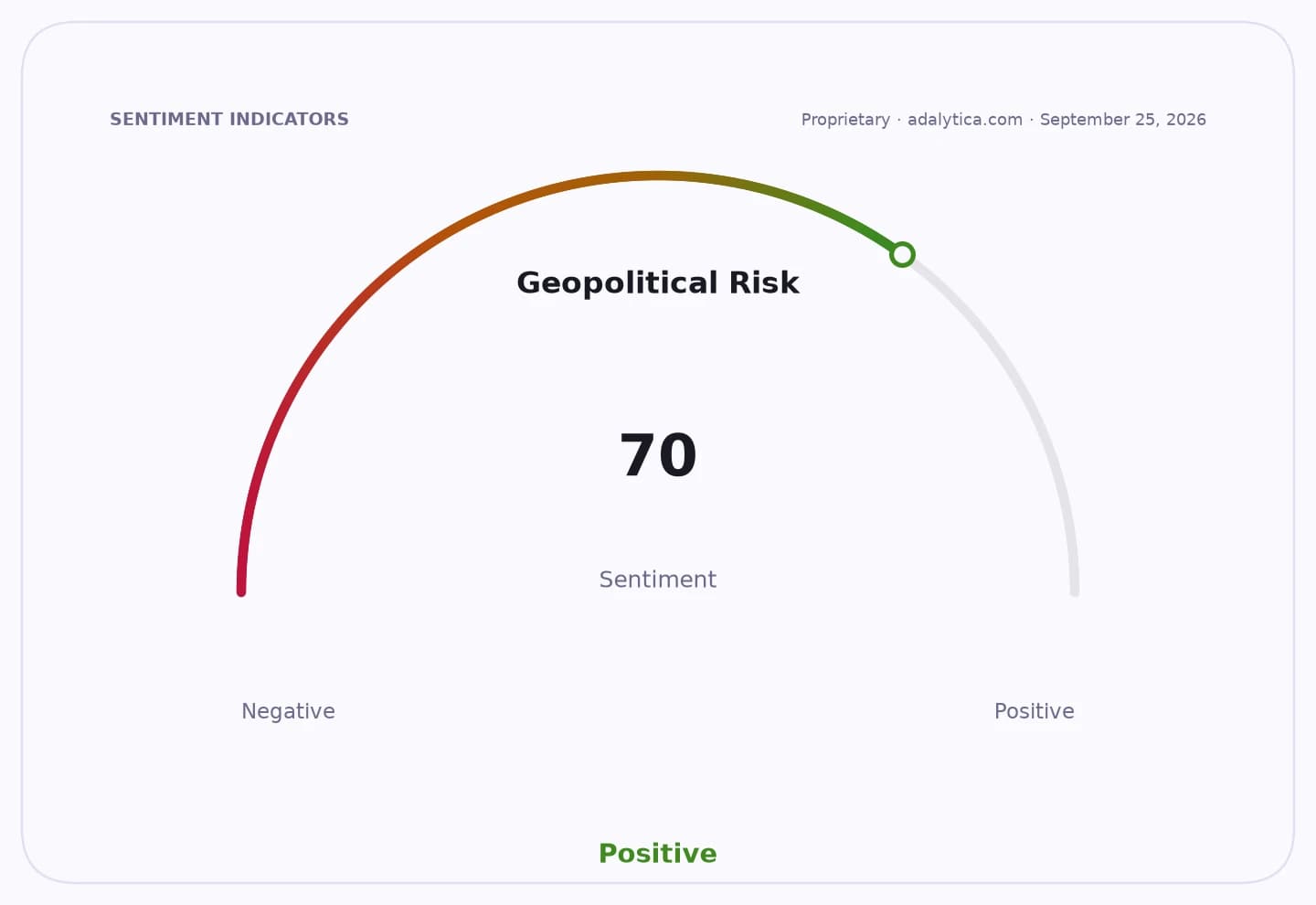
The latest price backdrop shows the broader oil complex under stress from escalating US-Iran tensions, with Brent and WTI volatility spilling into FX markets. WTI has surged sharply from the mid-$70s area earlier in the summer to above $80, and the news context points to a broader move past $90 as traders price in supply disruption risk and the chance of higher fuel costs.
That has helped the loonie hold near C$1.40 per pound, or roughly 1.40 Canadian dollars per pound sterling, after periods of choppy trading. On the technical side, GBP/CAD is hovering close to its 50-day moving average, while the Canadian dollar’s own trade signal shows near-term support alongside a relatively steady RSI, suggesting the market is not in a panic but is still leaning in favor of the loonie.
For investors, the key issue is the divergence between Canada’s energy exposure and the UK’s more import-dependent position. Higher oil prices tend to support the Canadian currency through trade flows and resource equities, while they can squeeze UK consumers and raise cost pressures for Britain’s economy, potentially leaving sterling more vulnerable if growth worries intensify.
The move also puts a spotlight on cross-asset positioning. A sustained crude rally can keep CAD supported versus GBP and other low-yielding currencies, but any sign of de-escalation in the Middle East or a reversal in oil would quickly unwind that advantage.
The next catalyst is whether oil holds above the recent breakout and whether fresh geopolitical headlines keep risk premia elevated; if not, the pound may regain some ground as the loonie’s energy premium fades.
| Entity | Gains | Losses |
|---|---|---|
| Canadian dollar | ▲Oil-linked support | ▼Less upside if crude retreats |
| UK pound | ▲Weaker versus CAD | ▼Higher import-cost pressure |
| Canadian exporters | ▲Better revenue backdrop | ▼Stronger currency if oil stays high |
| Energy consumers | ▲None | ▼Higher fuel and inflation costs |