A delegation from Oman’s University Medical City is in China to deepen cooperation with hospitals and research centers, a move that matters because the Sultanate is trying to raise healthcare quality with faster access to advanced medical expertise, research and technology.
Oman Health Delegation Visits China for Cooperation
For investors, this is less about one trip than the direction of travel. Oman’s health system is pushing toward a longer-term, more digitally enabled model, with the Ministry of Health also expanding its Health Sandbox for new innovations and looking to extend the National Health Program by 10 years. That combination points to steady demand for hospital services, diagnostics, medical devices, training and health technology partnerships rather than a one-off procurement cycle.
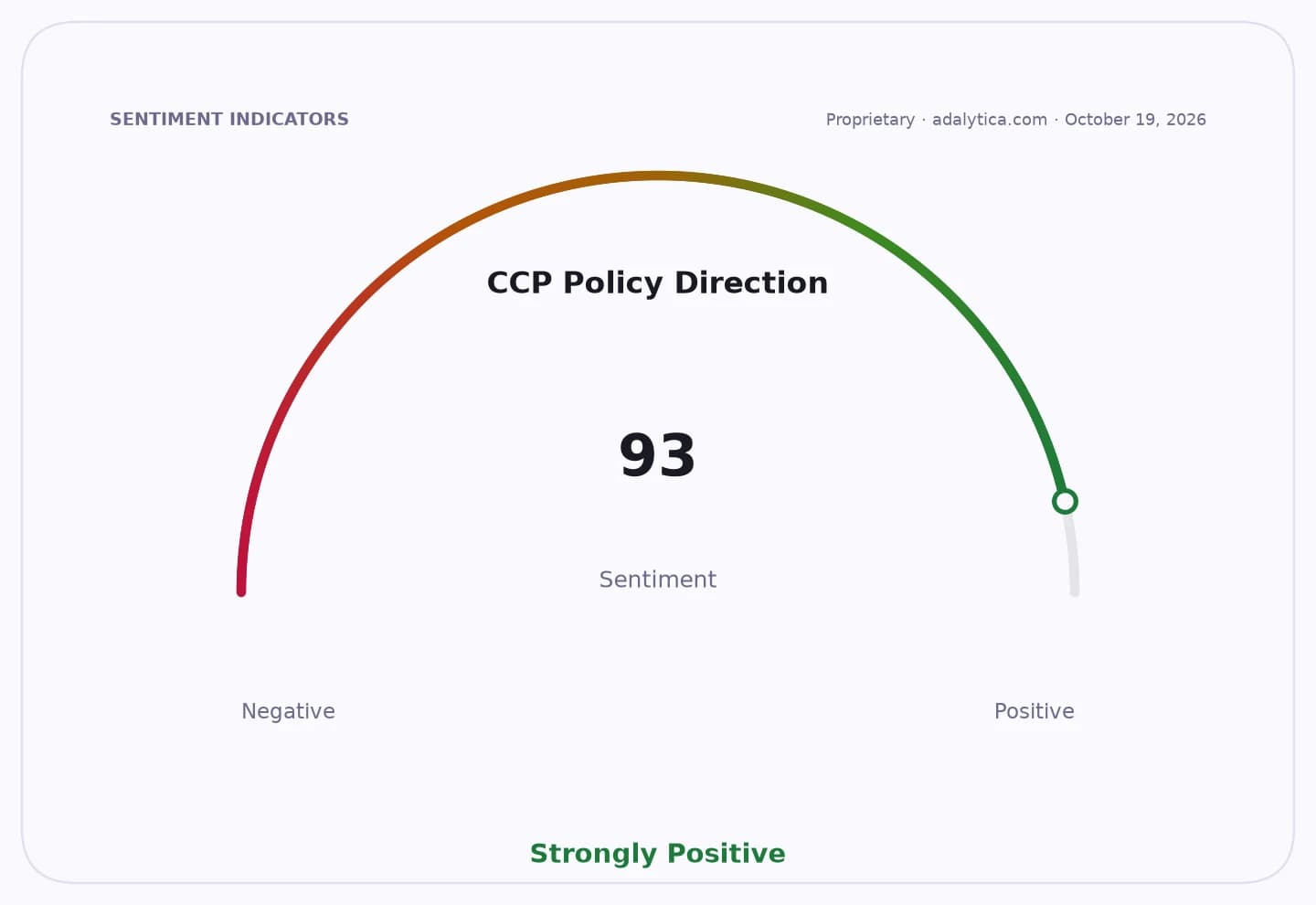
Sentiment Indicators
The delegation, led by CEO Dr. Suham bint Salem Al-Sinani, visited several Shanghai institutions, including the Shanghai Hospital Development Center, the Shanghai Chest Hospital, Ruijin Hospital at Shanghai Jiao Tong University and the Fudan University Cancer Center. The aim is to exchange advanced clinical and research expertise and strengthen strategic cooperation that can be folded into Oman’s healthcare development plans under Vision 2040.
That matters economically because healthcare is one of the clearest places where public spending, productivity and human capital intersect. When a health system upgrades specialist care and research links, it can reduce outbound referrals, improve treatment capacity at home and support a healthier workforce over time. For a country focused on diversification, that is not just a social-policy story — it is an investment in long-term competitiveness.
The China connection also fits a broader pattern. Beijing has built deep strengths in hospital management, cancer treatment, medical technology and applied health research, while Gulf health systems are increasingly looking east as well as west for scalable partnerships. China’s policy backdrop is still constructive for outward health cooperation, and Oman’s push for sustained international partnerships suggests this visit could lead to concrete projects, training pipelines or technology adoption.
The likely beneficiaries are clear: Oman’s patients, hospitals and health authorities stand to gain if the cooperation produces better care and faster knowledge transfer. Chinese medical institutions and health-tech partners also gain a platform in a market that is modernizing its system and willing to work through long-term institutional ties. The groups left with less room are providers relying on older, less integrated models of care.
For long-term investors, the more interesting takeaway is the theme. Health systems across the Gulf are moving from basic capacity-building toward quality, precision medicine and digital health. That usually creates durable opportunities in hospital operators, device makers, diagnostics, software and service providers with the right regional footprint. This is the kind of structural change worth watching, and one that patient investors should keep on a long-term watchlist.
| Entity | Gains | Losses |
|---|---|---|
| Oman health system | ▲Better care capacity | ▼Slow, fragmented delivery |
| Chinese hospitals/research centers | ▲New cooperation channels | ▼Fewer external growth links |
| Medical device and health-tech suppliers | ▲Longer-term demand | ▼Legacy providers |
| Patients and employers | ▲Improved outcomes | ▼Higher friction in care access |