Global oil demand is set to accelerate sharply in 2027, and that matters because it points to a stronger floor for crude, refining margins and upstream cash flow just as the market is still debating whether the next leg in energy is a short-lived spike or the start of a bigger cycle.
OPEC Sees Oil Demand Jumping in 2027
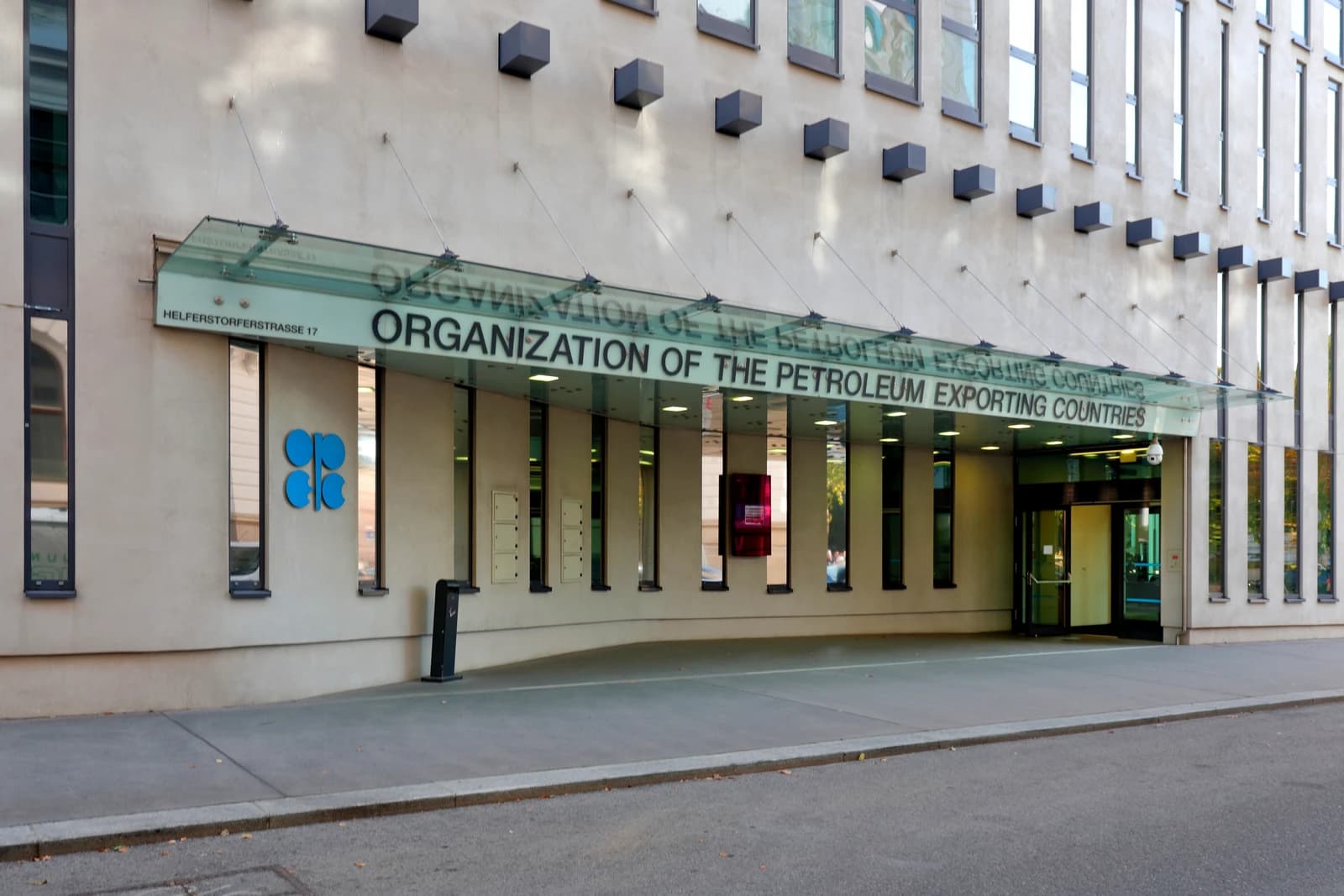
OPEC now expects world oil consumption to rise by 2.4 million barrels per day in 2027 to 108.2 million barrels per day, with India and other non-OECD Asian economies leading the increase. That is a meaningful acceleration from its forecast for just 400,000 barrels per day of growth in 2026, underscoring how quickly demand can re-accelerate once mobility, industrial activity and petrochemical feedstock use strengthen across emerging markets.
Sentiment IndicatorsⓘProprietary · adalytica.com · October 20, 2026
This is a snapshot — live sentiment, awareness and momentum for 130+ markets update continuously in the dashboard.Open AlphaPulse
The economic story is straightforward: oil demand is no longer being driven mainly by the developed world. OPEC sees non-OECD economies adding about 2 million barrels per day in 2027, while OECD demand is only expected to recover by 400,000 barrels per day after a decline in 2026. India’s projected growth rate of 6.5% in 2027, following 6.6% in 2026, is central to that outlook, and China and the Middle East are also expected to contribute. For investors, that shifts the center of gravity toward Asian consumption and away from the old assumption that OECD weakness can cap the cycle.
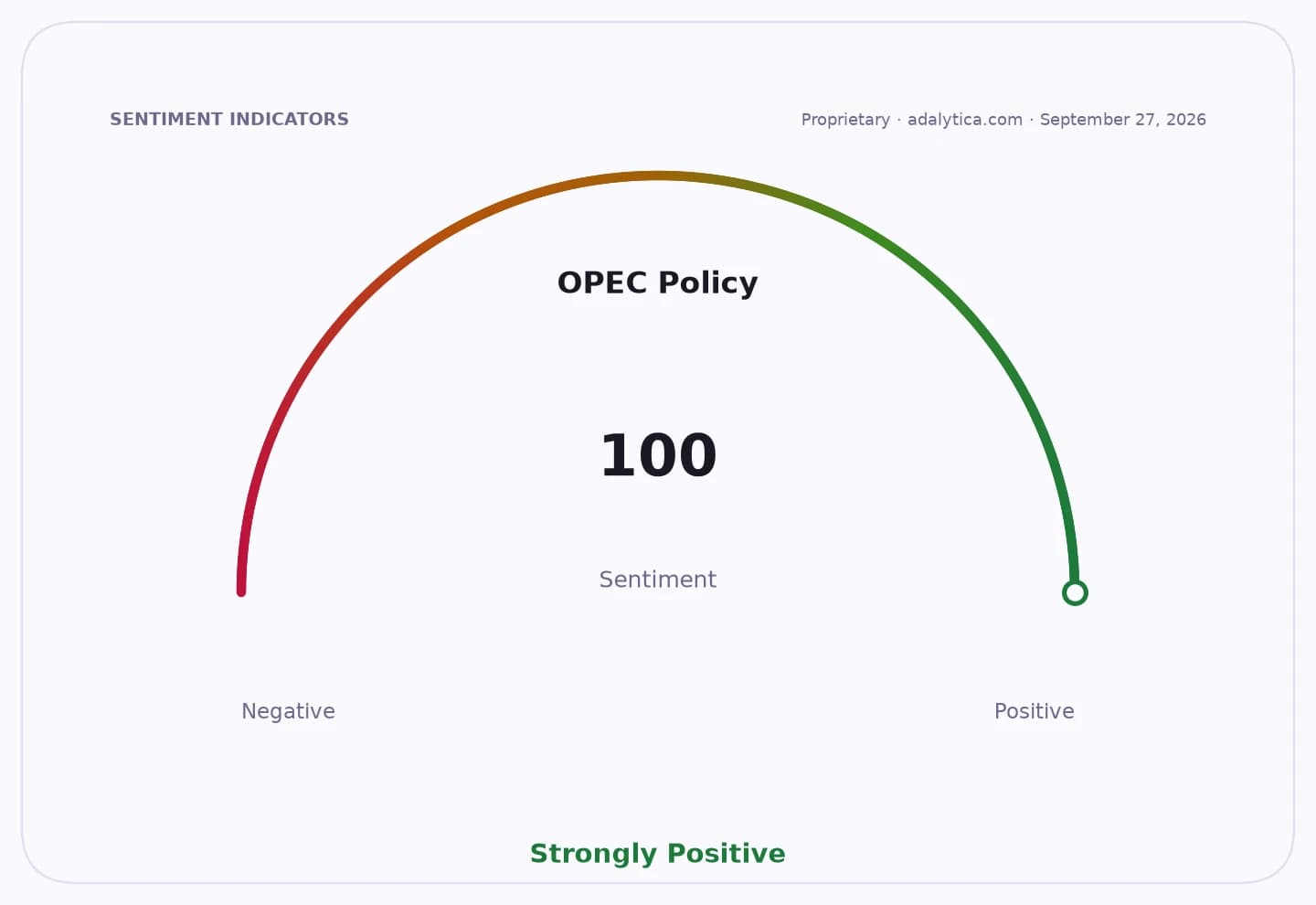
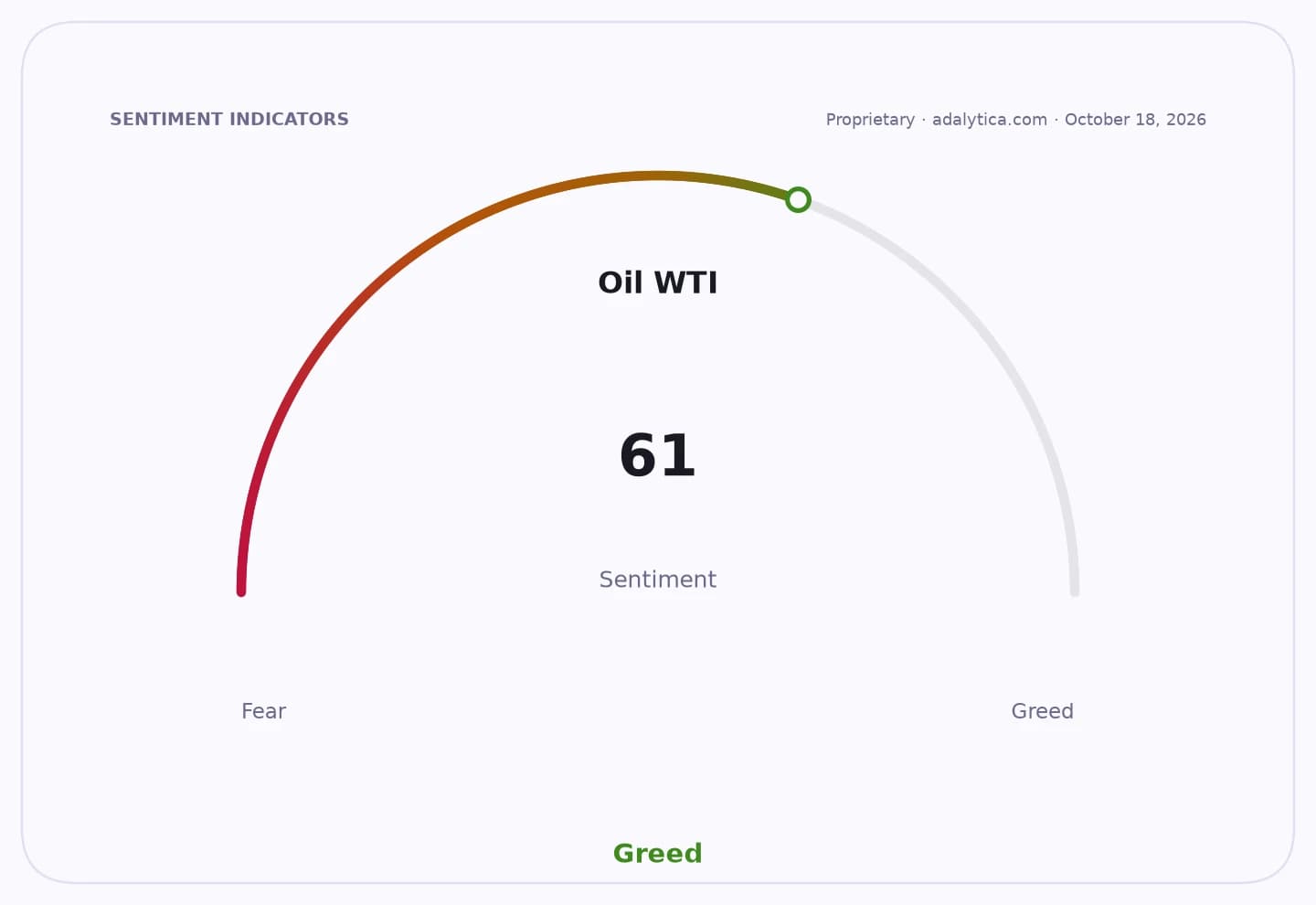
The market is already showing how sensitive energy shares are to tighter demand expectations and supply discipline. USO, the crude oil fund, has climbed to around 161.8, with its 50-day moving average well below the current price and RSI readings still elevated, while XLE has pushed to about 68, near the top of its recent range. Oil-services exposure has been even more volatile: OIH has rebounded from its spring lows, reflecting a market that is willing to pay for drilling and production capacity when oil prices stay firm. Adalytica’s OPEC policy sentiment remains in “fear,” which suggests the market still underestimates how quickly policy-driven supply restraint can meet a demand upswing.
That is where the investment case gets interesting. OPEC also says exploration and production capex will fall 2% in 2026 to $613 billion before rising 6% to $651 billion in 2027, a sign that the industry still is not spending aggressively enough to get ahead of future demand. If OPEC is right, the beneficiaries are the same businesses that make money when the world needs more barrels, not just higher prices: integrated majors, shale producers, refiners and oilfield services. Chevron, ConocoPhillips, Marathon Petroleum and Schlumberger all stand to benefit if the 2027 demand rebound pulls inventories down and keeps upstream investment disciplined.
The bigger narrative is that 2027 could mark the point where the market stops treating oil as a fading legacy fuel and starts pricing it as a still-essential, geopolitically constrained commodity tied to emerging-market growth. The near-term trade may still be noisy, but the strategic setup is clear: stronger Asian demand, restrained non-OPEC supply growth and only modest OECD recovery argue for staying constructive on energy equities and oil-linked assets before consensus catches up.
| Entity | Gains | Losses |
|---|---|---|
| India & non-OECD Asia | ▲Higher fuel demand | ▼More import dependence |
| Oil producers | ▲Stronger pricing power | ▼Lower-cost buyers |
| Energy equities (XLE, OIH) | ▲Cash-flow upside | ▼Demand bears |
| Oil importers/OECD consumers | ▲None | ▼Higher input costs |