The US military’s decision to sink an obsolete but still valuable warship in the Pacific’s largest exercise underscores how far Washington is willing to go to rehearse high-end combat, even as the exercise itself highlights the growing price of maintaining deterrence in a more contested ocean.
Pacific War Drill Lifts Defense Spending Outlook
The spectacle of a billion-dollar vessel going down is more than theater. It is a signal that the US and its allies are treating the Pacific as the most important theatre for future naval conflict, where sinking ships, dispersing forces and testing strike coordination matter as much as displaying firepower. For the Pentagon, the exercise is a demonstration of readiness. For markets, it is another reminder that defense spending is being shaped less by legacy platforms and more by munitions, sensors, missile defense, shipbuilding and sustainment.
That backdrop has direct implications for investors in the US defense complex. Lockheed Martin, Northrop Grumman and RTX are all exposed to the re-rating of demand for missiles, air defense and integrated battle systems if Pacific deterrence remains a budget priority. RTX’s latest trading pattern suggests investors have been quick to price in that theme: the shares jumped to $212.79 on Friday, up sharply from a recent low near $168 in late April, with momentum turning positive on conventional indicators including the 50-day moving average and MACD. Lockheed has also rebounded to $568.59, although it remains below the year’s highs after a difficult mid-year selloff. Northrop Grumman has rallied to $542.24 after a deep decline, but its longer-term technical picture still shows it well below the 200-day average, suggesting the market remains cautious on the broader defense cycle.
The message from the exercise is not just that the US can destroy a ship. It is that the cost of credible deterrence is rising. Every such drill reinforces the need for larger inventories of precision weapons, better targeting networks, anti-ship capabilities and resilient logistics across the western Pacific. That should support procurement for prime contractors, but it also raises the risk that defense budgets get stretched by the need to replace expended munitions and harden supply chains faster than production lines can keep up.
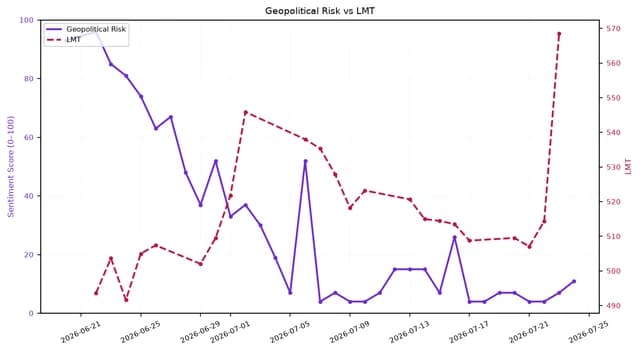
The divergence in the stocks reflects that tension. RTX’s rebound suggests traders see near-term benefits from missile demand and air-defense demand. Lockheed’s more volatile profile reflects both opportunity and execution risk across a wider portfolio, including space and aeronautics. Northrop’s weakness versus its peers points to skepticism that every area of defense spending will benefit equally, even as submarine and strategic programs remain structurally supported by tensions in the Pacific and beyond.
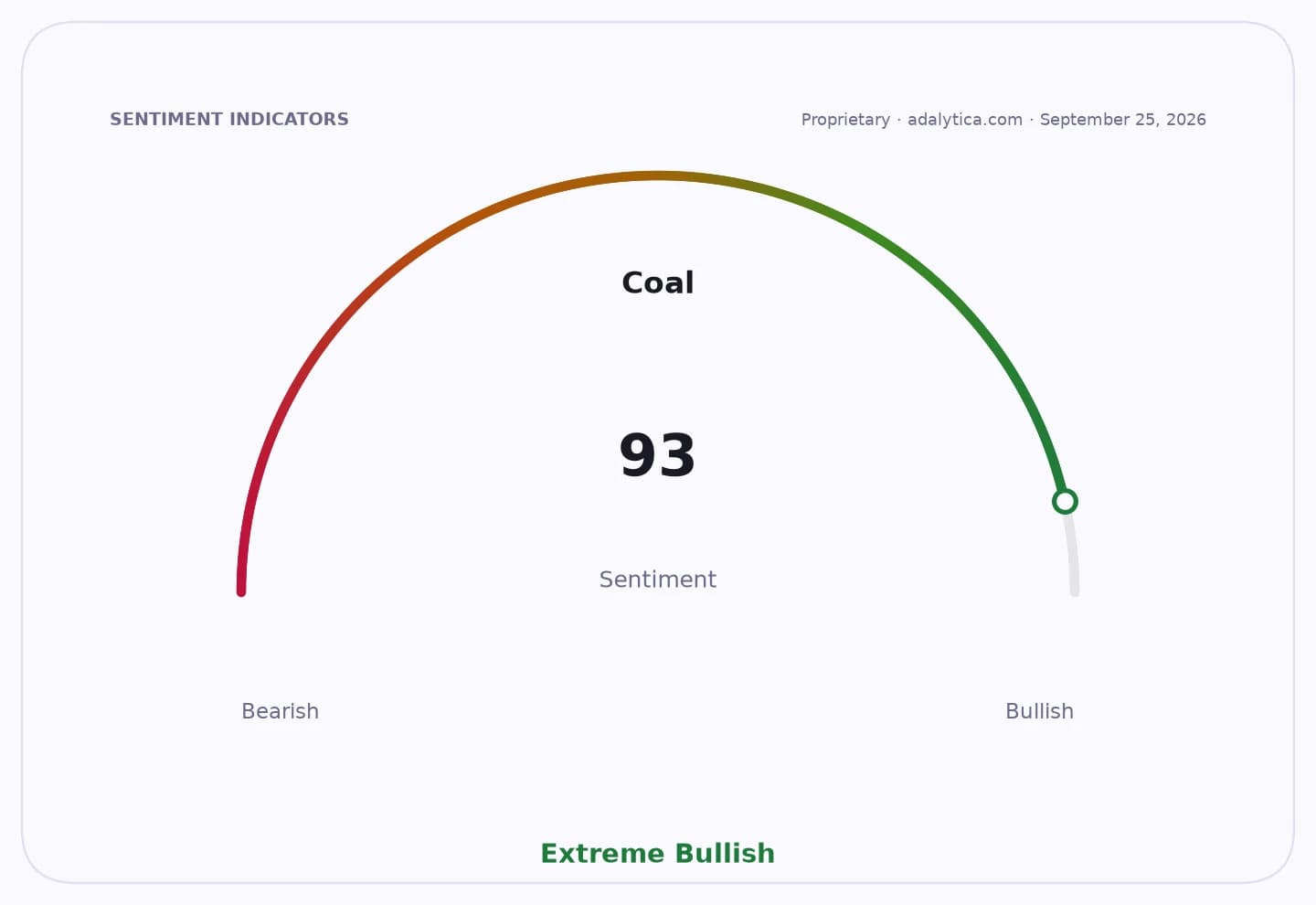
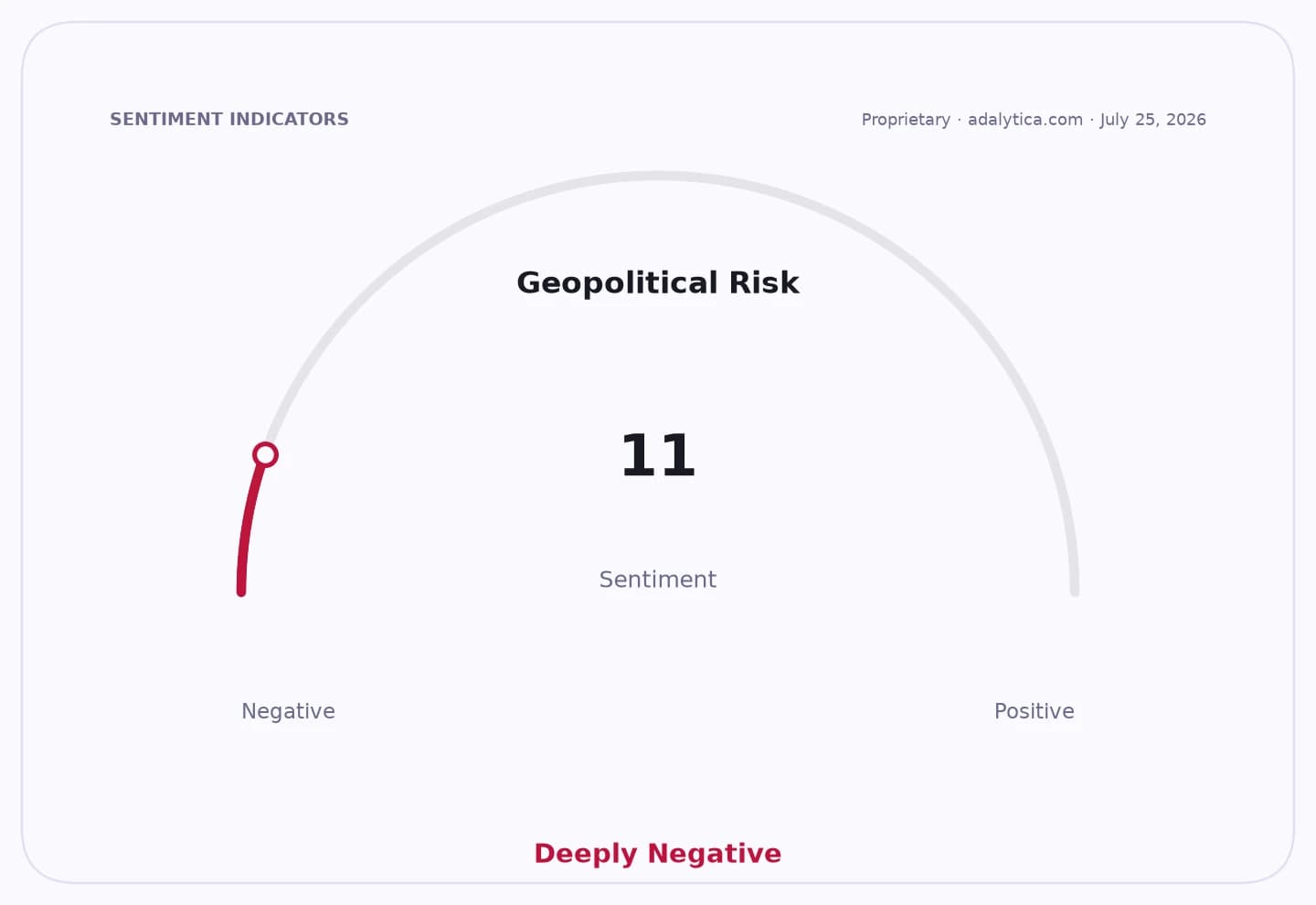
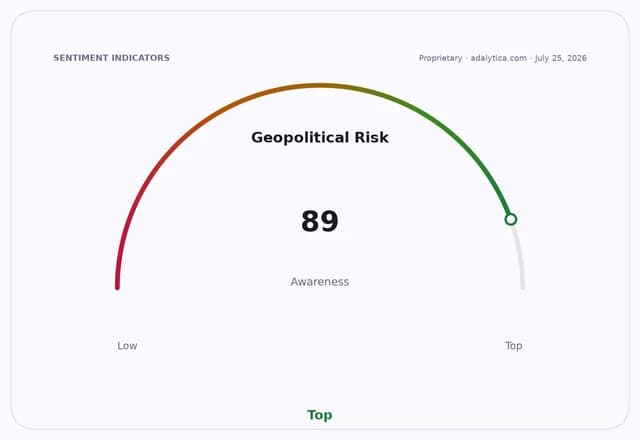
The broader market signal is one of escalation without immediate crisis. Adalytica’s Global Stability Sentiment gauge shows “Extreme Fear” at 11, even as awareness sits at “Extreme Greed,” a combination that often appears when geopolitical risk is widely watched but still poorly resolved. In practical terms, that means defense names can continue to attract capital on the assumption that the Pacific will remain the central theatre of US military planning, while investors stay alert to volatility if political or budget priorities shift.
For now, the sinking of the warship is best read as a rehearsal for a more dangerous era. It reinforces the case for defense spending, but also for scrutiny of which contractors can turn higher strategic demand into margin growth, backlog conversion and sustained earnings momentum.
| Entity | Gains | Losses |
|---|---|---|
| Missile and air-defense contractors | ▲Higher demand expectations | ▼Budget pressure if procurement slows |
| Shipbuilders and naval suppliers | ▲More Pacific-focused investment | ▼Risk of production bottlenecks |
| RTX | ▲Near-term sentiment boost | ▼Valuation risk if execution slips |
| Lockheed Martin and Northrop Grumman | ▲Structural deterrence spending | ▼Uneven benefit across programs |