Pakistan’s effort to enlist China in a new round of mediation over Iran is a reminder that the most important risk in South Asia is not diplomacy itself, but whether Beijing and Islamabad can protect the trade, energy and infrastructure links that make their partnership economically valuable.
Pakistan-China Mediation Raises Infrastructure Stakes
That matters because China’s relationship with Pakistan is no longer just a strategic slogan. It is a capital-intensive bet on ports, railways, maritime access and industrial investment that only works if the region is stable enough for goods, personnel and financing to move. Any breakthrough on Iran talks would be a tailwind for that vision; any escalation across the Pakistan-Iran frontier or deeper instability in Balochistan would raise the cost of doing business, delay projects and widen the geopolitical risk premium on the China-Pakistan Economic Corridor.
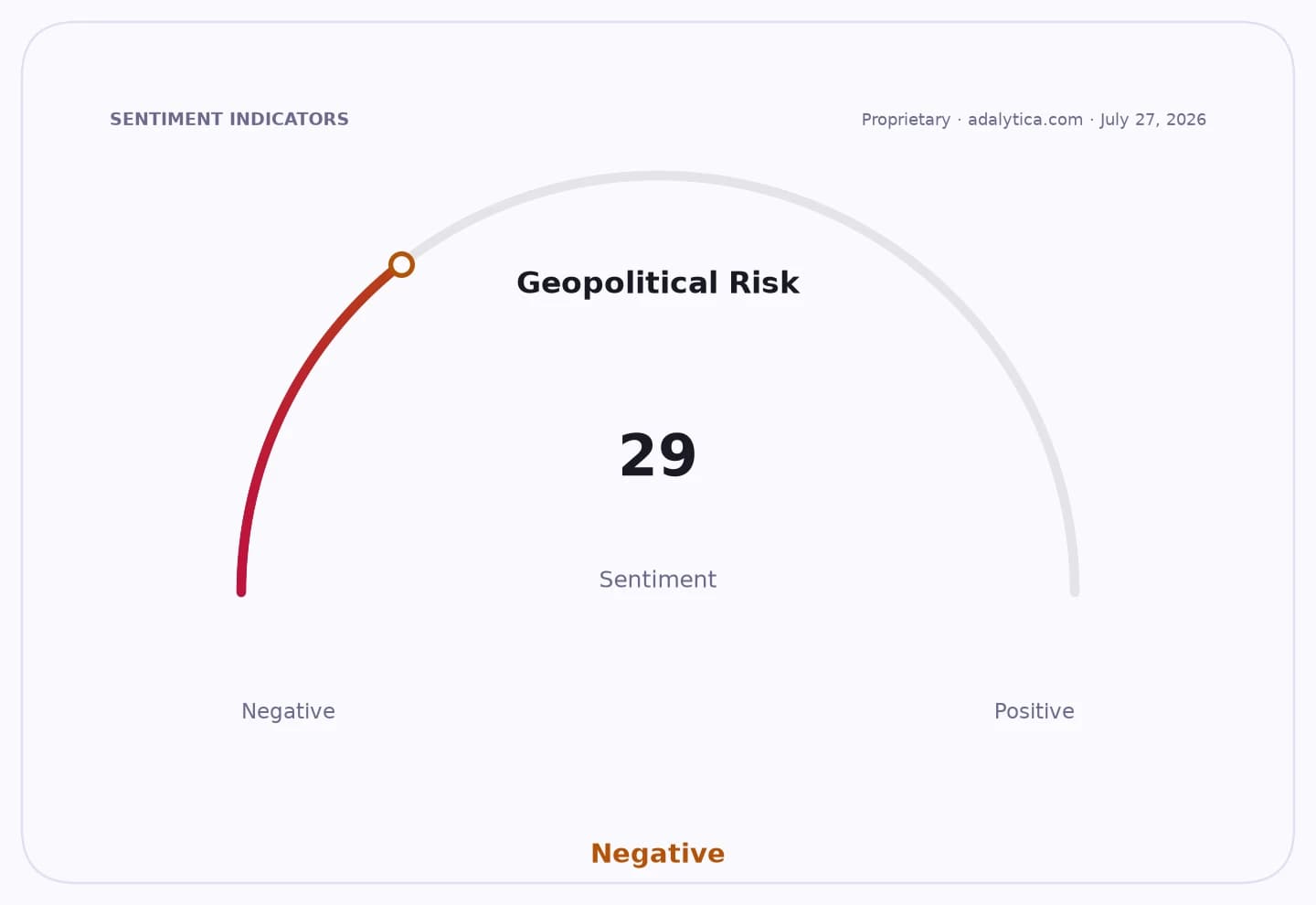
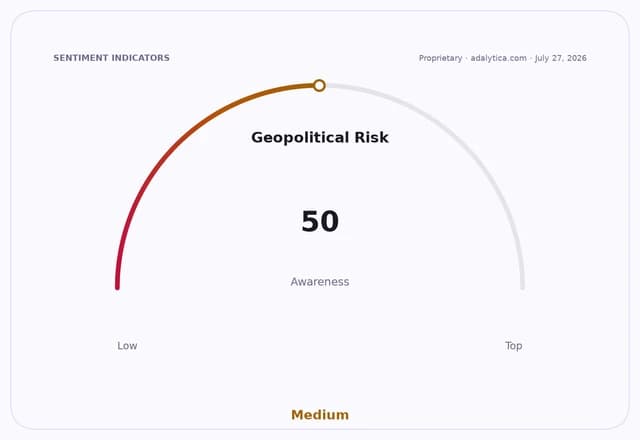
Sentiment IndicatorsⓘProprietary · adalytica.com · July 27, 2026
This is a snapshot — live sentiment, awareness and momentum for 130+ markets update continuously in the dashboard.Open AlphaPulse
The market underestimates how much this is a story about second-order effects. Pakistan is trying to use its ties with Beijing to revive diplomacy around Iran at a moment when global stability sentiment is stuck in fear territory, with Adalytica’s Global Stability Sentiment at 29 and China CCP Policy Direction Sentiment still only neutral at 39. That combination suggests investors are not pricing in a clean regional reset. Instead, they are pricing fragility: a narrow path where diplomacy can reduce pressure, but security failures in Balochistan keep threatening the logistics spine of China’s western access.
That is why the stakes extend beyond Pakistan and China. For Beijing, the corridor through Pakistan remains a strategic toll road to the Arabian Sea and a hedge against chokepoints elsewhere, but its value depends on uninterrupted supply routes and the protection of Chinese industrial assets. For Islamabad, deeper alignment with China offers financing, infrastructure and diplomatic cover, but it also increases exposure to insurgent violence and the reputational cost of being unable to secure flagship projects.
India’s naval buildup adds another layer to the investment case. As New Delhi responds to China’s expanding military footprint, the regional balance becomes more contested, not less. That keeps defense spending elevated, hardens bloc formation in Asia and reinforces the premium on supply-chain resilience, ports, rail, energy security and security contractors linked to infrastructure protection.
My thesis is simple: the real trade here is not a headline about mediation, but the infrastructure, defense and logistics winners that benefit from a prolonged scramble to secure South and West Asia. If Pakistan-China diplomacy holds, Chinese-backed corridors and connected industrial projects gain operating visibility. If it fails, the same assets become more expensive to defend, insure and finance, while regional rivals and security suppliers gain leverage.
For investors, the opportunity is to stay positioned in the picks-and-shovels of geopolitical friction: defense, maritime security, rail logistics, port infrastructure and energy transit. The market may eventually reward any diplomatic success, but the bigger and more asymmetric setup is that instability itself keeps driving capital toward the assets and companies that make fractured regions function.
| Entity | Gains | Losses |
|---|---|---|
| China-backed infrastructure projects | ▲Higher strategic value | ▼Security and financing risk |
| Pakistan government | ▲Diplomatic leverage | ▼Pressure over internal security |
| Defense and maritime security firms | ▲More procurement demand | ▼— |
| Insurgents in Balochistan | ▲— | ▼Greater counterinsurgency pressure |