Pakistan’s stock market just delivered its biggest surge of the year, with the KSE-100 index jumping 7,000 points in a sharp reminder that beaten-down markets can turn quickly when investors begin to believe stability is improving.
Pakistan stocks surge on improving stability hopes
For long-term investors, that matters because Pakistan’s equity market is not just reacting to headlines — it is trying to price a better path for earnings, liquidity and policy credibility. A rally of this size usually reflects more than short-term trading. It suggests that domestic money, and possibly opportunistic foreign capital, is starting to look past the country’s recent mix of power shortages, IMF pressure and regional tensions and instead focus on the possibility that economic conditions are bottoming out.
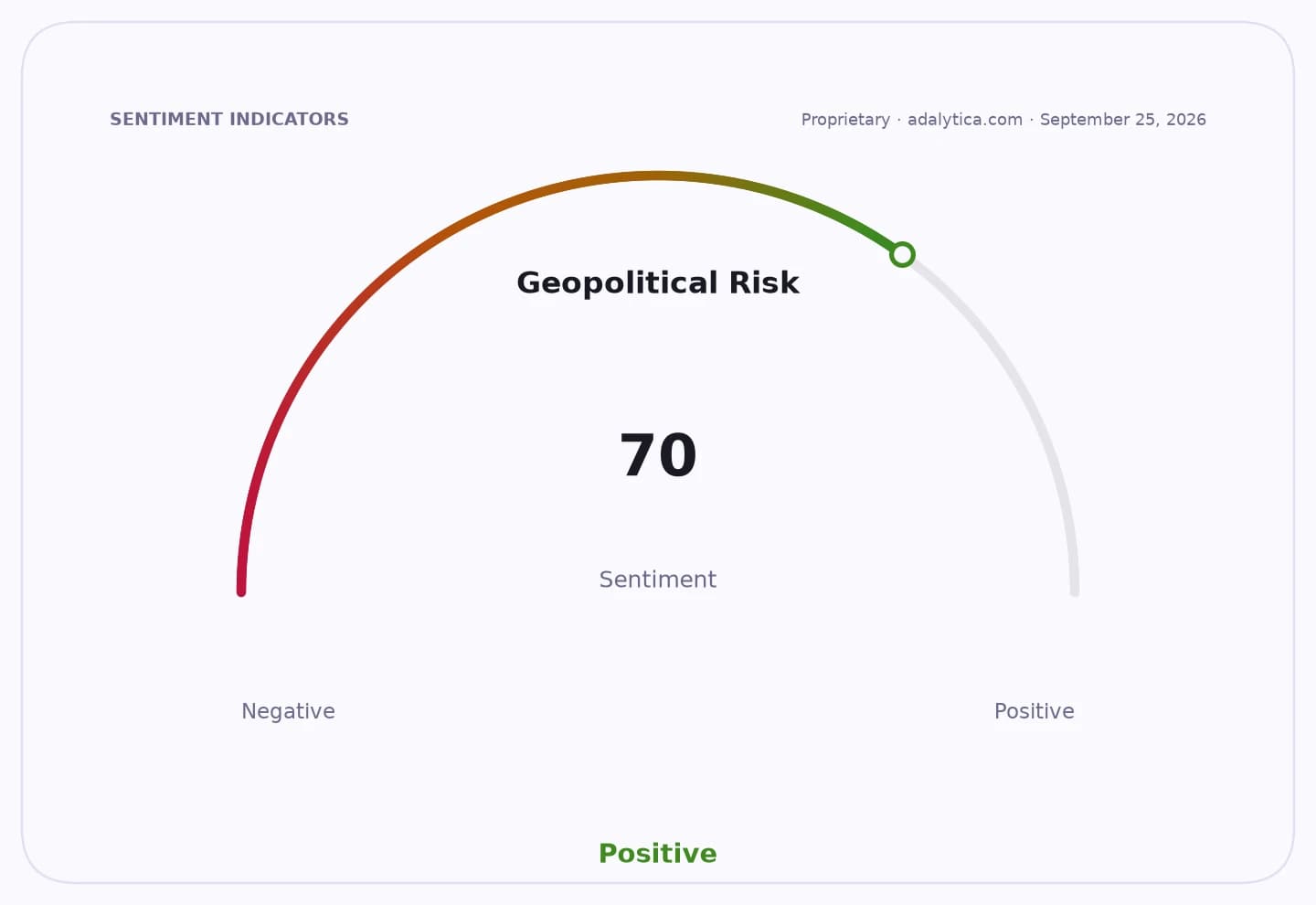
Sentiment IndicatorsⓘProprietary · adalytica.com · July 27, 2026
This is a snapshot — live sentiment, awareness and momentum for 130+ markets update continuously in the dashboard.Open AlphaPulse
That is the real story here. Pakistan has spent much of the year battling questions that tend to crush valuations: unreliable electricity in industrial hubs like Sindh, fiscal stress, a fragile external position and a political backdrop that leaves investors uneasy. When a market moves this hard, it is often because those risks are not gone, but because investors think they may be manageable enough to stop overwhelming the upside.
There is also a broader global market angle. Traditional safe-haven and growth indicators are sending mixed signals, and that can push investors toward select emerging markets where valuations are low and expectations are even lower. Adalytica’s Global Stability sentiment snapshot has improved sharply from deeply negative readings earlier in the month, while the U.S. dollar trade signal remains in “Extreme Fear,” a setup that can help risk assets outside the United States if it persists. In plain English: when the dollar weakens and global risk appetite steadies, frontier and emerging markets often get a second look.
Geopolitical Risk — 30-day sentimentadalytica.com
Explore this data interactively — full history, time series and cross-market comparisons.Open AlphaPulse
That does not mean Pakistan is suddenly a clean story. IMF scrutiny is still a real constraint, and the country’s reform record remains a major question for anyone thinking in years rather than weeks. Investors should assume volatility will stay high, because markets like Pakistan’s can swing violently on policy news, energy disruptions and geopolitics. But that is also why these moves matter: when sentiment shifts in a low-priced market, the upside can be powerful if the underlying economy stabilizes even modestly.
The key thing for investors is not to chase the headline move, but to ask whether this rally is being backed by better fundamentals. If Pakistan can make progress on trade, investment and energy reliability while keeping international financing lines open, the market could have room to run further. If not, this may prove to be another violent but temporary burst of optimism. Either way, Pakistan is back on the watchlist for investors willing to look beyond the next quarter and think in multi-year terms.
| Entity | Gains | Losses |
|---|---|---|
| Pakistan-listed stocks | ▲Repricing higher | ▼Recent short sellers |
| Domestic investors | ▲Portfolio recovery | ▼Cash hoarders missing the move |
| Exporters and reformers | ▲Better sentiment, funding hopes | ▼Importers facing stronger demand |
| IMF and policy skeptics | ▲More leverage if reforms stall | ▼Less urgency if optimism persists |