Paraguay’s decision to summon Brazil’s ambassador over President Luiz Inacio Lula da Silva’s comments about the Paraguay–Brazil war is less a sign of a real break than a reminder of how economically dependent Asuncion remains on its far larger neighbor. The latest flare-up matters because it tests one of South America’s most tightly bound bilateral relationships, but it is unlikely to disrupt the trade, power and investment links that anchor Paraguay’s economy.
Paraguay summons Brazil ambassador after Lula remarks
The anger in Asuncion follows Lula’s remarks on Paraguay’s wartime history, which Paraguayan officials portrayed as an affront to national sovereignty and a slur on a foundational episode of state identity. Yet the political theatre is unfolding against a hard economic backdrop: Paraguay relies heavily on Brazil as a market, transit route and industrial partner, while Brazil benefits from access to Paraguayan power, agriculture and supply chains. That interdependence limits how far either side can push before costs start to rise.
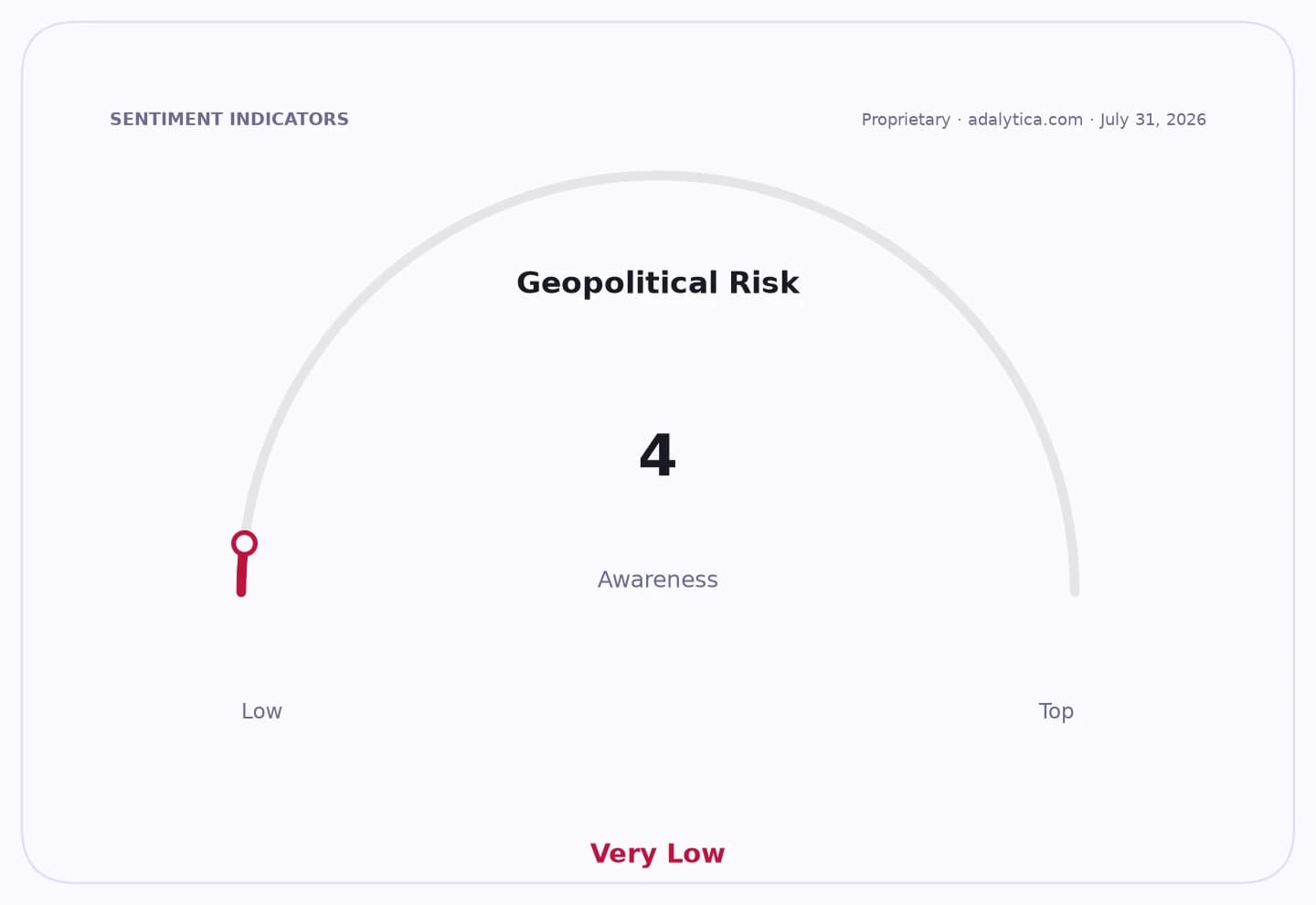
Sentiment IndicatorsⓘProprietary · adalytica.com · July 31, 2026
This is a snapshot — live sentiment, awareness and momentum for 130+ markets update continuously in the dashboard.Open AlphaPulse
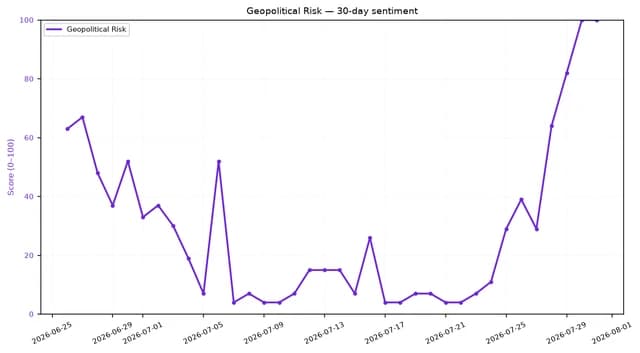
For investors, the episode is a geopolitics risk with a relatively contained financial footprint, but it still matters at the margin. Diplomatic noise can complicate cross-border energy coordination, logistics and private-sector planning, especially for companies exposed to the wider Mercosur trade corridor. It also adds another source of regional policy uncertainty at a time when South American governments are already navigating fragile growth, political polarization and pressure on external balances.
Markets are likely to treat the dispute as headline risk rather than a catalyst for lasting repricing. Brazil’s EWZ ETF is still trading above its 50-day and 200-day moving averages, and recent momentum indicators remain constructive, suggesting investors have not yet priced a material regional shock. Petrobras shares have also held up, while the broader move in Brazil assets has been driven more by rates, growth and commodities than by bilateral diplomacy.

Still, the political signal should not be dismissed. Lula has often tried to position Brazil as a regional stabilizer, while Paraguay has been quick to defend symbols of sovereignty when domestic politics are involved. The result is a familiar South American pattern: public indignation, formal summons, and then gradual de-escalation once economic reality reasserts itself.
The key question now is whether the dispute stays at the rhetorical level or spills into practical cooperation on energy, border administration or Mercosur politics. Given the weight of commerce between the two countries, investors should expect the former, but keep an eye on any sign that rhetoric turns into delays, tariff friction or disruptions to infrastructure and utility deals.
| Entity | Gains | Losses |
|---|---|---|
| Paraguayan government | ▲Domestic nationalist support | ▼Diplomatic credibility |
| Brazil-Paraguay trade ties | ▲Eventually preserve stability | ▼Short-term political friction |
| Regional investors | ▲Opportunity to buy dips | ▼Headline-driven volatility |
| Mercosur integration | ▲Resilience if de-escalation follows | ▼Political trust if rhetoric escalates |