U.S. stock benchmarks are being propped up by steady index-fund and ETF buying even as the S&P 500 flirts with technical resistance, with investors still putting money to work into passive products despite a jittery macro backdrop.
Passive Buying Supports S&P 500 Near Resistance
The support matters because it is cushioning the market at a time when the 10-year Treasury yield is easing to about 4.69%-4.71% from recent highs, high-yield credit spreads are tightening to 2.81 percentage points, and consumer sentiment remains deeply depressed at 43.18. That combination points to an unusual setup: rate pressure is still high by historical standards, but cash continues to flow into broad market exposure rather than out of equities.
SPY, the largest U.S. stock ETF, closed at $740.86 on July 28, while IVV finished at $744.22 and VOO at $680.96. All three are hovering just below their 50-day moving averages, with SPY at 743.98, IVV at 747.30 and VOO at 683.78, suggesting passive demand is helping keep the market pinned near recent highs even as momentum cools.
The technical picture is mixed but not broken. SPY’s RSI reading is 45.7, IVV’s is 45.4 and VOO’s is 45.5, all well short of overbought levels, while the MACD on each fund has slipped below its signal line. That points to a market that is consolidating rather than unraveling, giving ETFs and index funds room to absorb selling from active managers and traders.
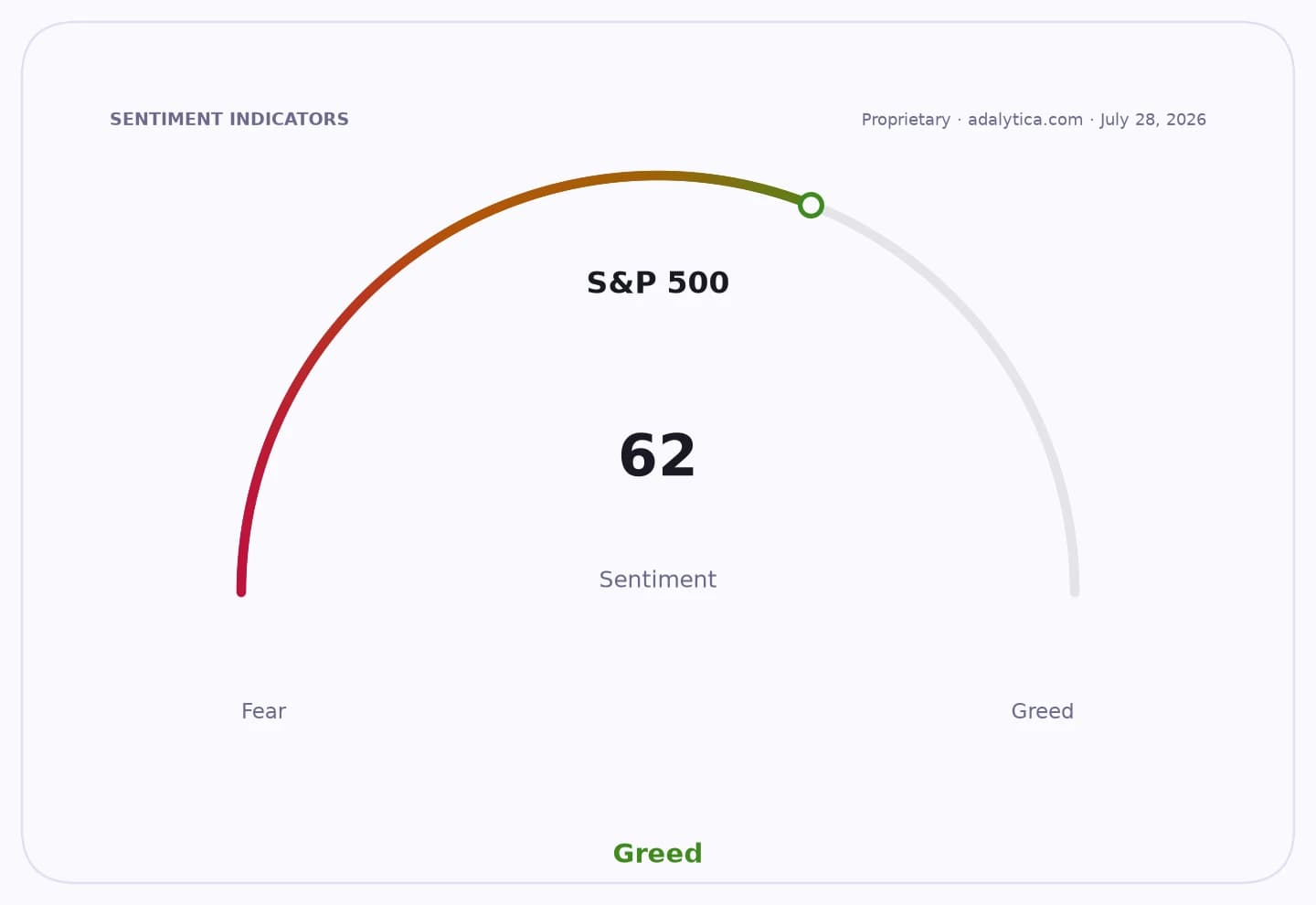
Adalytica’s S&P 500 Trade Signals snapshot shows sentiment at 62, labeled neutral, with awareness at 38, also neutral, after a sharp one-day and one-week improvement. The dollar is flashing the opposite setup, with sentiment at 1 and an “Extreme Fear” reading, underscoring how cross-asset flows are still being shaped by expectations for softer rates and a weaker greenback.
For investors, the story is less about a single catalyst than about a structural bid: retirement accounts, model portfolios and passive allocations keep funneling money into the same benchmark names, helping to stabilize prices even when macro data are soft. That creates a supportive backdrop for the megacap-heavy market, but it also leaves valuations vulnerable if yields turn higher again or if inflows slow.
The next test is whether fund flows can keep offsetting a less friendly macro mix as the market heads toward fresh inflation data, Fed commentary and more earnings from the largest S&P 500 constituents. If passive buying stays firm, the index can likely hold its range; if it fades, the market may have to stand on fundamentals alone.
| Entity | Gains | Losses |
|---|---|---|
| Index funds / ETF buyers | ▲Benchmark exposure | ▼Less upside from stock picking |
| S&P 500 mega-caps | ▲Steady passive demand | ▼Active allocation share |
| Treasury bears | ▲Softer yields, stronger equities | ▼Higher-rate pressure |
| Cash sidelined in active funds | ▲Lower volatility entry points | ▼Opportunity cost from rally |