June pending home sales are expected to fall 5.41% from a month earlier, a sharper drop than the market had anticipated, underscoring how the combination of mortgage rates near 4.6% and stubbornly elevated home prices is keeping buyers on the sidelines.
Pending Home Sales Signal Softer Housing Demand
The decline matters because pending sales are one of the clearest forward indicators for existing-home closings, which means the latest weakness points to another soft month ahead for transaction volumes. Even with the long-dated Treasury yield hovering around 4.6%, borrowing costs remain high enough to squeeze affordability, especially after the sharp run-up in home prices since the pandemic.
Sentiment IndicatorsⓘProprietary · adalytica.com · July 16, 2026
This is a snapshot — live sentiment, awareness and momentum for 130+ markets update continuously in the dashboard.Open AlphaPulse
That pressure is showing up across the housing complex. The S&P CoreLogic Case-Shiller U.S. National Home Price Index has climbed to 332.678 in April from 326.695 in January, keeping prices near record territory even as activity slows. At the same time, the broader housing slowdown is deepening, with sales and purchases hitting their lowest levels in two years amid limited supply and declining affordability.
Investors are already pricing in the squeeze on homebuilders, mortgage lenders and housing-related retailers. The iShares U.S. Home Construction ETF, ITB, is trading at 99.45, below its 200-day moving average of 99.13 and well under its recent highs, while the SPDR S&P Homebuilders ETF, XHB, has also eased back to 110.24 after a strong run earlier this year. Rocket Companies, a key mortgage originator, remains under pressure at 14.74, far below its 200-day moving average of 16.75, reflecting the drag from a thinner refinance market and slower purchase activity.
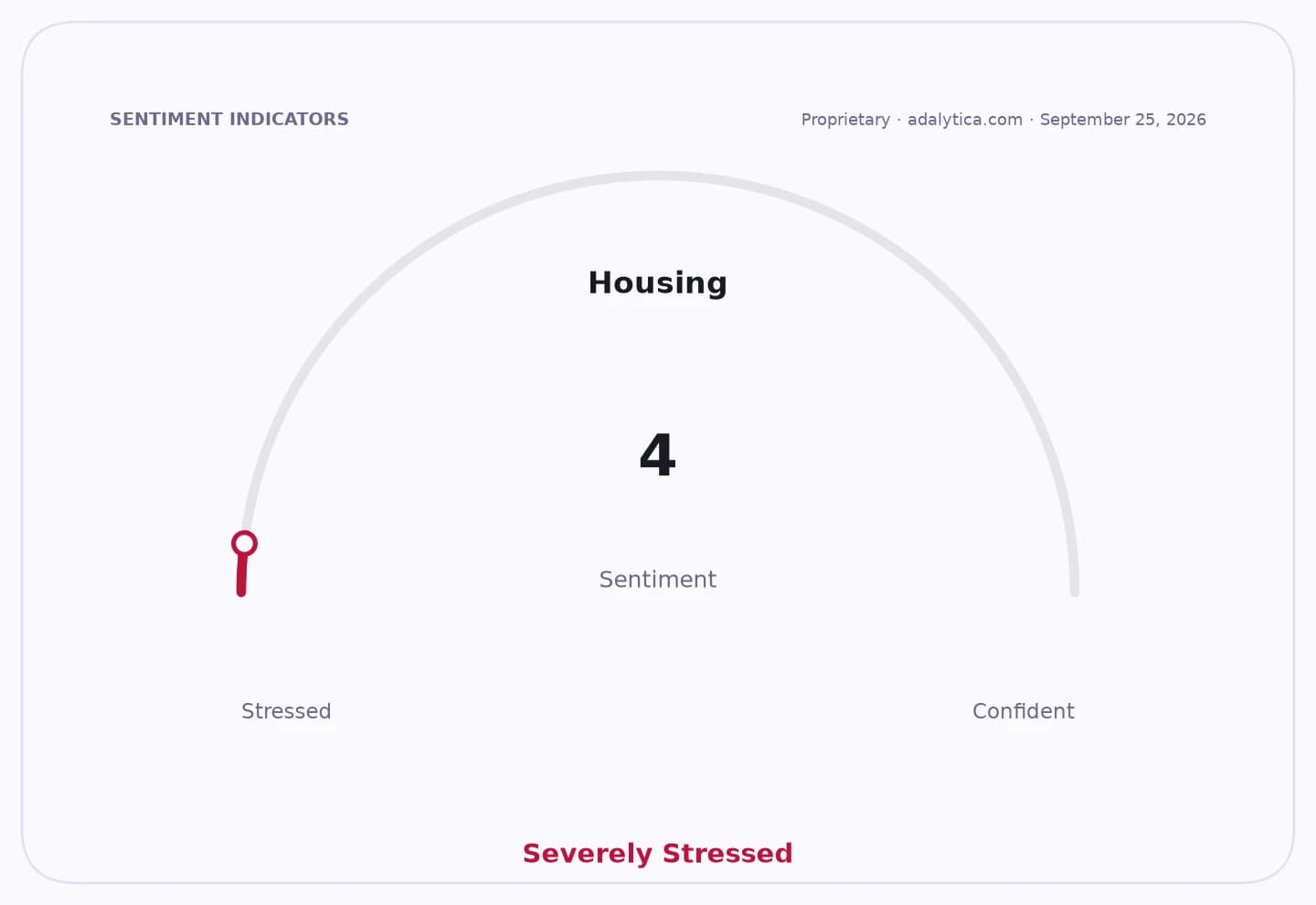
The latest data also fits with a broader affordability squeeze that is forcing would-be buyers into a wait-and-see posture. Adalytica’s Housing and Rent Inflation Sentiment gauge sits in “Extreme Fear” at 15, suggesting consumers are still highly wary of buying into a market where prices remain elevated and financing costs are sticky.
For housing stocks, the near-term catalyst is whether mortgage rates ease enough to unlock demand or whether persistent price gains keep transactions subdued into the summer selling season. Until then, pending sales weakness points to more caution across builders, brokers and mortgage lenders.
| Entity | Gains | Losses |
|---|---|---|
| Homebuyers | ▲More negotiating leverage | ▼Higher monthly payments |
| Homebuilders | ▲Potentially faster rate relief | ▼Slower sales pace |
| Mortgage lenders | ▲Purchase-loan demand if rates fall | ▼Refinance and volume pressure |
| Housing ETFs and stocks | ▲Upside if rates drop | ▼Near-term valuation pressure |