Pensioner households have been hit by the fastest inflation because the things they buy most often — food, utilities, housing services and health care — have risen faster than the overall cost of living, squeezing fixed incomes and raising pressure on governments to protect retirees.
Pensioner Inflation Pressures Rise as Khyber Pakhtunkhwa Raises Pensions 7%
That gap matters economically because pensioners typically spend a larger share of their budgets on essentials that are hardest to cut back, so even moderate price increases can translate into a larger real-income loss than for working-age households. For policymakers, it underscores how a single headline inflation rate can obscure very different experiences across the population, and why pension upratings are increasingly becoming a fiscal issue rather than just a social one.
Sentiment IndicatorsⓘProprietary · adalytica.com · July 29, 2026
This is a snapshot — live sentiment, awareness and momentum for 130+ markets update continuously in the dashboard.Open AlphaPulse
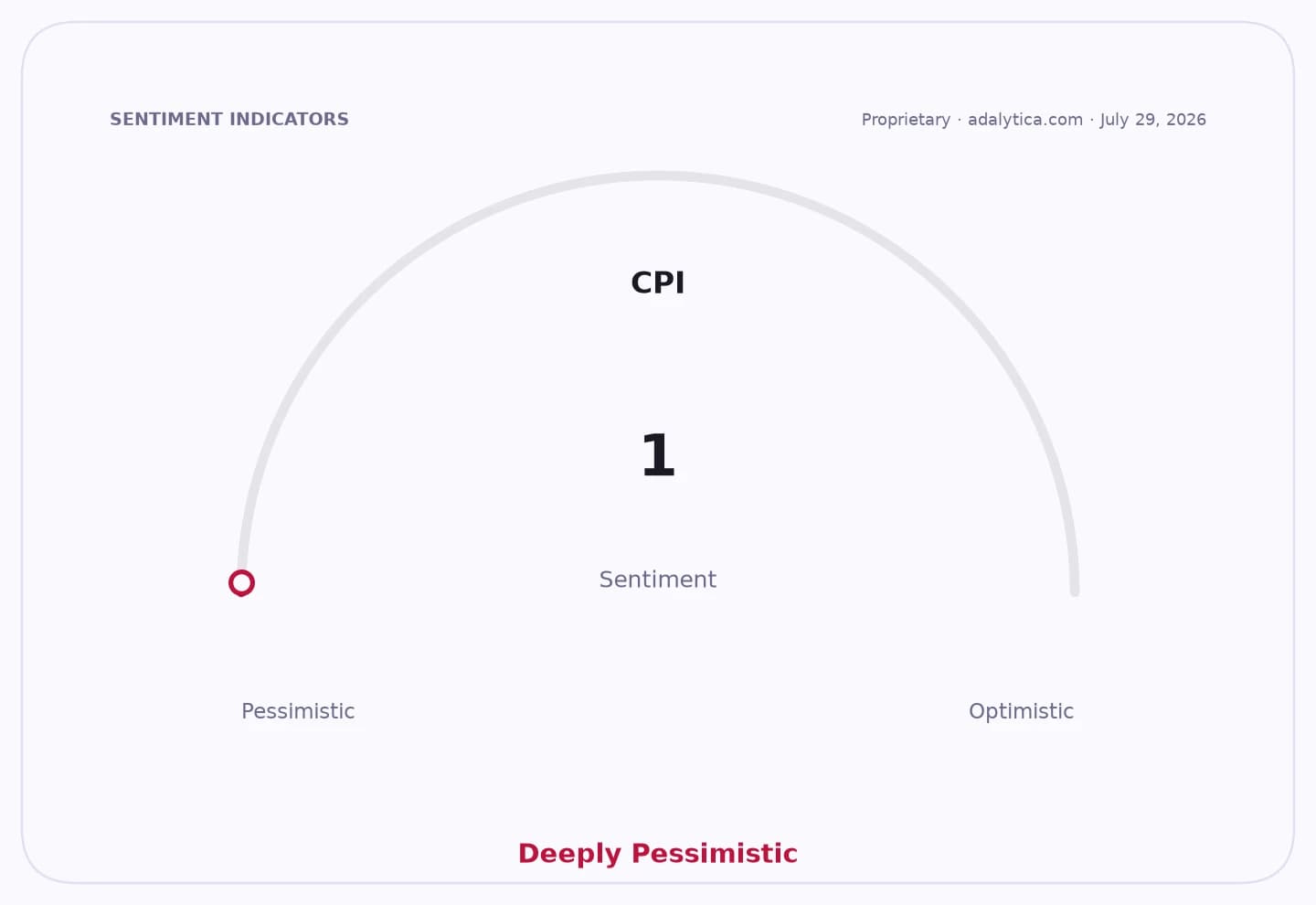
The broad U.S. consumer price index has climbed to around 332.6 in June 2026 from 332.4 in April, with a forecast for 335.5 in July, while core CPI has stayed near 336.1. Producer prices have also risen again, with the all-commodities PPI projected to advance to 295.8 in July from 286.8 in June. Even as the overall inflation backdrop looks contained compared with the pandemic spike, the composition of price gains still leaves older households exposed to persistent pain in daily spending categories.
That is why pension indexation is back in focus. Khyber Pakhtunkhwa’s government has approved a 7% pension increase from July 1 and will pay inflation-difference adjustments on July 24, a reminder that public retirement systems are under growing pressure to keep pace with living costs. The move offers immediate relief to retirees, widows, orphans and disabled beneficiaries, but it also highlights the strain on pension budgets when increases are tied to inflation rather than to a broader productivity or wage base.
For investors, the story is less about a single benefit adjustment than about the spending and policy ripple effects. Higher pension payments can support demand for consumer staples and health care, while continued cost pressure strengthens the case for defensive sectors such as health care and consumer staples over more cyclical spending categories. In the market, that helps explain why the Consumer Staples Select Sector SPDR Fund has been firm, with XLP closing at $87.38 on July 29, above both its 50-day and 200-day moving averages, while Health Care Select Sector SPDR Fund XLV finished at $166.11 and remained well above its longer-term averages.
The contrast with energy is also instructive. The Energy Select Sector SPDR Fund has rebounded to $58.67, but it remains far more volatile, underscoring how pensioners’ inflation burden is driven less by commodity price swings than by the steady compounding of necessities. If inflation stays moderate overall but remains sticky in essentials, governments will face continued pressure to raise benefits, and investors will keep favoring sectors with pricing power and stable cash flows. The next tests will be whether July CPI confirms another benign headline print and whether fiscal authorities can keep pension support aligned with living costs without widening funding strains.
| Entity | Gains | Losses |
|---|---|---|
| Pensioners | ▲Higher benefit payments | ▼Erosion from essential-price inflation |
| Governments | ▲Social relief, political cover | ▼Higher pension outlays |
| Consumer staples and health care | ▲Steadier demand | ▼Limited margin relief if costs rise |
| Taxpayers and pension funds | ▲— | ▼Higher fiscal and funding pressure |